Imagine a blockchain that doesn’t just keep up with your dApp’s demands but actually turbocharges it. That’s what Monad is bringing to the table. If you’ve ever been frustrated by Ethereum’s congestion or the sluggishness of legacy EVM chains, you’re not alone. Developers, traders, and founders have all hit the wall of sequential execution and high latency. Monad flips this script with an EVM that runs in parallel, unlocking real-time blockchain applications that were once just a dream.
Why Parallelization Is the Game Changer for EVM Chains
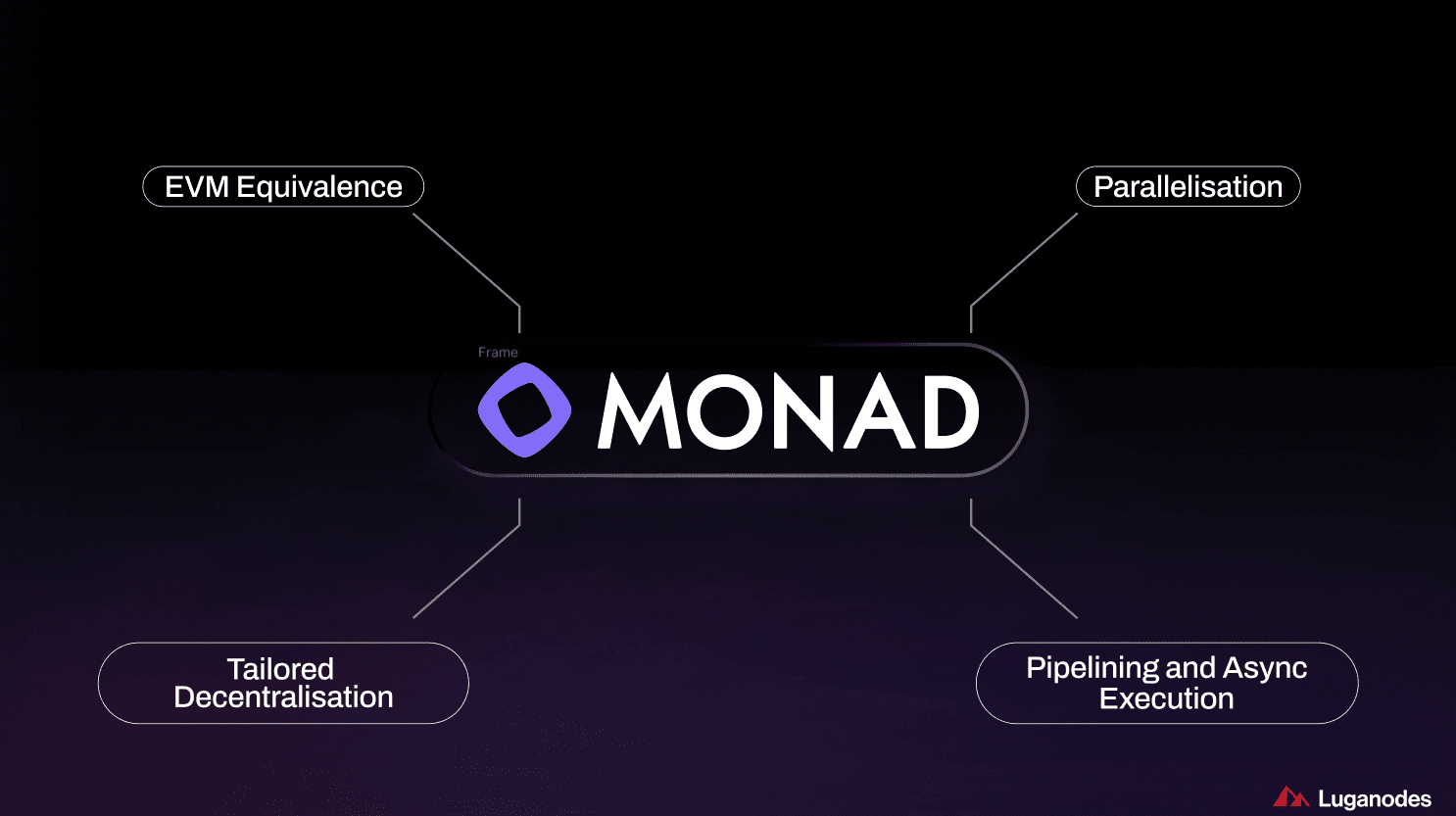
Let’s cut to the chase: classic EVM blockchains process transactions one after another. It’s reliable but painfully slow when demand spikes. Monad’s approach is fundamentally different. By parallelizing EVM execution, Monad analyzes incoming transactions to identify those without dependencies and processes them simultaneously. The result? Up to 10,000 transactions per second (TPS) and 1-second block times - a quantum leap for any developer building high-frequency Web3 apps or instant trading platforms.
This isn’t just theoretical performance either. Thanks to its innovative architecture, Monad delivers both low-latency dApps and real-time data access, making it possible for use cases like fully on-chain order books, real-time gaming, and even AI agent coordination - all natively on-chain.
Diving Into Monad's Optimistic Parallel Execution
The secret sauce behind Monad’s speed is its optimistic parallel execution. Here’s how it works: before executing transactions, Monad inspects their state dependencies. If two or more transactions don’t touch the same state variables, they’re executed at the same time - no waiting in line. This massively boosts throughput while keeping full Ethereum compatibility.
And if there are conflicts? Monad simply falls back to serial execution for those specific cases while still running everything else in parallel. It’s efficient and pragmatic - exactly what you want if you’re building apps where every millisecond counts.
Architectural Innovations Powering Real-Time Blockchain Apps
Speed isn’t just about processing power. It also comes down to how consensus and storage interact with execution:
- Asynchronous Execution: In Monad, consensus (agreement on which transactions are included) happens separately from execution (processing those transactions). This decoupling means neither process slows down the other.
- MonadBFT Consensus: Inspired by HotStuff but optimized further, this protocol achieves block finality in about one second with minimal communication rounds - crucial for low-latency dApps.
- MonadDB Storage Layer: A custom database using Patricia Tries keeps state access fast and hardware requirements low so anyone can run a performant node without enterprise-grade servers.
- Execution Events: Instead of relying on slow RPC calls for data feeds, apps running on the same machine as a node can tap directly into a shared-memory stream of every action taken by the EVM - think real-time dashboards or HFT bots consuming live data at wire speed.
Together these innovations create an environment where real-time blockchain applications aren’t just possible but practical.
So, what does this mean for the next generation of decentralized apps? Monad’s parallel EVM execution isn’t just about numbers on a benchmark - it’s about unlocking use cases that were previously off-limits on legacy chains. Think fully on-chain order books where trades clear instantly and market makers can run high-frequency strategies without getting bogged down by network congestion. Or real-time multiplayer games with state updates that feel as snappy as Web2, but with all the trustlessness and composability of Web3.
This is also a game-changer for AI agents and automation. With low-latency dApps and real-time data access, you can build autonomous bots that react to on-chain events within milliseconds, not minutes. That opens the door for everything from algorithmic trading bots to AI-powered DAOs coordinating complex actions in real time.
How Monad Stacks Up: Performance at a Glance
Monad vs Other EVM-Compatible Chains: Performance Comparison
| Blockchain | Throughput (TPS) | Block Time | Finality | Hardware Requirements |
|---|---|---|---|---|
| Monad | 10,000 | 1 second | Single-slot (~1 second) | Low (optimized via MonadDB) |
| Ethereum (Mainnet) | ~15 | 12 seconds | ~1-2 blocks (12–24 seconds) | Moderate to High |
| BNB Smart Chain | ~300 | 3 seconds | Finality in 2 blocks (6 seconds) | Moderate |
| Polygon PoS | ~7,000 | 2 seconds | ~2 blocks (4 seconds) | Moderate |
| Avalanche C-Chain | ~4,500 | ~2 seconds | ~1-2 seconds | Moderate |
If you’re wondering how Monad compares to other EVM-compatible chains, the difference is stark. While most competitors struggle to scale beyond a few hundred TPS without sacrificing decentralization or compatibility, Monad delivers 10,000 TPS, sub-second finality, and keeps hardware requirements modest thanks to its efficient storage layer. This puts truly scalable DeFi, gaming, and high-frequency Web3 use cases within reach - no trade-offs required.
Real-Time Blockchain: From Vision to Reality
The impact of these innovations is already being felt across the ecosystem. Developers are spinning up dApps that simply weren’t possible before. On-chain order books are matching trades faster than ever. Real-time dashboards update instantly as new blocks land every second. And with full Ethereum compatibility, migrating existing projects or building new ones on Monad is frictionless.
If you want to get even deeper into the architecture or see how developers are leveraging these breakthroughs in practice, check out our resources on how true parallel execution delivers 10,000 TPS without sacrificing Ethereum compatibility or explore benchmarks showing how Monad stacks up in real-world scenarios.
The Future: High-Frequency Web3 Starts Here
We’re standing at the edge of a new era where high-frequency Web3 applications aren’t just hype - they’re shipping today. Whether you’re building instant trading platforms, low-latency dApps for gamers or AI agents that need millisecond-level reactivity, Monad’s parallelized EVM is your launchpad.
The best part? This performance isn’t locked behind proprietary APIs or walled gardens - it’s open-source and fully EVM compatible. That means your Solidity skills transfer right over and your existing smart contracts can tap into this next-gen throughput with zero rewrites.
If you’re ready to build apps that demand more from blockchain infrastructure - faster trades, richer games, smarter bots - now’s the time to experiment with Monad’s parallel EVM architecture. The future of real-time blockchain applications has arrived… and it runs in parallel.




No comments yet. Be the first to share your thoughts!