

Picture this: Ethereum, the king of smart contracts, chugs along at 15 to 30 transactions per second, leaving developers dreaming of more. Enter Monad, the EVM-compatible Layer 1 blockchain that cranks out 10,000 TPS and 500 million gas per second. This isn't hype; it's a meticulously engineered tech stack centered on parallel execution that redefines what's possible for decentralized apps. As someone who's tracked EVM scalability for years, I can tell you Monad's approach feels like a breath of fresh air in a space bogged down by sequential bottlenecks.
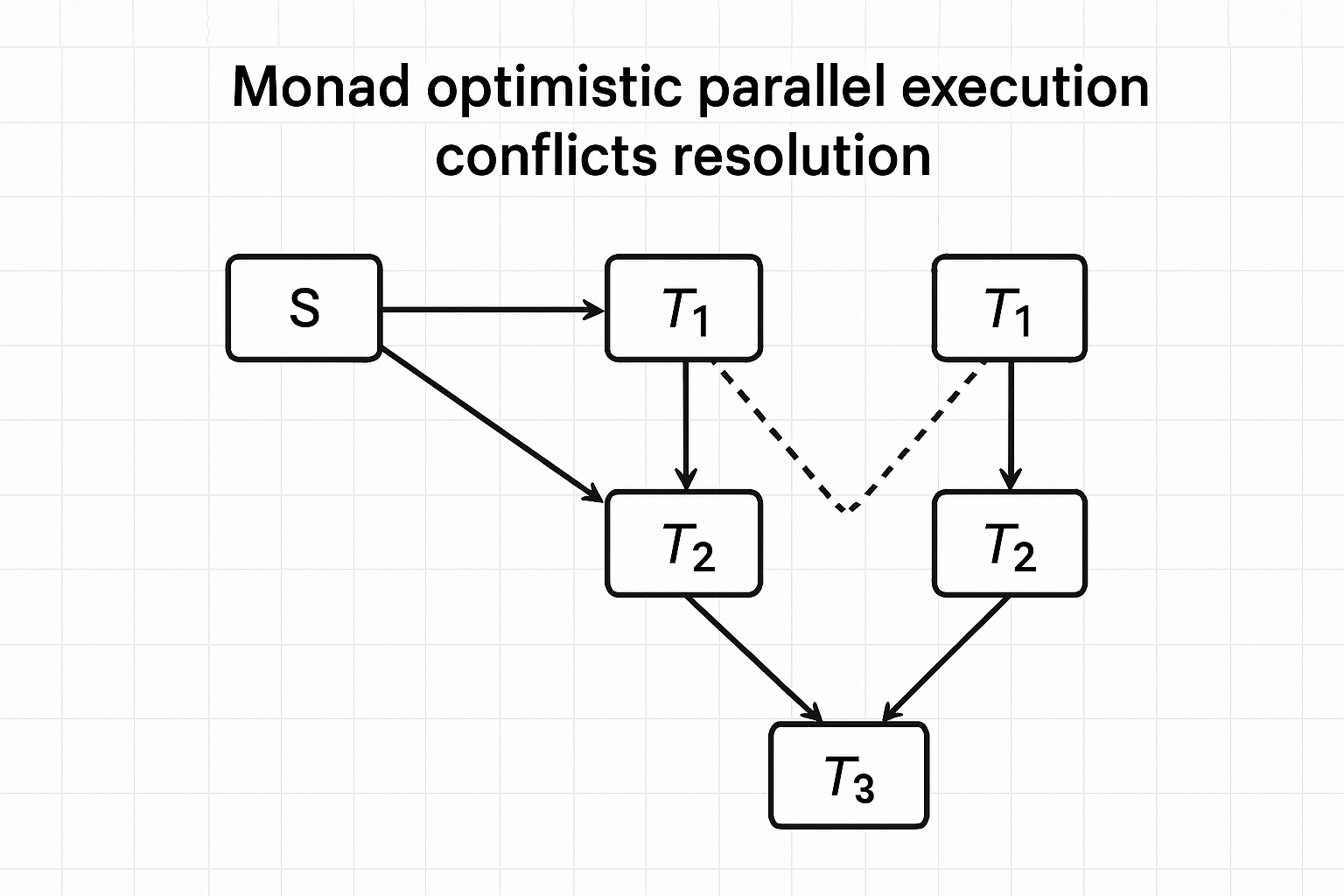
At the heart of Monad parallel execution lies an optimistic strategy. Unlike traditional blockchains that execute transactions one by one, Monad assumes most transactions won't clash over the same state. It fires them off in parallel across multiple cores, only stepping in to re-execute the troublemakers if conflicts pop up, like two trades hitting the same liquidity pool. This clever optimism slashes execution time dramatically, pushing through Monad 10000 TPS while staying byte-for-byte compatible with Ethereum tools. Developers can port their Solidity contracts without a single rewrite, which is a game-changer for adoption.
Optimistic Parallelism: Why It Delivers 500M Gas Per Second
Let's dive deeper into the mechanics. Monad's engine uses a superscalar pipelining model, borrowing from CPU design principles. Transactions get fetched, decoded, and executed in overlapping stages, much like an assembly line on steroids. With a 200 million gas limit per block and 400-millisecond block times, that math checks out to 500M gas per second. A simple ETH transfer at 21,000 gas? Monad handles nearly 24,000 of those every second. I've seen testnets hit 5,000 TPS with 334 million RPC requests in just 12 hours, proving the stack's real-world grit. This isn't theoretical; it's benchmarked performance that outpaces Ethereum by orders of magnitude.

What makes this feasible is Monad's custom virtual machine tweaks. It compiles the EVM bytecode to highly optimized machine code ahead of time, reducing runtime overhead. Parallelism shines here because state reads are cheap and non-blocking until a write conflict forces a rollback. In practice, most DeFi actions touch distinct accounts, so re-executions are rare, keeping latency under a second with 800ms finality. If you're building high-frequency trading bots or NFT marketplaces, this Monad EVM tech stack unlocks fluidity Ethereum users only fantasize about.
Asynchronous Execution Untethered from Consensus
Parallelism alone wouldn't cut it without smart orchestration. Monad decouples execution from consensus entirely. While MonadBFT, their HotStuff-inspired protocol, agrees on transaction order in two communication rounds, execution runs asynchronously in the background. This pipelining means blocks are proposed, voted on, and executed without waiting games, slashing idle CPU time. Network latency dictates round progress optimistically, so even at global scale, you get sub-second responsiveness. It's like having validators multitask flawlessly, a far cry from Ethereum's sequential slog.
Check out this breakdown of how optimistic parallelism enables those numbers. Pair it with MonadDB, their bespoke database using a Merkle Patricia Trie optimized for parallel reads. It dumps Ethereum's disk-heavy I/O for RAM-centric access, letting consumer hardware join the network without melting. Lower barriers mean better decentralization, and that's crucial for long-term Monad blockchain performance 2025 projections.
Ethereum Technical Analysis Chart
Analysis by Maya Ellison | Symbol: BINANCE:ETHUSDT | Interval: 1D | Drawings: 7
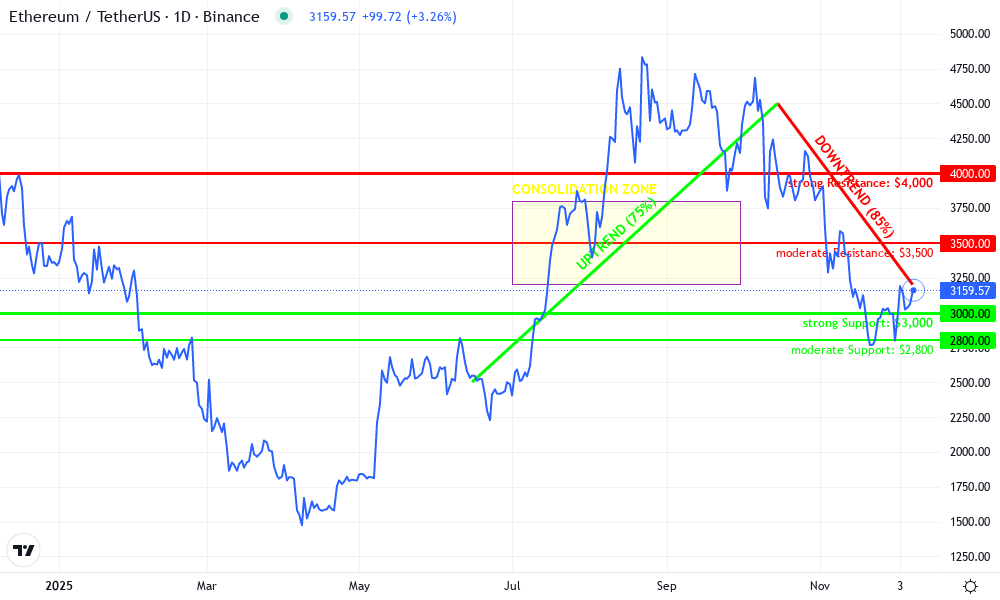
Technical Analysis Summary
As Maya Ellison, my conservative technical overlay on this ETHUSDT chart emphasizes key support zones and a potential long-term uptrend channel while highlighting recent distribution patterns. Draw a primary uptrend line from the June 2025 low at $2,500 connecting to the October 2025 high at $4,500 using 'trend_line' (uptrend, green). Overlay a short-term downtrend line from October peak $4,500 to current $3,200 (red 'trend_line'). Mark horizontal supports at $3,000 (strong), $2,800 (moderate), and resistances at $3,500 (moderate), $4,000 (strong) with 'horizontal_line'. Use 'rectangle' for the July-September consolidation range $3,200-$3,800. Add 'callout' for volume divergence near November lows and MACD bearish cross in late November. Place 'long_position' entry zone above $3,100 support with 'stop_loss' below $2,900. Include 'text' annotations for fundamental tie-ins like Monad ecosystem growth supporting ETH scalability narrative.
Risk Assessment: medium
Analysis: Recent breakdown increases near-term volatility, but strong supports and fundamental tailwinds (e.g., Monad EVM compatibility boosting ETH) limit downside. Conservative stance warrants waiting for higher lows.
Maya Ellison's Recommendation: Hold core ETH position; scale in longs on $3,000 support confirmation with <2% portfolio risk. Patience over speculation—focus on long-term blockchain convergence.
Key Support & Resistance Levels
📈 Support Levels:
- $3,000 - Strong multi-touch support from Sep-Nov bounces, aligns with 0.618 fib retracement strong
- $2,800 - Moderate prior swing low from July, volume cluster moderate
- $2,500 - Weak June low, potential deeper retrace zone weak
📉 Resistance Levels:
- $3,500 - Moderate recent highs, November rejection moderate
- $4,000 - Strong October peak and prior resistance cluster strong
- $4,500 - Major March-May high, psychological barrier strong
Trading Zones (low risk tolerance)
🎯 Entry Zones:
- $3,100 - Bounce from $3,000 support with volume confirmation, low-risk long aligned to uptrend low risk
- $2,900 - Deeper entry on breakdown retest, higher reward if Monad news catalyzes rebound medium risk
🚪 Exit Zones:
- $3,800 - Initial profit target at consolidation high 💰 profit target
- $3,500 - Trailing stop at resistance 💰 profit target
- $2,900 - Tight stop below key support to preserve capital 🛡️ stop loss
Technical Indicators Analysis
📊 Volume Analysis:
Pattern: decreasing on rally, spike on pullback
Bearish divergence in Nov-Dec; volume climaxes on downside suggest distribution before accumulation
📈 MACD Analysis:
Signal: bearish crossover
MACD line crossed below signal in late Nov, histogram contracting—wait for bullish divergence
Applied TradingView Drawing Utilities
This chart analysis utilizes the following professional drawing tools:
Disclaimer: This technical analysis by Maya Ellison is for educational purposes only and should not be considered as financial advice. Trading involves risk, and you should always do your own research before making investment decisions. Past performance does not guarantee future results. The analysis reflects the author's personal methodology and risk tolerance (low).
MonadBFT and MonadDB: The Unsung Heroes of Scalability
MonadBFT isn't just fast; it's responsive. By cutting phases and responding to actual latencies, it ensures consensus doesn't bottleneck execution. Meanwhile, MonadDB's custom key-value store handles the state trie with surgical efficiency, supporting the parallel onslaught without crashing. Together, they form a stack where every layer amplifies the last, hitting those headline specs. From my vantage, this holistic redesign positions Monad as the EVM chain to watch, especially as mainnet matures and dApps flood in.
Developers I've spoken with are already buzzing about how this stack lowers the floor for ambitious projects. Think real-time gaming dApps or prediction markets that actually keep up with user demand, without the gas wars or front-running headaches. Monad's full EVM compatibility means you grab your MetaMask, tweak your RPC endpoint, and you're off to the races. No learning curve, just amplified performance.
Monad vs Ethereum: Performance Comparison
| Metric | Monad | Ethereum |
|---|---|---|
| TPS | 10,000 | 15-30 |
| Gas per Second | 500M | ~30M |
| Block Time | 0.4s | 12s |
| Finality | 0.8s | 12-18 min |
| Hardware Needs | Consumer-grade | High-end |
From Theory to Practice: Monad's Parallel Execution in Action
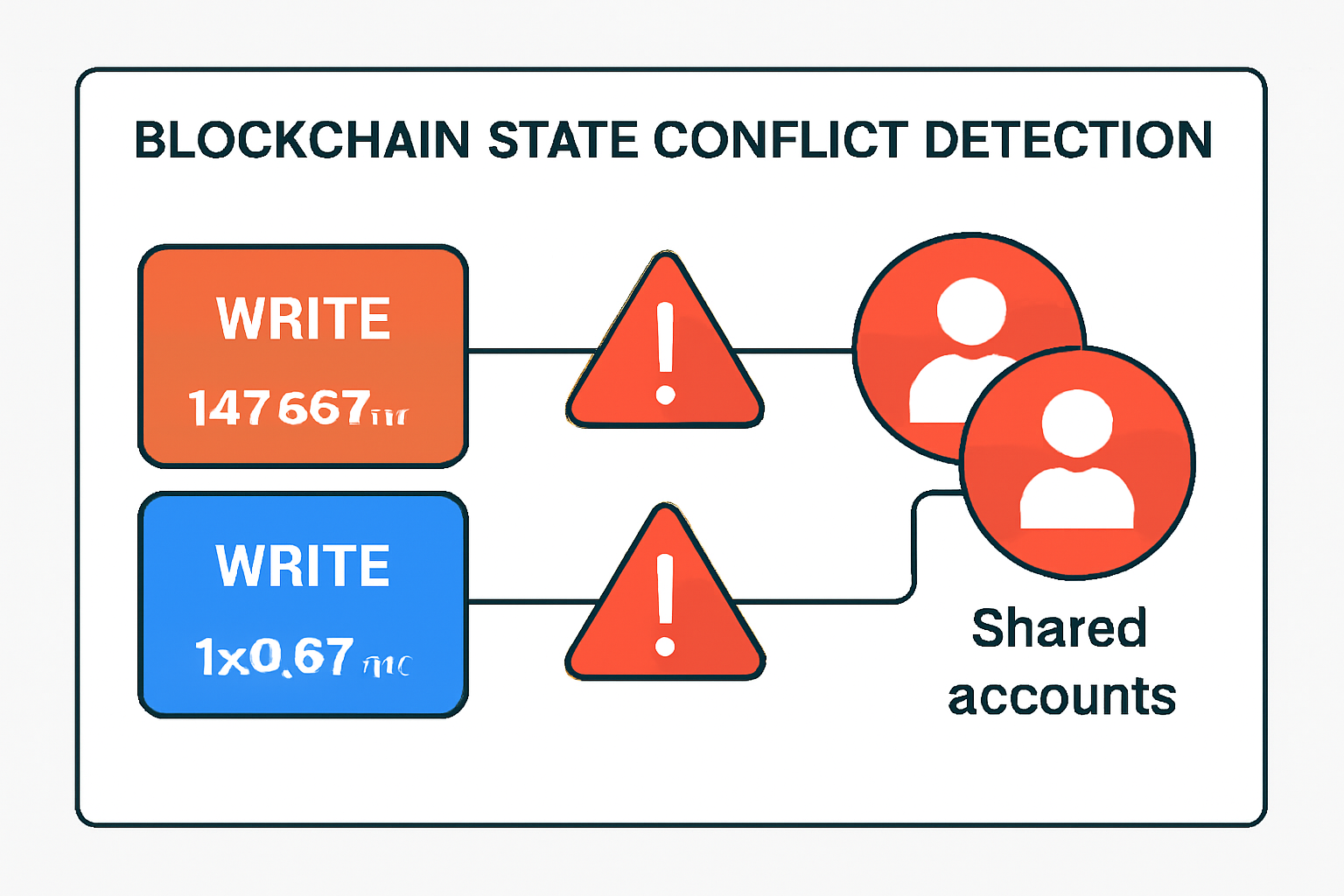
Want to see the magic unfold? Monad grabs a batch of transactions, sorts them by consensus order via MonadBFT, then unleashes them across threads. Each one speculatively updates the state in parallel. Most breeze through independently; say, Alice swaps on Uniswap while Bob mints an NFT elsewhere. But if Charlie and Dana both try topping up the same lending pool, boom, conflict detected during write phase. Monad rewinds those two, re-executes sequentially with the correct state snapshot, and merges the rest. This monad parallel execution keeps the overall block humming at full speed, routinely clocking monad 500m gas per second.
Unlocking 10,000 TPS: Monad's Optimistic Parallel Execution Guide

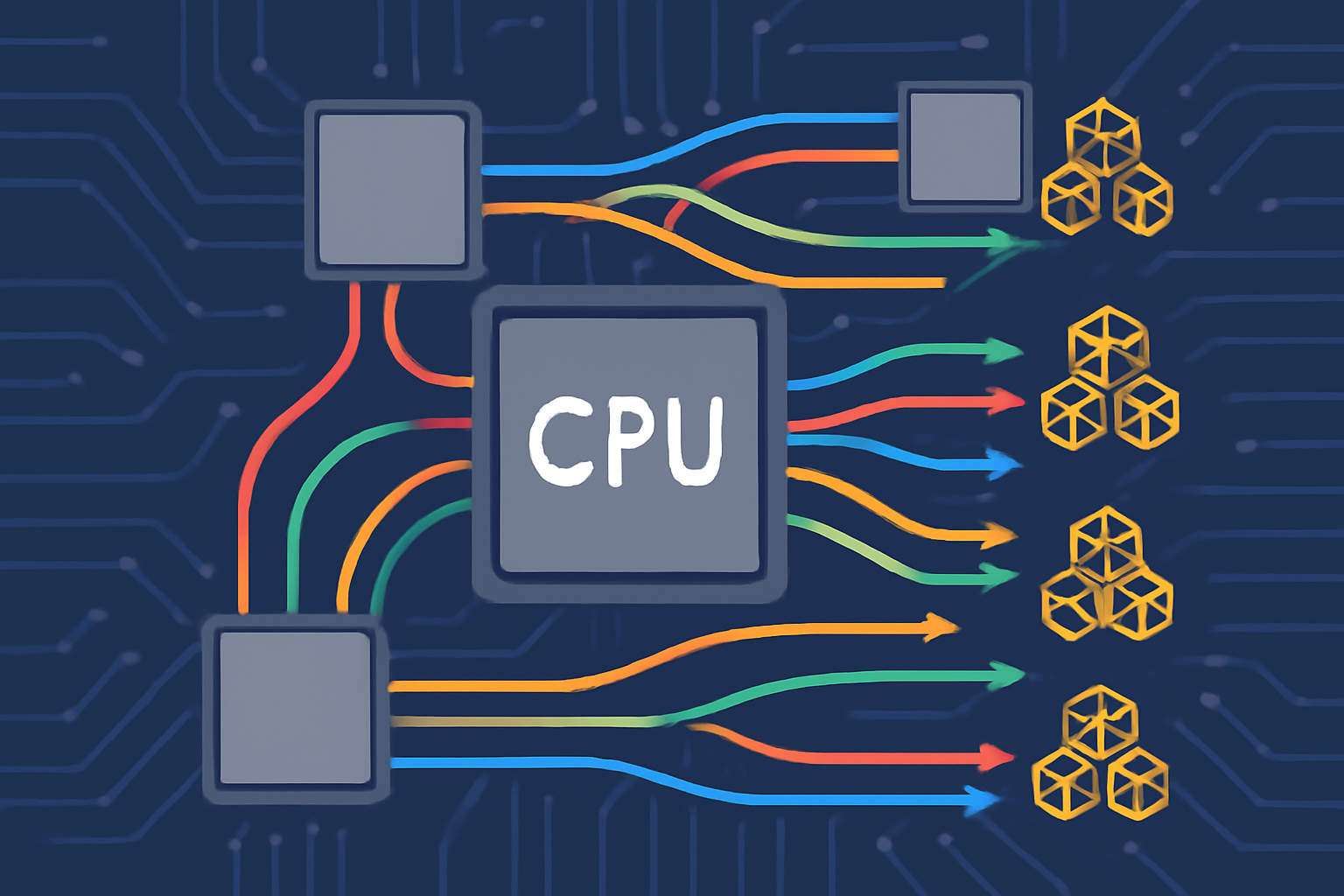
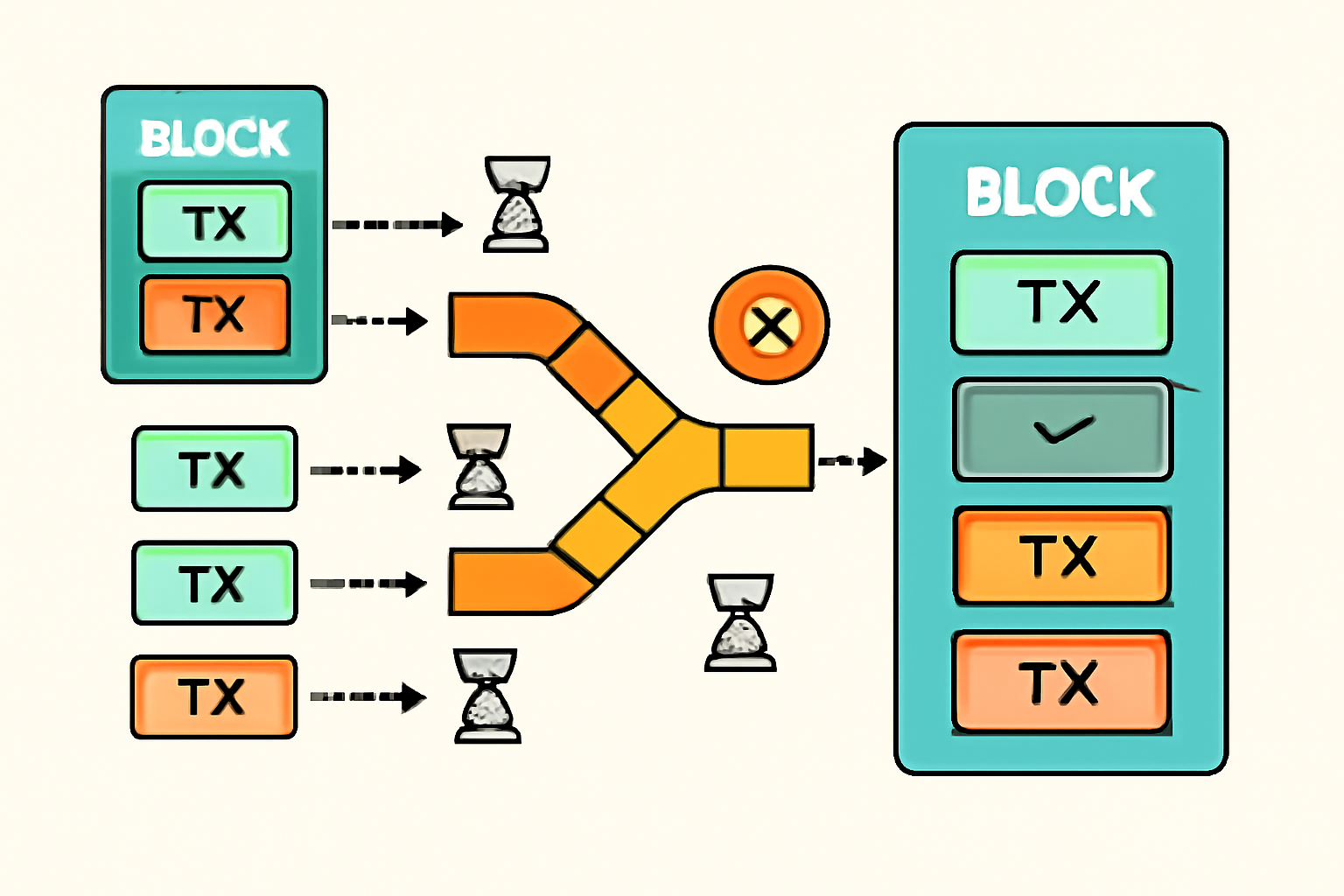
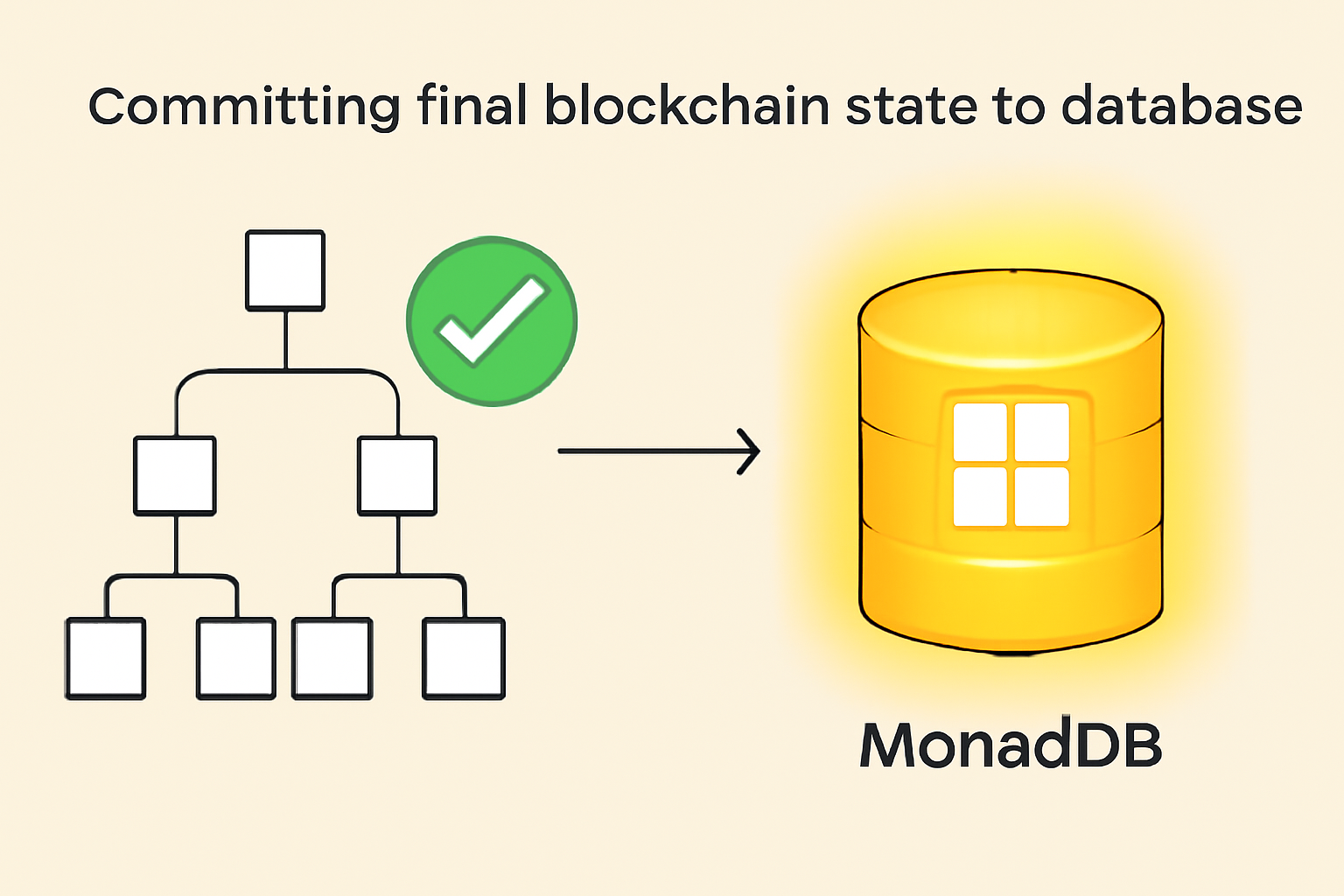
I've pored over their testnet data, and the re-execution rate hovers low enough that throughput barely dips. Pair that with asynchronous execution, where validators prep the next block while the current one finalizes, and you've got a flywheel of efficiency. MonadDB seals the deal by serving state proofs lightning-fast from RAM, dodging Ethereum's I/O drags. It's this end-to-end tuning that delivers monad 10000 tps sustainably.
Real-World Benchmarks and 2025 Outlook
Benchmarks don't lie. Monad's public testnet crushed 10,000 TPS peaks, with blocks packing 200 million gas every 400 milliseconds. That's 500 million gas per second sustained, dwarfing Ethereum's crawl. Simple transfers? Up to 24,000 per second. Complex DeFi swaps? Still thousands without breaking a sweat. Sources like Figment and Imperator. co highlight how these numbers hold under load, thanks to superscalar pipelining that overlaps fetch-decode-execute cycles.

Looking ahead to monad blockchain performance 2025, mainnet's live vibes suggest even more. With single-slot finality at 800 milliseconds, DeFi protocols can iterate faster, gaming dApps can go fully on-chain, and enterprises might finally dip toes into permissionless scalability. Check these mainnet benchmarks for the latest proof points. The monad evm tech stack isn't just faster; it's future-proof, inviting builders to push boundaries Ethereum never could.
As adoption ramps, expect network effects to compound. Liquidity fragments less when speed matches demand, and tools like foundry or hardhat port seamlessly. From my years dissecting chains, Monad stands out for balancing raw power with Ethereum fidelity. If you're a dev eyeing high-throughput plays or an investor scouting the next EVM leap, dive in now. The parallel revolution is here, and it's executing flawlessly.




No comments yet. Be the first to share your thoughts!