
With MON trading at $0.0195 after a 6.03% rise in the last 24 hours, the timing feels right to position in Monad's ecosystem. Kintsu's mainnet launch brings liquid staking to this high-performance EVM chain, letting you earn around 13% APY on staked MON while keeping liquidity through sMON. This isn't just passive income; it's a gateway to governance influence via the new Points Program.
Monad stands out in the blockchain landscape for its parallelized EVM execution, promising thousands of transactions per second without sacrificing Ethereum compatibility. Developers and users alike flock here for scalability that rivals centralized systems. Kintsu slots in as the foundational liquid staking protocol, transforming locked MON into usable sMON. Stake your tokens, receive sMON at a 1: 1 ratio initially, and deploy them across DeFi for compounded yields. This setup appeals to my strategy of patient capital in innovative layers, where risk-adjusted returns compound over time.
Why Kintsu Delivers Superior Yields on Monad Mainnet
Traditional staking locks capital, but Kintsu changes that equation. By staking MON, you secure the network and earn staking rewards, estimated at 13% APY based on current network dynamics. The sMON you receive remains liquid, opening doors to lending markets, liquidity pools, and other DeFi primitives on Monad. Recent launches confirm this: points accrue from direct staking, sMON utilization, referrals, and even NFT holdings. Early movers gain multipliers, like 5x points for contributing to superMON pools that boost overall APY for participants.
Participants can earn points by staking MON, utilizing sMON in DeFi, and through referrals.
From a portfolio perspective, this blends security with opportunity. Monad's speed reduces latency risks in DeFi, making sMON more efficient than equivalents on slower chains. At $0.0195, MON offers an entry below recent highs of $0.0200, aligning with long-term bets on EVM scalability. The Points Program adds asymmetry; points determine future KSU token airdrops, granting say over validator selection and protocol upgrades. Prioritizing early stakers ensures governance power in Monad's evolution.

Navigating the Points Program for Maximum Rewards
Kintsu's Points Program isn't a gimmick; it's a structured incentive layer. Deposit MON into the staking pool to mint sMON and start accruing base points. Use sMON in DeFi - think lending on integrated protocols or providing liquidity for sMON pairs - to multiply earnings. Referrals bring friends into the fold, netting you additional points, while eligible NFTs provide passive boosts. superMON contributions, where you add extra MON to amplify pool APY, deliver 5x points, creating a flywheel for the community.
Think decades ahead: these points position you for KSU governance tokens, influencing decisions that shape Monad's validator set and fee structures. In my experience with multi-asset allocations, such mechanisms reward conviction. Current data shows MON's resilience, up from a 24-hour low of $0.0184, underscoring momentum post-launch.
Monad (MON) Price Prediction 2027-2032
Short-term and long-term forecasts driven by Kintsu liquid staking growth, 13% APY, points program, and mainnet adoption
| Year | Minimum Price | Average Price | Maximum Price | YoY % Change (Avg from Prev) |
|---|---|---|---|---|
| 2027 | $0.015 | $0.045 | $0.120 | +131% |
| 2028 | $0.025 | $0.090 | $0.250 | +100% |
| 2029 | $0.040 | $0.180 | $0.500 | +100% |
| 2030 | $0.070 | $0.350 | $1.00 | +94% |
| 2031 | $0.120 | $0.700 | $2.50 | +100% |
| 2032 | $0.200 | $1.40 | $5.00 | +100% |
Price Prediction Summary
Monad (MON) shows strong growth potential from $0.0195 in 2026, with average prices projected to reach $1.40 by 2032 (over 70x increase). Bullish scenarios driven by staking adoption, DeFi utility via sMON, and points program airdrops; bearish mins account for market cycles and competition.
Key Factors Affecting Monad Price
- Kintsu liquid staking with 13% APY and sMON DeFi integration boosting TVL
- Points Program incentivizing early stakers for future KSU governance token
- Monad mainnet performance, validator selection, and ecosystem expansion
- Crypto market cycles with potential bull runs in 2027-2028 and 2031-2032
- Regulatory clarity for L1 blockchains and institutional adoption
- Competition from other high-performance L1s and overall market cap growth potential
Disclaimer: Cryptocurrency price predictions are speculative and based on current market analysis. Actual prices may vary significantly due to market volatility, regulatory changes, and other factors. Always do your own research before making investment decisions.
Preparing Your Wallet for Monad Mainnet Staking
Before diving into monad staking kintsu, ensure compatibility. Monad mainnet requires wallets like MetaMask configured for its RPC endpoints. Add the Monad network manually: chain ID 1312, RPC URL from official docs, symbol MON, explorer link. Fund with MON from exchanges supporting withdrawals to Monad addresses. Security first - use hardware wallets for significant stakes, enable 2FA, and verify contracts to avoid phishing.
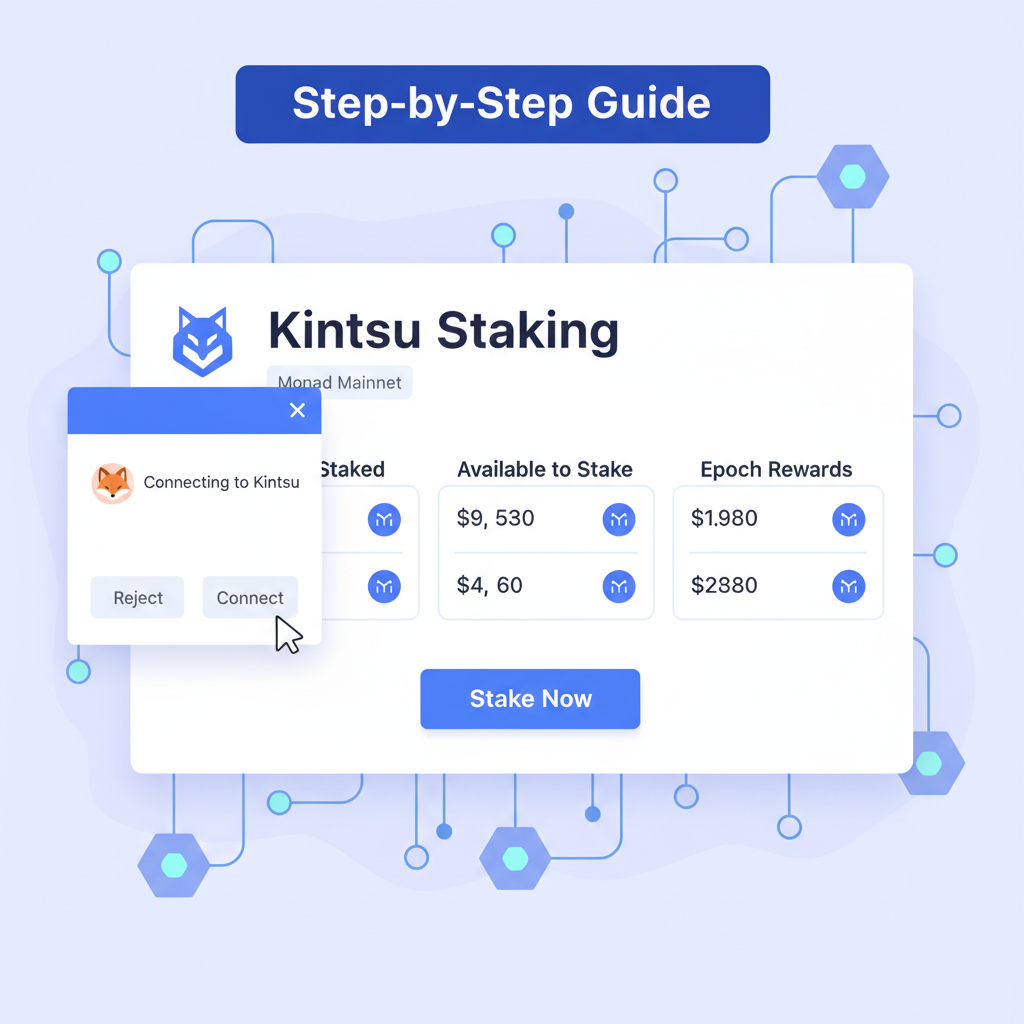
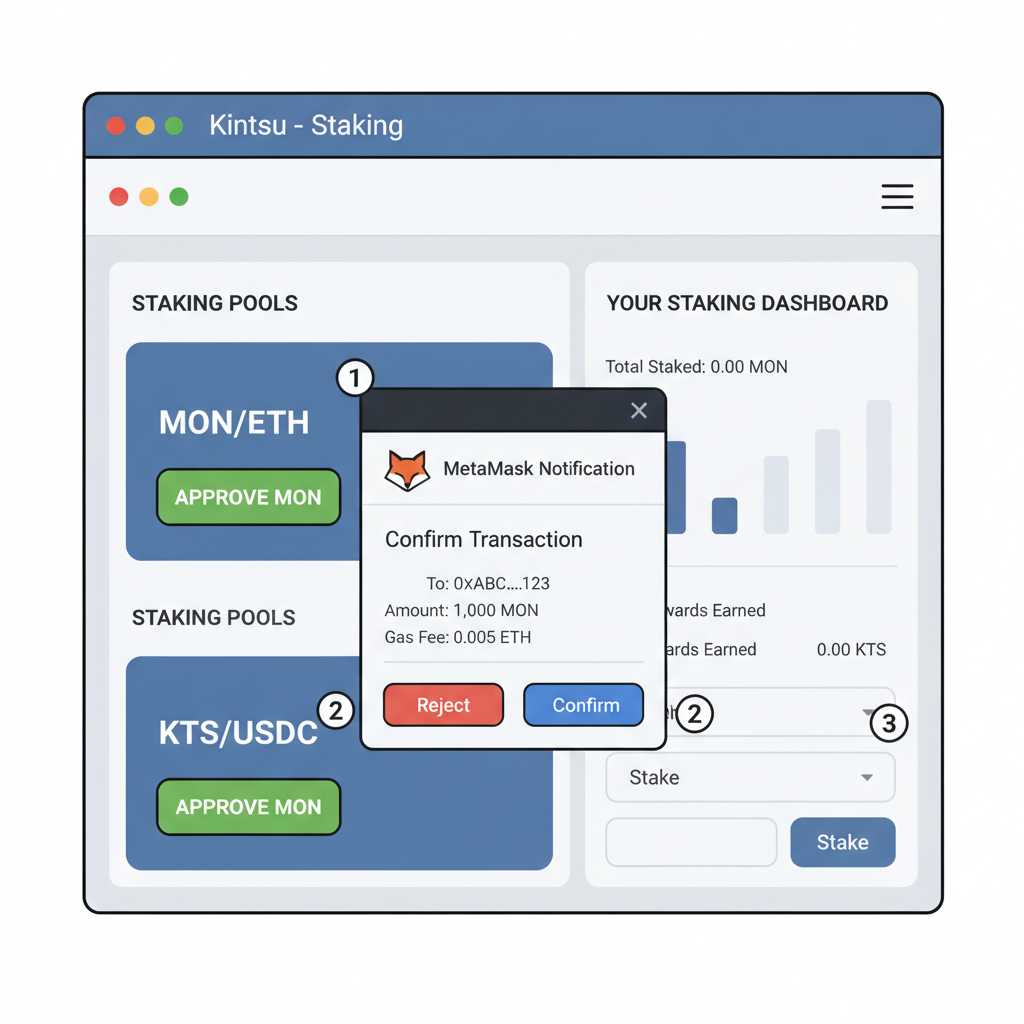
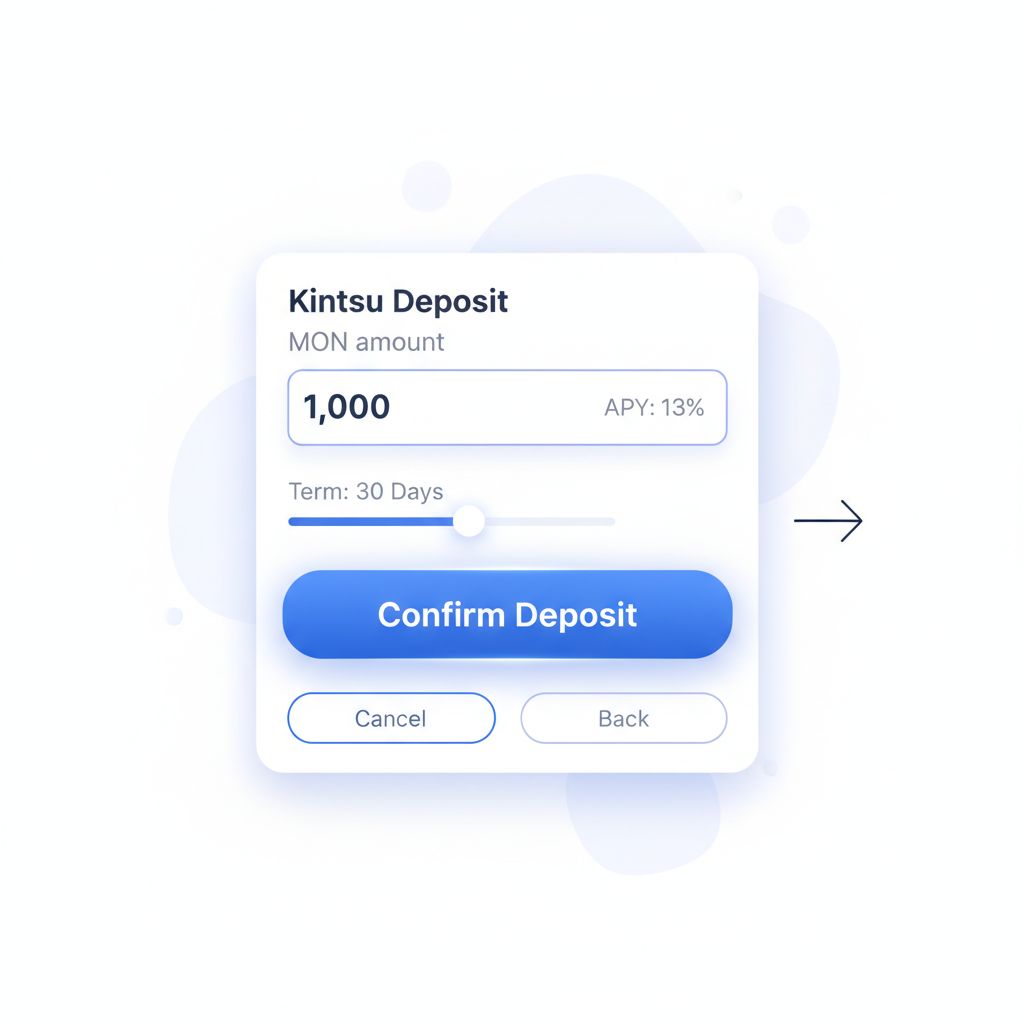
Once set, connect to Kintsu's interface. Approve MON spend, confirm deposit amount, and receive sMON instantly. Track points dashboard for real-time progress toward KSU eligibility. This frictionless onboarding embodies Monad's developer-friendly ethos, making monad mainnet staking APY accessible without technical hurdles.
With your wallet primed, staking unfolds seamlessly, but execution matters for capturing that 13% APY and points momentum. I've guided allocations through volatile launches before; precision here compounds advantages in Monad's ecosystem.
Step-by-Step Staking on Kintsu: From Deposit to sMON Rewards
Stake MON on Kintsu: Unlock 13% APY & Points in Minutes
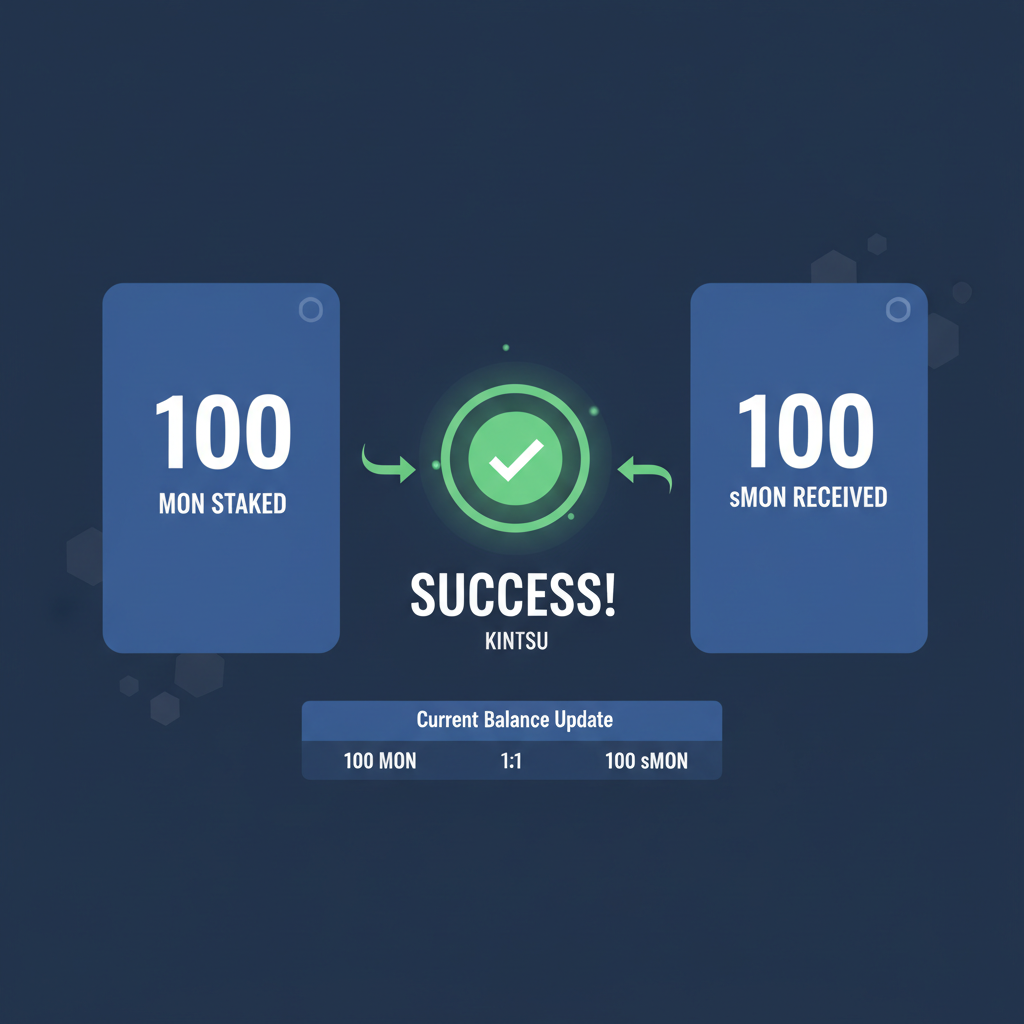
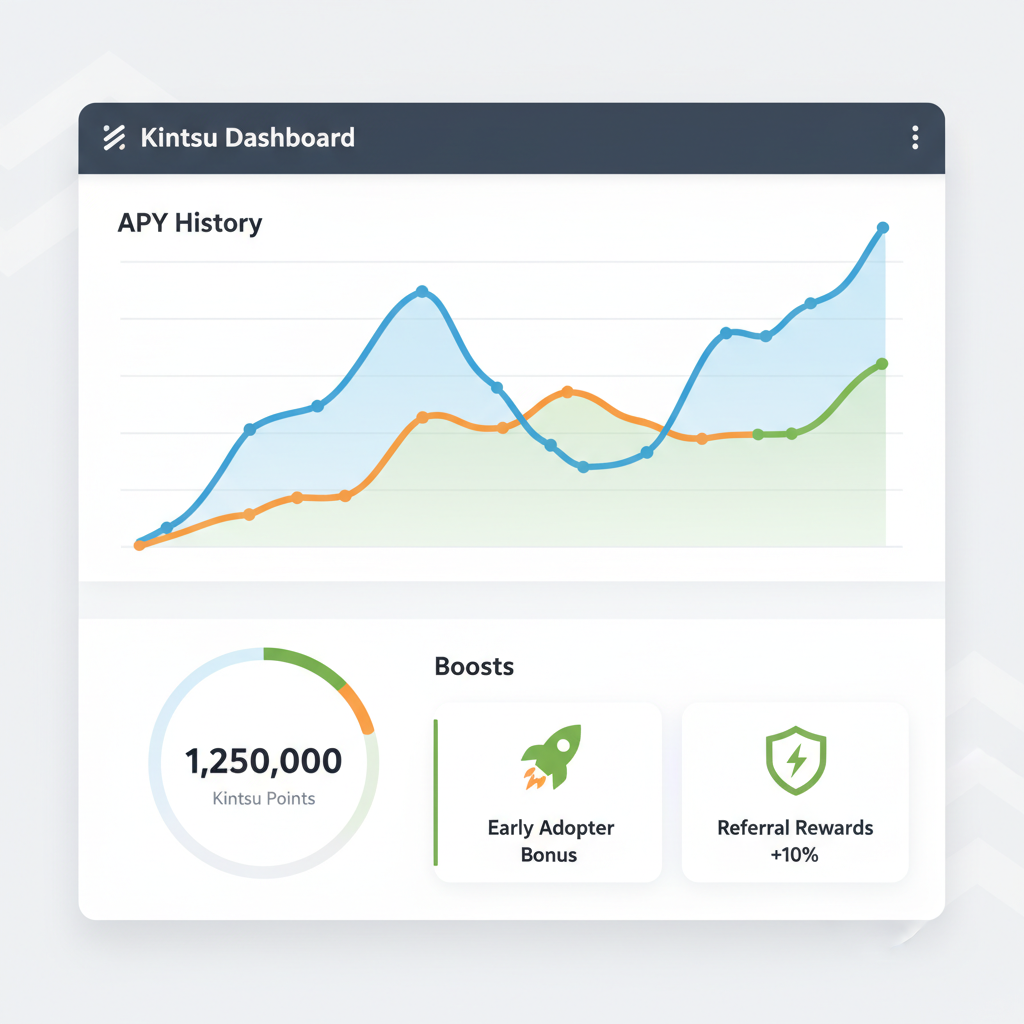
Post-deposit, sMON becomes your versatile asset. Deploy it into Monad's emerging DeFi landscape - lending protocols for extra yield or liquidity pools for trading fees. This kintsu smon defi integration turns static staking into dynamic income streams. At MON's current $0.0195 price, even modest stakes position you for upside as network activity surges, evidenced by the recent 6.03% gain from $0.0184 lows.
Points accumulation demands strategy. Base points flow from staking volume and duration; DeFi usage multiplies them, referrals add linear growth, and NFT qualifiers offer passive edges. superMON pledges, enhancing collective APY, unlock 5x multipliers - a nod to community-driven scaling that resonates with my decades-long view on aligned incentives.
| Activity | Points Multiplier | Benefit |
|---|---|---|
| Stake MON → sMON | 1x | 13% APY and base points |
| sMON in DeFi/LP | 2-3x | Compounded yields |
| Referrals | Variable | Network growth share |
| superMON contribution | 5x | Boosted pool APY |
KSU tokens, distributed by points, empower you in validator curation - selecting operators that optimize Monad's parallel execution for sustained performance. This governance layer elevates monad points program staking beyond yields, fostering protocol resilience I've seen thrive in mature chains.
Risks, Unstaking, and Long-Term Positioning
No allocation skips risks. Slashing for validator downtime affects stakers proportionally, though Kintsu diversifies across top performers. sMON depegging looms if liquidity thins, but Monad's throughput mitigates this versus congested networks. Unstaking involves a short cooldown, preserving capital access without full locks. At $0.0195, with highs at $0.0200 fresh in memory, dollar-cost averaging into stake mon tokens suits patient strategies amid mainnet hype.
Monitor via dashboards; points vest toward KSU snapshots, rewarding sustained participation. In quantitative terms, Monad's EVM edge - sub-second finality - underpins DeFi composability, positioning Kintsu as a cornerstone. My portfolios favor such vectors where innovation meets utility, eyeing multi-year horizons as adoption scales.
Engaging now, with MON's upward tick, secures foundational stakes in a chain redefining EVM limits. Kintsu bridges yield and influence, turning blockchain participation into strategic equity.



No comments yet. Be the first to share your thoughts!