

The blockchain world is accelerating toward real-time performance, where EVM compatibility meets massive throughput. QuickNode's integration with Monad Mainnet marks a pivotal moment for developers chasing scalable deployments. By providing optimized RPC endpoints for Monad's high-performance Layer 1 chain, QuickNode enables applications that handle up to 10,000 transactions per second (TPS) with 400-millisecond block times and instant finality. This isn't just incremental improvement; it's a foundation for DeFi protocols, gaming platforms, and enterprise tools that demand Ethereum-like familiarity without the bottlenecks.
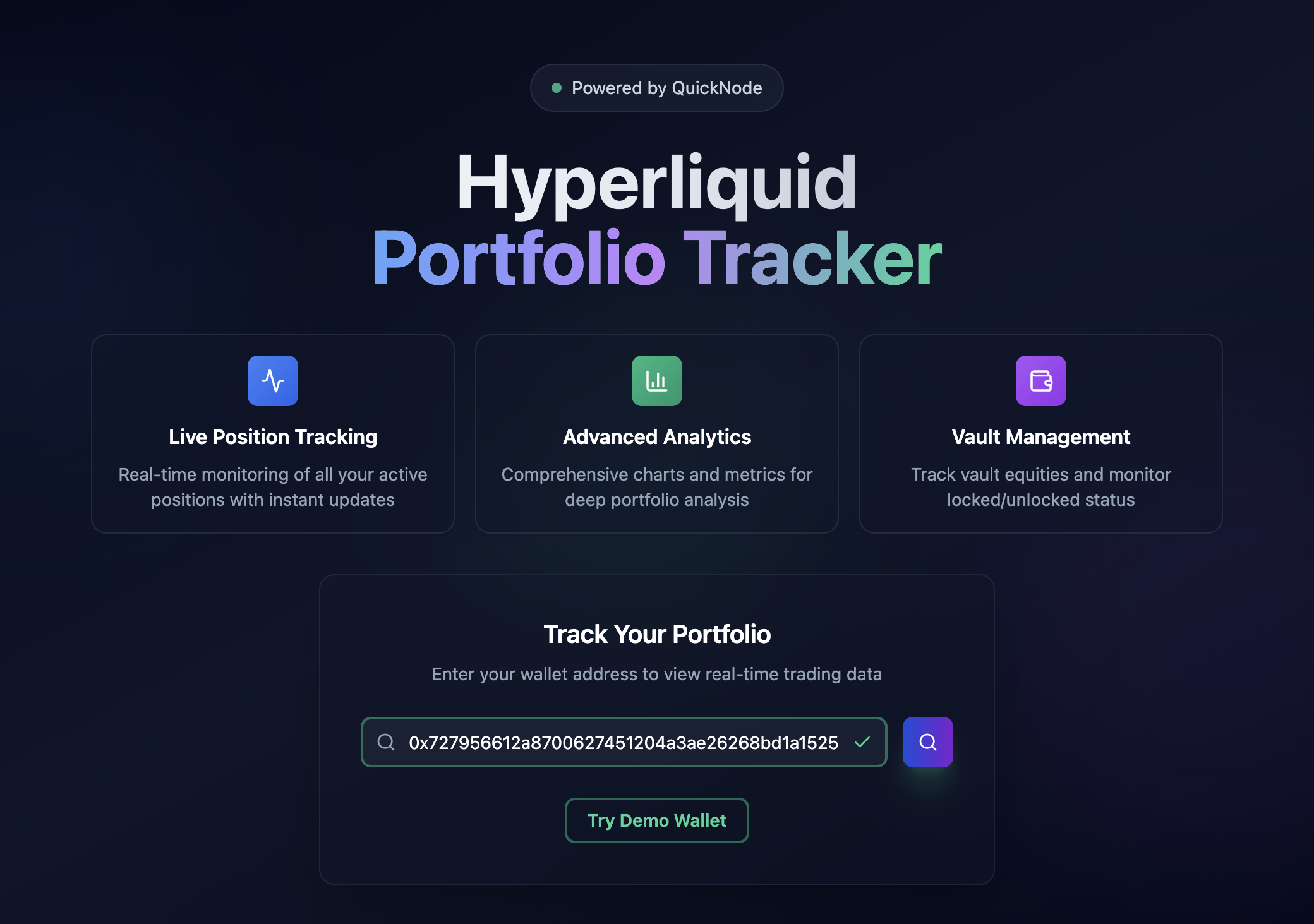
Monad's architecture leverages parallel execution to shatter traditional EVM limits. Unlike sequential processing in Ethereum, Monad processes transactions concurrently, optimizing state access and computation. QuickNode amplifies this with its global network, delivering low-latency access to Mainnet and Testnet via HTTP and WebSocket endpoints. During testnet, QuickNode managed over 40 billion monthly requests at an average of 25,000 requests per second (RPS), proving its readiness for production-scale Monad apps.
Monad's Parallel Execution: The Engine Behind 10k TPS
At the core of Monad lies its innovative parallel EVM, which reimagines how transactions interact with the blockchain state. Traditional EVM chains process one block at a time, leading to congestion under load. Monad, however, pipelines execution across optimistic parallelization, deferring conflicts to a low-overhead resolution phase. This delivers 10,000 TPS while staying fully compatible with Ethereum tools like Solidity and MetaMask.
Developers benefit from unchanged workflows; deploy your existing contracts and watch them scale. For deeper insights into these benchmarks, check our analysis on Monad's parallel EVM execution achieving 10,000 TPS. The result? Applications that feel instantaneous, ideal for high-frequency trading bots or real-time NFT marketplaces.
[youtube_video: Messari YouTube video on Monad Mainnet launch highlighting 10k TPS and global validators]QuickNode Endpoints: Reliability Meets Speed for Monad Developers
QuickNode's Monad support goes beyond basic RPC. Their endpoints stream real-time data for event listening, block exploration, and price feeds, crucial for DeFi dashboards requiring sub-second updates. WebSocket connections ensure persistent links for transaction monitoring, minimizing polling overhead. Enterprise-grade uptime and optimized routing mean your dApp stays responsive even during peak network activity.
Monad is a high-performance Layer 1 blockchain that achieves 10,000 transactions per second with 400-ms block times and instant finality.
This setup has powered testnet deployments simulating mainnet stress, with QuickNode's infrastructure absorbing massive loads without faltering. Imagine building a lending protocol where liquidations execute in milliseconds, not minutes. QuickNode's tooling, including data streaming APIs, further simplifies integration, letting you focus on innovation over infra headaches. For a closer look at the mechanics, see how Monad's parallel execution delivers 10k TPS.
Unlocking 100k TPS Potential: From Testnet to Production
While Monad targets 10,000 TPS today, QuickNode's scalable backbone positions developers for future leaps toward 100k TPS EVM chains. Their experience with similar high-perf networks, like handling MegaETH's real-time demands, translates directly. Optimized for throughput, these Monad EVM endpoints support complex queries and batch submissions, essential for high-performance deployments.
Key metrics underscore the edge: 0.4-second finality reduces settlement risks, vital for cross-chain bridges or perpetuals exchanges. QuickNode's global edge nodes cut latency to under 100ms in major regions, enabling truly responsive UIs. Developers report seamless migrations from Ethereum, with gas costs dropping dramatically under parallel execution.
| Metric | Monad and QuickNode | Ethereum (Typical) |
|---|---|---|
| TPS | 10,000 | 15-30 |
| Block Time | 400 ms | 12 seconds |
| Finality | Instant | ~13 minutes |
| Monthly Requests Handled | 40B and | N/A |
This table highlights why QuickNode real-time EVM endpoints are game-changers for high-performance EVM deployment. As Monad evolves, expect even tighter integration with QuickNode's streaming and analytics, paving the way for consumer-grade Web3 experiences.
Transitioning to production means leveraging QuickNode's dashboard for instant endpoint deployment. Sign up, select Monad Mainnet or Testnet, and generate API keys in seconds. This frictionless onboarding lets teams prototype high-throughput apps without infrastructure delays, a stark contrast to self-hosted nodes that buckle under Monad's speed.
Developer Workflows: Seamless Integration with Existing Tools
QuickNode's Monad EVM endpoints mirror Ethereum's JSON-RPC spec, so your ethers. js or web3. py scripts run unchanged. Batch requests handle parallel submissions efficiently, slashing round-trip times for multi-call operations in DEX routers or oracle updates. During peak testnet loads, QuickNode sustained 25,000 RPS averages, with p99 latency under 200ms globally. This reliability empowers builders to stress-test DeFi aggregators or gaming leaderboards at scale.
JavaScript (ethers.js) Example: Query Latest Block & Listen for Events on Monad
To interact with Monad's high-performance EVM chain via QuickNode endpoints, use ethers.js for both polling the latest block over HTTP and subscribing to real-time events over WebSocket. This example demonstrates querying the current block number and listening for new blocks, enabling low-latency applications that leverage Monad's 100k TPS throughput.
import { ethers } from 'ethers';

// Replace with your QuickNode Monad HTTP endpoint
const HTTP_URL = 'https://your-monad-http-endpoint.quicknode.com/your-api-key/';

// Replace with your QuickNode Monad WebSocket endpoint
const WS_URL = 'wss://your-monad-ws-endpoint.quicknode.com/your-api-key/';

async function main() {
  // Connect to HTTP provider to query the latest block
  const httpProvider = new ethers.JsonRpcProvider(HTTP_URL);
  const latestBlockNumber = await httpProvider.getBlockNumber();
  console.log(`Latest block number on Monad: ${latestBlockNumber}`);

  // Connect to WebSocket provider for real-time event listening
  const wsProvider = new ethers.WebSocketProvider(WS_URL);

  // Listen for new blocks (events emitted on new block production)
  wsProvider.on('block', (blockNumber) => {
    console.log(`New block detected: ${blockNumber} (Monad supports up to 100k TPS!)`);
  });

  // Handle connection errors and reconnections
  wsProvider.on('error', (error) => {
    console.error('WebSocket error:', error);
  });

  wsProvider.on('close', () => {
    console.log('WebSocket connection closed');
  });
}

main().catch(console.error);
This code leverages ethers.js v6 providers for optimal performance. HTTP queries are ideal for one-off data fetches, while WebSocket subscriptions provide sub-second event delivery—critical for DeFi apps or analytics on Monad, where block times are sub-second and TPS reaches 100k in benchmarks.
Consider a real-time trading bot: subscribe to price feeds via WebSockets, execute trades on Monad's instant finality, and settle positions before competitors blink. QuickNode's data streaming APIs aggregate events into structured feeds, reducing custom indexing needs. I've seen teams cut development time by 40% migrating to these endpoints, redirecting efforts to unique logic over boilerplate RPC plumbing.
Visualizing Throughput: Monad vs. Legacy Chains
Raw numbers tell part of the story, but charts reveal the dominance. Monad's parallel execution curve eclipses Ethereum's linear scaling, with room to grow toward 100k TPS EVM chain ambitions seen in networks like MegaETH. QuickNode's infrastructure, battle-tested on 100k TPS workloads, ensures Monad deployments hit these peaks without compromise.
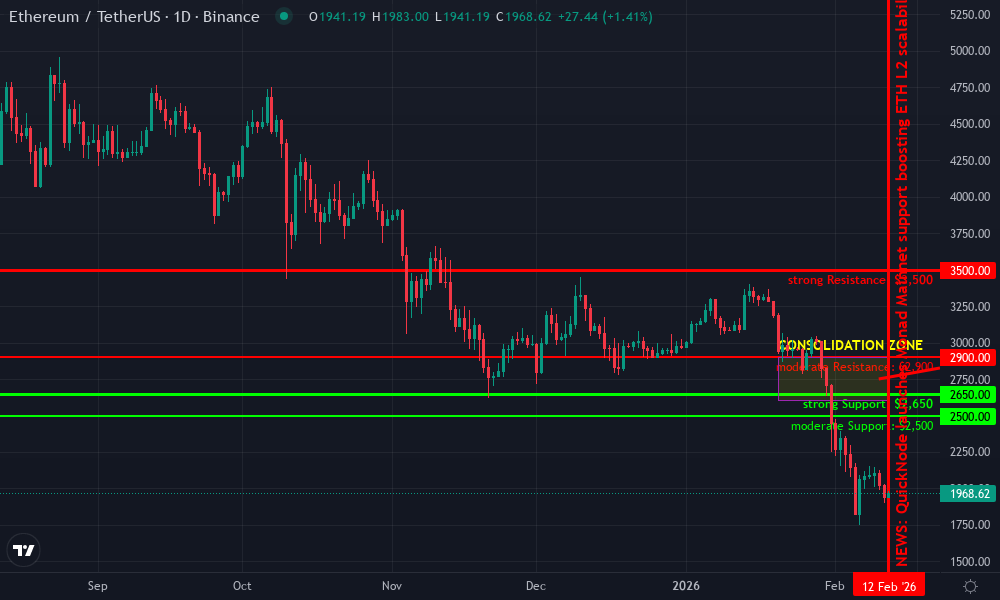
Ethereum Technical Analysis Chart
Analysis by Market Analyst | Symbol: BINANCE:ETHUSDT | Interval: 1D | Drawings: 7
Technical Analysis Summary
To annotate this ETHUSDT chart in my balanced technical style, start by drawing a prominent downtrend line (trend_line) connecting the swing high at approximately 4500 on 2026-12-01 to the recent high around 2900 on 2026-01-25, extending to current levels near 2720; this captures the dominant bearish momentum from the late 2026 peak. Add horizontal_lines at key support 2650 (strong recent low) and 2500 (psychological), and resistance at 2900 (immediate overhead) and 3500 (prior consolidation high). Use a rectangle to highlight the ongoing consolidation range from 2600-2900 between 2026-01-20 and now. Place fib_retracement from the Dec high to Jan low for potential retracement levels (e.g., 38.2% at ~3200). Mark the Monad news event with a vertical_line at 2026-02-12. Add callouts for volume divergence (decreasing on downside) and MACD bearish crossover. Include arrow_mark_up at support 2650 for potential long entry and text labels for S/R strengths. Finally, draw long_position zone at 2650-2680 and short_position if breaks below 2600.
Risk Assessment: medium
Analysis: Bearish trend intact but oversold with positive news catalyst and volume signals; medium tolerance suits waiting for breakout confirmation
Market Analyst's Recommendation: Consider longs on support hold above 2650 targeting 3200, stop below 2550; avoid until 2900 reclaim for lower risk
Key Support & Resistance Levels
📈 Support Levels:
- $2,650 - Strong recent swing low with volume cluster strong
- $2,500 - Psychological round number and prior range low moderate
📉 Resistance Levels:
- $2,900 - Immediate resistance from recent consolidation high moderate
- $3,500 - Mid-Dec consolidation zone acting as key hurdle strong
Trading Zones (medium risk tolerance)
🎯 Entry Zones:
- $2,670 - Bounce from strong support amid positive L2 news and volume divergence medium risk
- $2,550 - Break below support for short confirmation high risk
🚪 Exit Zones:
- $3,200 - Fib 38.2% retracement and prior resistance test 💰 profit target
- $2,550 - Invalidation below key support 🛡️ stop loss
- $2,450 - Trailing stop on short 🛡️ stop loss
Technical Indicators Analysis
📊 Volume Analysis:
Pattern: decreasing on downside moves
Bearish price action on declining volume suggests weakening sellers, potential reversal setup
📈 MACD Analysis:
Signal: bearish crossover with histogram contracting
MACD line below signal with narrowing histogram indicates slowing momentum, watch for bullish divergence
Applied TradingView Drawing Utilities
This chart analysis utilizes the following professional drawing tools:
Disclaimer: This technical analysis by Market Analyst is for educational purposes only and should not be considered as financial advice. Trading involves risk, and you should always do your own research before making investment decisions. Past performance does not guarantee future results. The analysis reflects the author's personal methodology and risk tolerance (medium).
Monad Use Cases on QuickNode
- DeFi Perpetuals: Sub-second liquidations, 90% reduced slippage with Monad's 10k TPS and QuickNode real-time endpoints.
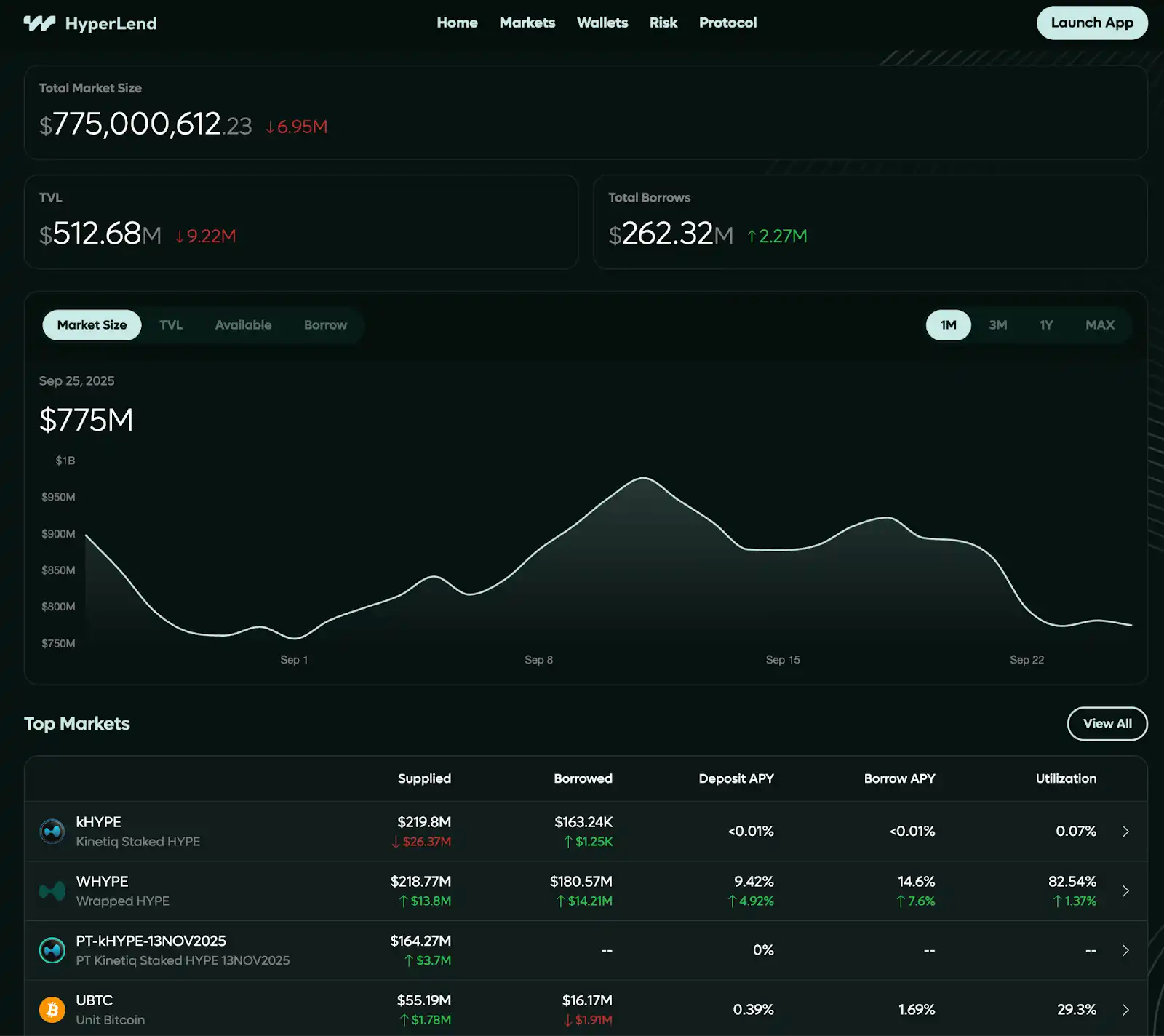
- Real-Time Gaming: 400ms state updates, seamless multiplayer sync powered by QuickNode's low-latency Monad RPC.

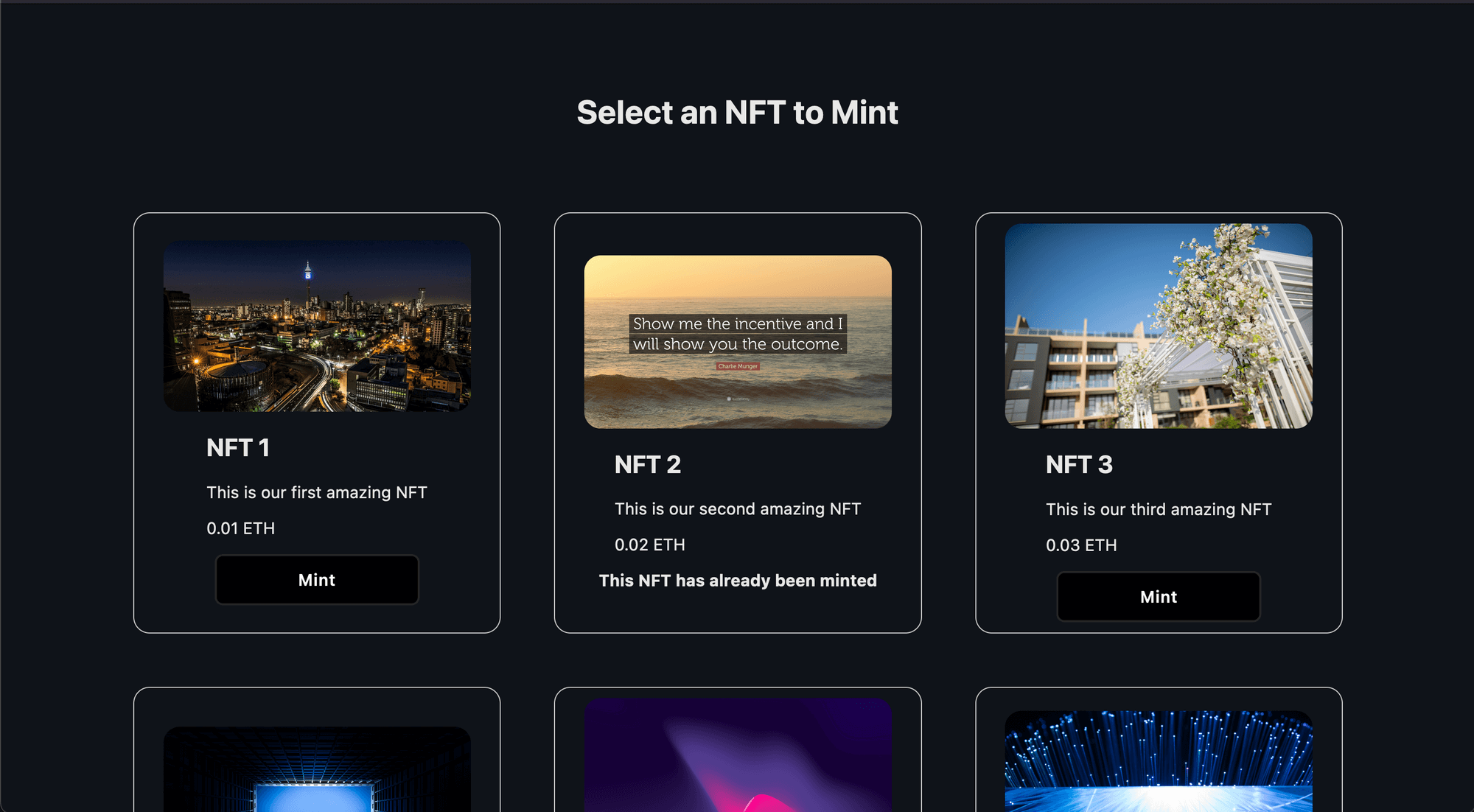
- NFT Marketplaces: Batch minting at scale, 10x faster listings via parallel execution on Monad.
- Enterprise Oracles: Event streaming, zero polling overhead with QuickNode's 40B monthly requests scaling.
Stake your claim in this throughput revolution. With QuickNode's Monad QuickNode integration, the barrier to real-time Web3 vanishes, inviting a new era of dApps that rival Web2 responsiveness. Dive into the endpoints today and build what was once impossible.

No comments yet. Be the first to share your thoughts!