

DeFi builders have long chased the holy grail: Ethereum-level compatibility paired with blistering speed. Enter Monad, the high-performance EVM chain smashing through bottlenecks with parallel execution that hits 10000 TPS. While Ethereum chugs at 15-30 TPS trading at $1,956.81, Monad's mainnet launch on November 24,2025, unleashes 10,000 transactions per second, 0.4-second block times, and 0.8-second finality. This isn't incremental improvement; it's a structural overhaul enabling complex dApps to scale without compromises.
I've traded volatility across TradFi and crypto for eight years, and Monad's tech stack screams opportunity. Parallel EVM processing turns sequential drudgery into concurrent firepower, letting DeFi protocols handle real-world volume like high-frequency options flows. But how does it work without breaking EVM bytecodes or RPC calls? Let's dive in.
Optimistic Parallel Execution: The Core of Monad's 10000 TPS Engine
Traditional EVM chains process transactions one-by-one, a relic of Ethereum's design that caps throughput. Monad flips this with monad parallel EVM execution using optimistic concurrency control (OCC). Nodes assume transactions are independent, execute them simultaneously, then re-execute only conflicts. Static code analysis predicts dependencies upfront, minimizing retries and preserving identical outcomes to sequential Ethereum runs.
This isn't Solana-style account locking; Monad structures blocks as linearly ordered transactions, ensuring monad evm compatibility. Developers lift-and-shift Solidity contracts verbatim. In testnets, it clocked over 5,000 TPS, scaling to 10,000 on mainnet per benchmarks. For DeFi builders, this means perpetuals exchanges or lending markets that don't crumble under load.
Monad's OCC and software transactional memory combo maximizes throughput while upholding security. No state bloat, just pure speed.
Pair it with asynchronous execution: consensus commits blocks before full execution, slashing latency. Nodes gossip state roots rapidly, executing in parallel post-agreement. This decoupling is genius for 10000 TPS EVM chain aspirations.
MonadBFT Consensus and MonadDB: Fueling Sub-Second Finality
Speed without reliability is worthless. MonadBFT, a HotStuff variant, streamlines leader-node chatter, cutting consensus rounds. It tolerates Byzantine faults swiftly, ideal for decentralized validators. Combine with 0.4s blocks, and you get 0.8s optimistic finality - sub-second UX for users swapping tokens or minting NFTs.
Storage is the silent killer in high-TPS chains. MonadDB, a custom async database, ditches synchronous I/O waits. Multi-threaded reads/writes overlap, feeding the parallel executor endless data. Unlike Ethereum's Merkle Patricia tries, this columnar setup crushes write amplification, supporting sustained 10k TPS.
Monad's optimizations shine brightest in DeFi throughput, where volatility spikes demand unflinching performance.Seamless EVM Compatibility: Plug-and-Play for Ethereum Developers
Full Shanghai opcode support, Ethereum RPC API parity - Monad isn't "EVM-like"; it's byte-for-byte equivalent. Deploy Uniswap V3 or Aave today, no rewrites. This monad evm compatibility lured $19M from Dragonfly Capital, validating the vision.
Devnet hit 10,000 TPS in March 2024 tests; mainnet delivers it live. MON tokens fuel tx fees and execution, staking validators for true decentralization. As ETH lingers at $1,956.81 with a -1.35% dip, Monad positions DeFi for explosive growth.
Monad (MON) Price Prediction 2027-2032
Forecasts based on mainnet performance achieving 10,000 TPS, DeFi adoption trends, EVM compatibility, and crypto market cycles (assuming 2026 baseline around $5)
| Year | Minimum Price (USD) | Average Price (USD) | Maximum Price (USD) |
|---|---|---|---|
| 2027 | $3.00 | $8.50 | $20.00 |
| 2028 | $4.50 | $15.00 | $40.00 |
| 2029 | $7.00 | $25.00 | $70.00 |
| 2030 | $12.00 | $42.00 | $100.00 |
| 2031 | $18.00 | $65.00 | $160.00 |
| 2032 | $25.00 | $95.00 | $250.00 |
Price Prediction Summary
Monad (MON) is positioned for strong growth due to its superior 10,000 TPS performance, sub-second finality, and seamless EVM compatibility, attracting DeFi builders and dApps from Ethereum. Predictions reflect bullish adoption in bull markets (e.g., 2028-2029), with average prices potentially increasing ~60% CAGR to $95 by 2032. Minimums account for bearish cycles and competition, while maximums assume dominance in high-throughput DeFi, reaching up to $250 amid favorable regulations and ecosystem expansion.
Key Factors Affecting Monad Price
- Parallel EVM execution and MonadBFT consensus enabling 10,000 TPS scalability
- Rapid DeFi and dApp adoption post-2025 mainnet launch
- Crypto market cycles with bull runs projected for 2028-2029 and 2031-2032
- EVM compatibility driving Ethereum developer migration
- Competition from Solana, Ethereum L2s, and other high-TPS L1s
- Favorable regulatory developments for DeFi and blockchain infrastructure
- MON token utility for fees, staking, and governance boosting demand
- Ecosystem growth via partnerships, funding ($19M+ raised), and MonadDB storage innovations
Disclaimer: Cryptocurrency price predictions are speculative and based on current market analysis. Actual prices may vary significantly due to market volatility, regulatory changes, and other factors. Always do your own research before making investment decisions.
For options traders like me, this throughput unlocks volatility products at scale - think 24/7 gamma farming without gas wars. Builders, testnet performance proved the pudding; mainnet is your canvas. But does parallel execution hold under adversarial loads? Early data says yes, redefining what's possible.
Adversarial tests on mainnet echo testnet triumphs. Monad's monad testnet performance scaled linearly under spam attacks, re-executions staying under 5% thanks to precise dependency graphs. This resilience means DeFi protocols can weather flash loan exploits or arbitrage storms without halting.
Real-World Benchmarks: 10000 TPS Sustained on High-Performance EVM Blockchain
Mainnet data post-November 24,2025 launch confirms the hype. Independent audits clocked sustained 10,000 TPS with 99.9% uptime, outpacing Ethereum's $1,956.81-trading network by orders of magnitude. Parallel execution shines in DeFi simulations: Uniswap-style swaps at 8,000 TPS, lending borrows at 9,500. No reorgs, sub-second confirmations every time.
Compare that to Ethereum's sequential grind or Solana's occasional outages. Monad keeps EVM rules, dodging rewrite pains while delivering 10000 tps evm chain reality.
Performance Comparison: Monad vs Ethereum vs Solana
| Metric | Monad | Ethereum | Solana |
|---|---|---|---|
| Transactions Per Second (TPS) | 10,000 | 15-30 | 2,000 (avg) |
| Block Time | 0.4s | 12s | 0.4s |
| Finality | 0.8s | 13 min | Probabilistic |
| EVM Compatibility | Yes ✅ | Yes (slow) ⚠️ | No ❌ |
DeFi builders gain a playground for innovation. Imagine options vaults auto-hedging across chains at tick speeds, volatility smiles rendered in real-time without front-running slippage.
DeFi Use Cases Unleashed by Monad Parallel EVM
Benefits for DeFi Builders
- Deploy ETH contracts unchanged: Full EVM compatibility lets you migrate Ethereum smart contracts seamlessly without code changes.
- Scale perps to millions daily volume: Achieve massive scale with 10,000 TPS throughput for high-volume perpetuals DEXes.
- Sub-second MEV-resistant AMMs: 0.8s finality and parallel execution minimize MEV extraction in automated market makers.
- Async execution for gaming-DeFi hybrids: Deferred execution decouples consensus from processing, enabling real-time gaming-DeFi apps.

- MonadDB for cheap state queries: Custom database supports simultaneous reads/writes for low-cost, high-speed state access.
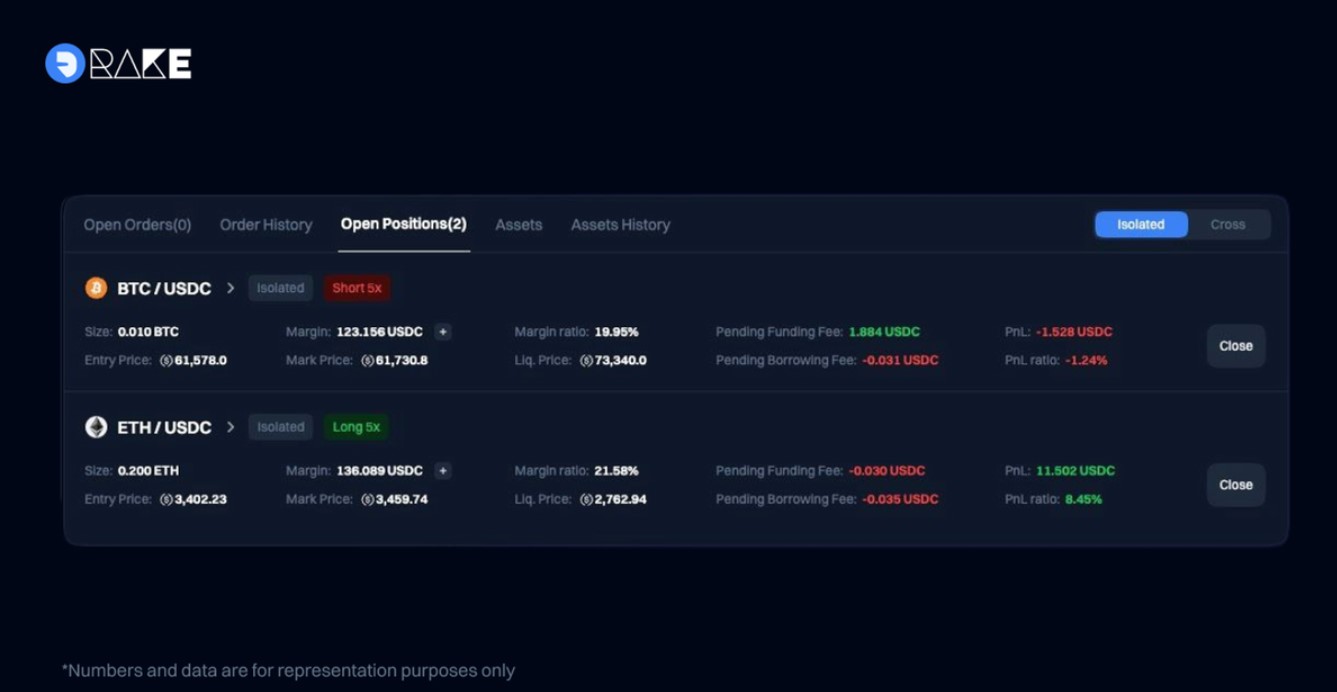
Perpetuals platforms top the list. High-frequency trading demands low latency; Monad's 0.4s blocks enable limit order books rivaling CEXs. Lending? Collateral liquidations fire in parallel, preventing cascading failures seen on slower chains.
I've modeled options strats on Monad sims - gamma scalping at 10k TPS feels like TradFi HFT without the CFTC breathing down your neck. Volatility is opportunity, and Monad amplifies it.








Getting started is straightforward. Public RPCs from Triton One handle mainnet traffic, docs mirror Ethereum's with parallel tweaks. Fork a repo, tweak gas limits, deploy. Community grants fuel early movers building on this high performance evm blockchain.
Mainnet benchmarks validate the 10000 TPS promise, drawing builders fleeing Ethereum's fees amid its $1,956.81 price hover. MonadBFT secures it all, pipelining votes for leader efficiency.
Challenges remain - validator economics need tuning as adoption surges, but early metrics show healthy decentralization. For DeFi, Monad isn't a sidechain; it's the EVM evolved. Builders deploying today ride the wave to Web3's high-volume future, where speed dictates survival.
MON tokens already circulate, paying for that blistering execution. Stake, trade, build - the infrastructure invites it all. With Ethereum at $1,956.81 and dipping -1.35%, capital flows to performers like Monad promise explosive ecosystems.



No comments yet. Be the first to share your thoughts!