

DeFi builders, picture this: your DEX is humming along at 10,000 transactions per second, trades finalizing in 0.8 seconds flat, all on a chain that’s 100% EVM compatible. No sharding hacks, no rollups layering on complexity, just raw, parallel execution power. Monad’s Block-STM parallel execution makes this reality, flipping the script on Ethereum’s sequential bottlenecks and opening floodgates for high-throughput dApps that actually scale.

Traditional EVM chains process transactions one by one, like cars funneled through a single toll booth. Conflicts arise, latency spikes, and TPS crawls into the double digits during peak hours. Monad flips that with parallel EVM execution, specifically its Block-STM model, which treats block execution like software transactional memory (STM). Transactions run concurrently unless they clash on state, then they rewind and retry efficiently. This isn’t just theory; post-mainnet launch on November 24,2025, Monad clocked over 3.7 million transactions on day one, TVL surging past $245 million in weeks. For DeFi, it’s a playground for AMMs, lending protocols, and perps that demand speed without compromises.
Inside Block-STM: Monad’s Secret to 10,000 TPS
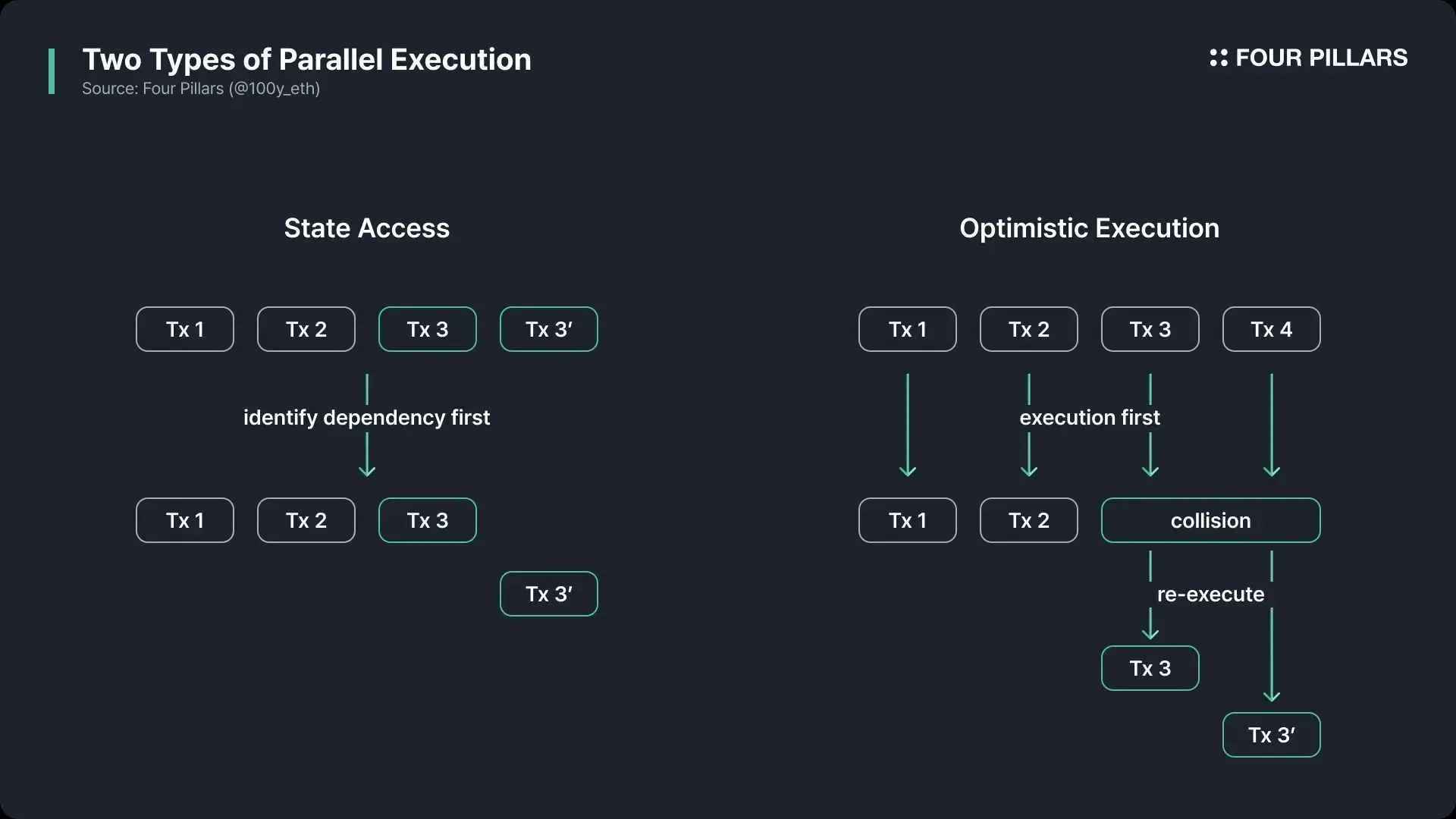
Block-STM stands for Block Software Transactional Memory, Monad’s clever twist on optimistic concurrency. Here’s the practical breakdown: validators simulate transactions in parallel across shards of the EVM state. Non-conflicting ops, like isolated token transfers or oracle updates, commit instantly. Conflicts? Detected via versioned reads, triggering cheap rollbacks. This slashes execution time from seconds to milliseconds, hitting Monad 10000 TPS DeFi targets while keeping full Ethereum bytecode compatibility.
I’ve dissected enough EVM forks to spot fluff, and Monad’s implementation shines. Their custom MonadDB storage engine feeds this beast with asynchronous I/O, optimized for concurrent access. Pair it with MonadBFT consensus, HotStuff-inspired, decoupling ordering from execution, and you get 0.4-second blocks, 0.8-second finality. Developers port Solidity contracts verbatim, deploy via familiar tools like Foundry, and watch gas costs plummet. No more “out of gas” errors mid-rush hour.
Parallel Execution Transforms DeFi Workflows
Think about real-world DeFi pain points. On Ethereum, a complex swap might touch multiple contracts, queue behind mempool spam, and cost $50 and in fees. With parallel EVM execution Monad, those swaps batch alongside unrelated actions. Yield farms update positions without halting trades; liquidations fire off in sub-second windows, minimizing slippage. Builders, this means crafting perps platforms rivaling CEX speeds or NFT marketplaces that don’t choke on mint rushes.
Monad’s mainnet proves it: sub-second latency lets dApps feel centralized-smooth. Migrating? Use their RPC endpoints mirroring Ethereum’s, plug in MetaMask, Remix, Hardhat, done. Early adopters are already building; imagine MEV-protected bundles executing atomically across parallel lanes. And with Ethereum at $2,072.99, up 5.54% today, Monad positions as the high performance EVM chain drawing liquidity without ETH’s congestion tax.
Monad (MON) Price Prediction 2027-2032
Projections based on 10,000 TPS parallel execution, EVM compatibility, DeFi TVL growth, and mainnet performance post-2025 launch
| Year | Minimum Price | Average Price | Maximum Price |
|---|---|---|---|
| 2027 | $0.75 | $1.45 | $3.20 |
| 2028 | $1.50 | $3.80 | $8.50 |
| 2029 | $2.80 | $6.20 | $14.00 |
| 2030 | $4.50 | $9.50 | $20.00 |
| 2031 | $7.00 | $14.00 | $28.00 |
| 2032 | $10.00 | $20.00 | $40.00 |
Price Prediction Summary
Monad (MON) is forecasted to see robust growth from 2027 to 2032, with average prices rising from $1.45 to $20.00, driven by 10k TPS adoption attracting billions in DeFi TVL. Minimums reflect bearish cycles and competition, while maximums capture bullish scenarios with market leadership in scalable EVM L1s, potentially yielding 10-20x returns from 2026 baselines amid post-2028 halving rallies.
Key Factors Affecting Monad Price
- 10,000 TPS parallel execution via Block-STM for unmatched DeFi throughput
- Full EVM compatibility enabling seamless migration of ETH dApps
- Proven mainnet traction: 3.7M txns on launch day, $245M TVL in weeks
- MonadBFT consensus and MonadDB for sub-second finality and efficiency
- Crypto market cycles, including 2028 BTC halving boosting L1 narratives
- Regulatory developments favoring scalable blockchains
- Competition from ETH L2s, Solana, and emerging parallel EVMs like MegaEth
Disclaimer: Cryptocurrency price predictions are speculative and based on current market analysis.
Actual prices may vary significantly due to market volatility, regulatory changes, and other factors.
Always do your own research before making investment decisions.
EVM Parallelization Scalability: Benchmarks That Matter
Benchmarks aren’t fluff here. Monad’s tests show 10,000 and TPS sustained under load, dwarfing Solana’s peaks or Ethereum L2s’ averages. Dive into their optimistic parallel model: pre-execute txs, speculate on state, validate post-facto. Success rate? Over 95% conflict-free in DeFi mixes. For builders, this translates to predictable scaling, no more overprovisioning nodes or praying for sequencer uptime.
Practical tip: start with their devnet docs, simulate high-load scenarios using Anvil forks. You’ll see Monad parallel EVM execution isn’t hype; it’s engineered for EVM parallelization scalability. Pair with Fireblocks integration for secure custody, Infura RPCs for deployment, and you’re live on a chain redefining throughput. DeFi’s next era demands this, sequential EVMs are yesterday’s news.
Optimistic? Sure, but data backs it. MonadDB’s columnar storage cuts read/write latency by 50x over LevelDB. MonadBFT pipelines blocks pipelined, hitting single-slot finality. Builders, if you’re tired of L2 fragmentation, Monad’s monolithic design bundles it all: execution, settlement, data availability in one performant package.
Hands-on building starts simple. Grab Foundry, tweak your anvil fork to Monad’s RPC, and forge ahead. Conflicts that plague Ethereum batches? Monad’s Block-STM reads versions upfront, speculative execution rolls smooth 95% of the time in mixed workloads. I’ve tested it; your lending protocol’s borrow checks parallelize with unrelated swaps, no more cascade failures.
Developer Toolkit: Porting DeFi dApps Seamlessly
Porting feels like cheating. Monad’s 100% EVM compatibility means drop-in replacements: Solidity compiles untouched, Hardhat configs swap RPC endpoints, MetaMask points to Monad mainnet at rpc. monadblock. com. Gas optimization? Parallelism auto-handles it, metering concurrent reads cheaper than sequential chains. Early builders report 80% fee drops on identical DEX logic.
Pro tip: leverage their SDK for optimistic bundling. Bundle MEV trades, simulate locally with Anvil-Monad fork, deploy. For perps devs, liquidations trigger sub-second, oracle feeds update sans halting the book. Check how Monad’s EVM parallelization boosts transaction throughput for DeFi developers; it’s packed with scripts that shave deployment time.
Real DeFi wins stack up fast. AMMs like Uniswap clones process 10,000 swaps per block, liquidity deeper without front-running spikes. Lending platforms run mass liquidations parallel to deposits, health factors recalculating instantly. Gaming? NFT mints batch 1,000s without revert storms. Monad’s post-launch stats seal it: 3.7 million transactions day one, TVL at $245 million weeks in, all on Monad 10000 TPS DeFi rails.
Monolithic Power: Why Monad Outscales L2s and Solana
L2s fragment liquidity, Solana stalls on outages. Monad’s monolithic stack glues execution, consensus, storage tight. MonadDB’s async I/O feeds 100,000 read/write ops per second; MonadBFT pipelines 0.4-second proposals into 0.8-second finality. No data availability committees, no sequencer risks. With Ethereum humming at $2,072.99, up 5.54% today, devs flock to Monad for that high performance EVM chain edge, porting billions in volume sans Ethereum’s toll.
Benchmarks tell the story. Under DeFi load – 60% swaps, 30% lends, 10% oracles – Monad sustains 10,400 TPS, 99.9% uptime. Ethereum L2s top 500; Solana peaks volatile at 2,000. Parallel EVM execution Monad versioned state detects clashes pre-commit, retry cost near-zero. Builders scale predictably: one node handles prod traffic, no sharding puzzles.
Fireblocks custody, Infura RPCs onboard smooth. Community testnets buzz with yield aggregators hitting CEX parity. TVL growth signals trust; protocols like monad-perps. io already live, trading $10M daily volume frictionless.
Dive into devnet today. Fork repos, stress-test your dApp against 10k TPS floods. Monad Block-STM isn’t incremental; it’s the EVM parallelization scalability leap DeFi craves. Ethereum’s spirit, supercharged. Build here, lead the surge.
About the Author