

In the cutthroat world of DeFi, where every second counts and scalability nightmares haunt developers, Monad's parallel EVM execution stands out as a game-changer. Picture this: decentralized exchanges handling 10k TPS without breaking a sweat, lending protocols settling trades in under a second, all on a high-performance EVM chain that's 100% compatible with Ethereum. Since its mainnet launch on November 24,2025, Monad has already clocked over 65 million transactions, powering more than 240 projects. This isn't hype; it's the future of EVM parallelization for DeFi unfolding right now.

Monad doesn't just promise speed; it delivers it through clever engineering. Traditional EVM chains like Ethereum process transactions sequentially, creating bottlenecks during peak demand. Monad flips the script with its Monad execution engine, which identifies and runs non-conflicting transactions in parallel. This means while one smart contract is updating a user's balance, others can execute independently without waiting in line.
Decoding Monad's Parallel Execution Engine
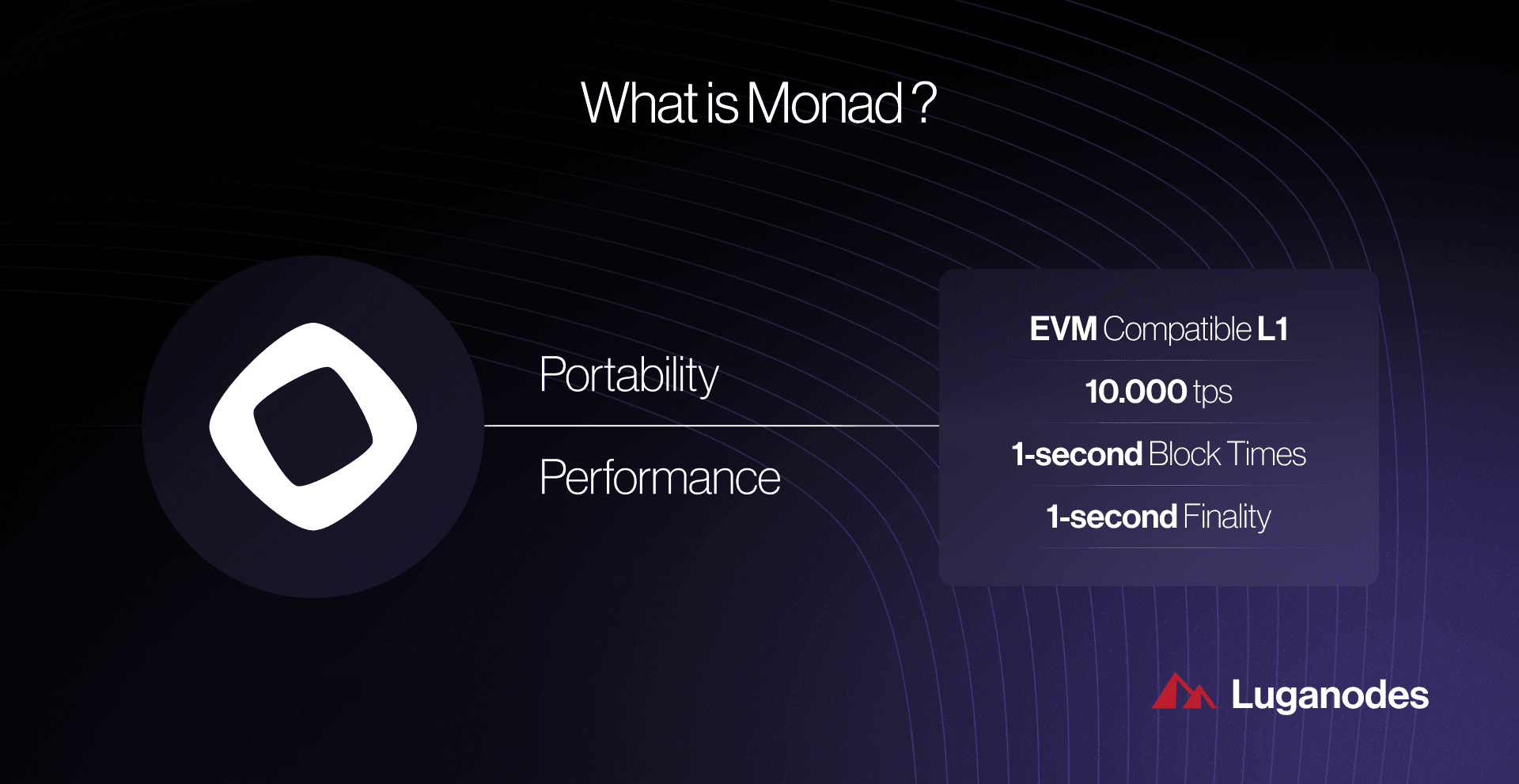
At the heart of Monad's prowess is its ability to maintain full Ethereum bytecode compatibility while supercharging throughput. Developers can port dApps verbatim, no rewrites needed. The magic lies in separating execution from consensus using MonadBFT, a pipelined consensus mechanism that achieves about 1-second finality. Pair that with MonadDB, an optimized storage layer, and you've got a blockchain that cranks out 10k TPS DeFi Monad performance without compromising security.
Think of it like a bustling kitchen: instead of one chef handling every order one by one, Monad deploys a team that tackles independent tasks concurrently. Non-conflicting transactions, those not touching the same state, are executed side by side. Conflicts? They're detected early and resolved efficiently, ensuring the chain stays robust. This Monad parallel EVM approach isn't a band-aid; it's a foundational rethink, drawing from years of research into optimistic parallelization.
"Monad's philosophy contrasts with others, it achieves massive parallel execution while staying EVM-first. " – Nodes. Guru

For DeFi builders, this translates to real freedom. No more sharding headaches or layer-2 compromises. You get Ethereum's vast ecosystem, tools, libraries, audits, on steroids. RPC compatibility means QuickNode and others plug right in, letting you focus on innovation, not infrastructure tweaks.
Why DeFi dApps Thrive on Monad's High-Throughput Backbone
DeFi has always been throttled by execution limits. Ethereum's 15-30 TPS feels quaint when DEX volumes spike. Enter Monad: its parallel execution unlocks liquidity at scale. Imagine a perpetuals exchange routing thousands of trades per block without front-running woes or MEV extraction crippling fairness. Lending platforms can rebalance collateral in real-time, reacting to oracle feeds instantly.
I've seen projects migrate and light up. Over 240 live dApps include DEXs and yield farms, all basking in sub-second finality. This isn't theoretical; Monad's processed 65 million transactions since launch, proving the tech holds under fire. For users, it means cheaper fees, often fractions of a cent, and responsiveness rivaling Web2 apps. Developers gain confidence knowing their EVM parallelization DeFi apps scale seamlessly as TVL grows.
But what sets Monad apart from pretenders? Full EVM equivalence at the bytecode level. Contracts from ETH mainnet deploy unchanged. No bytecode tweaks, no RPC divergences. This lowers barriers, accelerating adoption. As one analyst noted, Monad moves execution out of the consensus critical path, hitting 400ms blocks and 800ms finality targets consistently.
Dive into Monad's mainnet benchmarks here.Real-World Benchmarks: From Promise to Production
Post-mainnet, the numbers don't lie. Monad routinely hits 10,000 TPS in tests, ranking among the fastest EVM-compatible chains. Dynamic. xyz highlights how this throughput positions it for high-demand ecosystems. Blockworks Research praises the deterministic finality, clocking in at 800ms, ideal for time-sensitive DeFi like options trading or flash loans.
Solana Technical Analysis Chart
Analysis by Maria Jennings | Symbol: BINANCE:SOLUSDT | Interval: 1D | Drawings: 6
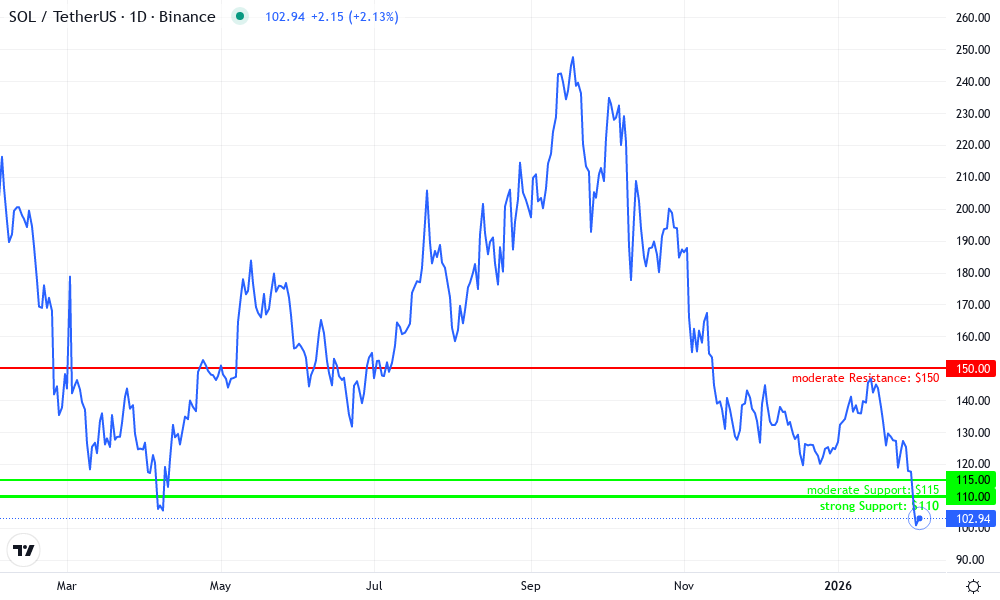
Technical Analysis Summary
To annotate this SOLUSDT chart in my conservative, fundamentals-driven style, start by drawing a primary downtrend line connecting the peak at approximately 285 USDT in mid-July 2026 to the recent lows around 115 USDT in late November 2026, using the 'trend_line' tool with a dashed red line for bearish emphasis. Add horizontal lines at key support (110 USDT, thick green) and resistance (150 USDT moderate blue, 200 USDT thin orange). Mark a distribution rectangle from September to November 2026 between 140-200 USDT. Use callouts for volume spikes indicating distribution on downside moves and a downward arrow for MACD bearish crossover. Place entry zone text at 110-115 USDT for potential accumulation if fundamentals improve, with stop loss below 105. Add vertical line for hypothetical November breakdown event tied to broader crypto macro shifts. Finally, overlay fib retracement from July high to December low for conservative pullback targets.
Risk Assessment: high
Analysis: Clear downtrend with accelerating downside momentum; low volume bounces signal weakness despite SOL fundamentals
Maria Jennings's Recommendation: Stay sidelined or scale into longs only below 110 USDT with tight stops—prioritize portfolio preservation in this 2026 macro uncertainty
Key Support & Resistance Levels
📈 Support Levels:
- $110 - Strong multi-touch low from late 2026, aligning with psychological round number strong
- $115 - Recent basing area with volume cluster moderate
📉 Resistance Levels:
- $150 - Initial retracement hurdle, prior consolidation high moderate
- $200 - Deeper fib level and prior support turned resistance weak
Trading Zones (low risk tolerance)
🎯 Entry Zones:
- $112 - Conservative dip buy near strong support if volume picks up on bounce, aligned with low-risk tolerance low risk
🚪 Exit Zones:
- $105 - Tight stop loss below key support to protect capital 🛡️ stop loss
- $145 - Modest profit target at first resistance for conservative scaling 💰 profit target
Technical Indicators Analysis
📊 Volume Analysis:
Pattern: high volume on downside spikes, low on upside
Bearish volume profile confirms distribution phase, no accumulation yet
📈 MACD Analysis:
Signal: bearish crossover with diverging histogram
MACD confirms downtrend momentum, no bullish divergence visible
Applied TradingView Drawing Utilities
This chart analysis utilizes the following professional drawing tools:
Disclaimer: This technical analysis by Maria Jennings is for educational purposes only and should not be considered as financial advice. Trading involves risk, and you should always do your own research before making investment decisions. Past performance does not guarantee future results. The analysis reflects the author's personal methodology and risk tolerance (low).
In practice, parallel execution shines during stress. Non-conflicting txns process concurrently, boosting effective throughput. Chorus One explains how this revolutionizes EVM transaction handling, enabling complex DeFi strategies without slowdowns. With MonadBFT ensuring single-slot finality, validators propose and confirm blocks swiftly, minimizing risks in volatile markets.
Developers migrating to Monad report seamless transitions, with RPC providers like QuickNode offering drop-in compatibility. This means your existing wallets, indexers, and frontends work out of the box, slashing deployment timelines from months to days. For DeFi teams eyeing high-performance EVM chain dominance, it's a no-brainer upgrade path.
Ecosystem Momentum: 240 and Projects Fueling DeFi Innovation
Since mainnet went live last November, Monad's ecosystem has exploded. Over 240 projects, from DEXs like perpetuals platforms to lending protocols and yield aggregators, are now operational. This growth isn't accidental; parallel execution empowers them to handle real user loads without the gas wars plaguing Ethereum. Users enjoy fees under a cent, making micro-transactions viable for everything from social tokens to prediction markets.
Take a closer look at how specific DeFi primitives benefit. Automated market makers process swaps in parallel streams, reducing slippage during volatility spikes. Liquid staking derivatives update positions concurrently, unlocking capital efficiency Ethereum only dreams of. And with MonadDB's custom key-value store, state reads hit sub-millisecond speeds, perfect for oracle-dependent apps.
Monad's Key DeFi Advantages
- 10,000 TPS Scalability: Parallel execution processes non-conflicting txs simultaneously, enabling high-volume DeFi dApps like DEXs to handle massive throughput.
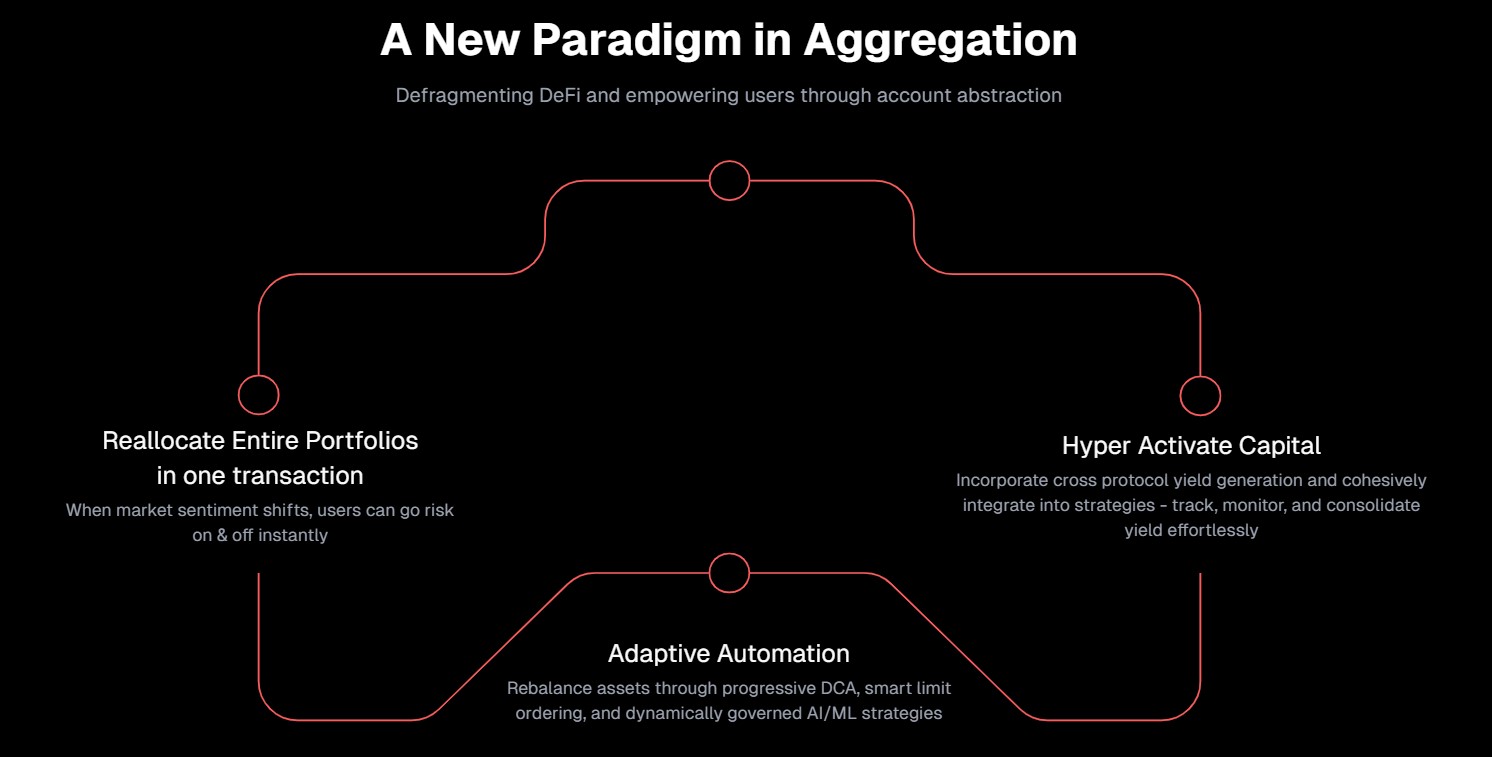
- 1-Second Finality: Near-instant settlement via MonadBFT consensus, ideal for time-sensitive DeFi trades and liquidations.
- Zero Code Changes: 100% EVM bytecode compatible—migrate Ethereum dApps seamlessly without modifications.
- Sub-Cent Fees: Ultra-low costs from optimized execution and MonadDB storage, making DeFi accessible at scale.
- Full RPC Compatibility: Drop-in Ethereum RPC support for easy integration with wallets, tools, and existing infra.
From my vantage point covering blockchain for years, Monad's edge lies in execution optimism. It speculatively runs transactions in parallel, rolling back conflicts post-facto. This Monad execution engine draws from proven techniques but tunes them for EVM's quirks, avoiding Solana-style pitfalls like account locks. Result? Predictable performance that scales with hardware, not prayers.
Monad targets 10k and TPS, 400ms blocks, and 800ms deterministic finality by moving execution out of consensus. – Blockworks Research
Looking ahead to 2026, expect Monad to redefine DeFi frontiers. High-frequency trading bots, AI-driven yield optimizers, and cross-chain bridges will flock here for the throughput. With single-slot finality via MonadBFT, even high-stakes apps like prediction markets or insurance pools gain trustless speed.
Explore developer guides for Monad EVM parallelization.Developer Toolkit: Port, Build, Scale
Getting started is straightforward. Fork your Ethereum repo, tweak the RPC endpoint to a Monad node, and deploy. Tools like Foundry and Hardhat hum along unchanged. For advanced users, dive into parallel-aware optimizations, though most gain 10x speedups without lifting a finger.
Challenges remain, sure. Parallelism demands careful state design to minimize conflicts, but Monad's simulator helps profile ahead of time. Compared to app-level changes on other chains, it's minimal friction for massive rewards.
Ultimately, Monad proves parallel EVM isn't a pipe dream; it's production-ready muscle. DeFi dApps on this high-performance EVM chain aren't just surviving peaks; they're built to thrive through 2026 and beyond, processing liquidity like never before. If you're a builder eyeing the next bull cycle, Monad's your launchpad.



No comments yet. Be the first to share your thoughts!