Monad parallel EVM architecture explained
Monad resolves the throughput bottleneck inherent in sequential EVM execution by processing transactions in parallel. Traditional EVM chains process blocks linearly, where each transaction must wait for the previous one to complete, regardless of whether the transactions interact with the same state. Monad’s architecture identifies independent transactions within a block and executes them simultaneously, mimicking the speed of high-performance centralized systems while maintaining EVM compatibility.
This parallel execution engine allows Monad to achieve 10,000 transactions per second (TPS) with 0.6-second finality and 0.3-second block times. By decoupling execution from ordering, the network maximizes hardware utilization. Developers can deploy existing Solidity smart contracts without modification, as the underlying execution environment remains identical to Ethereum’s, but the throughput scales significantly beyond standard Layer 1 constraints.
The technical advantage lies in the separation of consensus and execution. While consensus layers still order transactions to ensure determinism, the execution layer processes them in parallel batches. This design prevents the serialization delays that typically throttle EVM chains during high network congestion. The result is a scalable infrastructure capable of supporting high-frequency DeFi applications and complex on-chain games that require immediate state updates.
Performance metrics and finality speeds
Monad is engineered to solve the throughput bottleneck inherent in sequential EVM execution. By utilizing parallel processing for transaction execution, the network decouples computational intensity from linear block production. This architecture allows Monad to maintain complete EVM compatibility while achieving performance metrics that rival non-EVM high-throughput chains. The result is a deterministic environment where high-frequency DeFi interactions, such as complex swaps or liquidations, occur without the congestion typical of legacy Layer-1 networks.
The network targets a theoretical maximum of 10,000 transactions per second (TPS). This capacity is supported by 0.3-second block times and an optimistic finality window of approximately 0.6 to 0.8 seconds. For context, standard Ethereum block times hover around 12 seconds with significantly lower throughput, while Solana achieves high speeds but operates on a non-EVM virtual machine. Monad’s metrics place it in a unique position, offering EVM-native smart contracts with performance characteristics that enable institutional-grade DeFi applications.
The following comparison highlights how Monad’s technical specifications stack up against established Layer-1 networks. Understanding these differences is essential for developers and investors assessing the viability of parallel execution models in the current market.
| Network | Target TPS | Finality Time | EVM Compatible |
|---|---|---|---|
| Monad | 10,000 | ~0.6s | Yes |
| Ethereum | ~30 | ~15s | Yes |
| Solana | ~65,000 | ~1.5s | No |
These metrics are derived from official technical documentation and infrastructure provider data. While mainnet conditions may vary, the architectural design ensures that performance scales with hardware improvements without requiring protocol-level sharding or complex rollup integrations.
Parallel execution and conflict resolution
Monad achieves its target throughput of 10,000 TPS and 0.6-second finality by executing transactions in parallel rather than sequentially. This architecture requires a robust mechanism to handle state conflicts, ensuring that the deterministic nature of the EVM is preserved even when multiple transactions attempt to modify the same account simultaneously.
The system employs a two-phase execution model. During the speculative phase, transactions are executed concurrently without waiting for consensus. Monad uses a read-write set validation technique to detect conflicts. If two transactions touch the same storage slot, the protocol identifies the conflict early. The BFT consensus layer then orders these transactions deterministically, allowing the state machine to apply them in a conflict-free sequence.
This approach eliminates the bottleneck of linear processing while maintaining full EVM compatibility. Developers can deploy existing Solidity contracts without modification, as the underlying conflict resolution logic is handled at the protocol level. The result is a scalable environment where high-frequency DeFi operations, such as complex swaps or liquidity rebalancing, do not congest the network.
The efficiency of this model is evident in the network’s ability to process high volumes of concurrent requests. By decoupling execution from ordering, Monad minimizes the wait time for transaction confirmation. This structural advantage positions it as a viable infrastructure layer for high-stakes financial applications that demand both speed and reliability.
DeFi implications for 2026
Monad’s architectural shift from sequential to parallel execution redefines the latency constraints for decentralized applications. By targeting 10,000 transactions per second (TPS) with 0.4-second block times and approximately 0.8-second optimistic finality, the network removes the friction that typically degrades user experience in high-throughput environments [1]. This performance profile enables use cases that were previously economically unviable on congested Layer-1 chains.
The most immediate beneficiary is high-frequency decentralized trading. Parallel processing allows multiple order book matches to occur simultaneously rather than waiting for a single queue. This capability supports complex liquidity aggregation and atomic arbitrage strategies that require near-instantaneous settlement. Projects leveraging Infura’s node infrastructure for Monad can execute these operations with minimal slippage, mirroring the speed of centralized exchanges while maintaining non-custodial security.
Beyond trading, the low-latency finality unlocks new models for gaming and socialFi. Traditional blockchains often struggle with the rapid state changes required by multiplayer games or real-time social interactions. Monad’s ability to process millions of Web2-style interactions—such as likes, shares, and in-game asset transfers—parallel to each other creates a seamless bridge between traditional digital engagement and Web3 ownership. This efficiency ensures that user activity does not bottleneck the network, preserving consistent performance during peak demand.
| Feature | Monad | Standard EVM |
|---|---|---|
| Throughput | ~10,000 TPS | 15-30 TPS |
| Block Time | 0.4s | 12s+ |
| Finality | ~0.8s | 12-15 min |
This performance gap narrows the competitive advantage of centralized platforms, allowing DeFi protocols to capture market share in sectors that demand speed. As the ecosystem matures, developers will prioritize applications that leverage these technical specifications, shifting the focus from mere scalability to functional depth in real-time financial and social services.
Testnet Updates and Ecosystem Growth
Monad’s architecture targets 10,000 TPS with 0.6-second finality, a performance tier that redefines the parallel EVM standard. As the network moves closer to mainnet, the focus has shifted from theoretical benchmarks to tangible ecosystem integration. The infrastructure is no longer just a promise; it is becoming the backbone for the next wave of decentralized finance.
The development timeline reflects a rigorous approach to stability. Early testnet phases have allowed builders to stress-test parallel execution engines under real load, ensuring that the 0.3-second block times hold up during high-throughput events. This iterative process minimizes the risk of post-launch fragmentation, a common pitfall for high-performance L1s. Official documentation from monad.xyz confirms that the network is prioritizing deterministic state transitions to maintain security without sacrificing speed.
Ecosystem partners are already aligning their roadmaps with Monad’s release schedule. Infrastructure providers like Infura are preparing specialized node services, while liquidity aggregators such as 0x are optimizing their routing protocols for parallel transaction execution. This early integration ensures that when the mainnet launches, the DeFi primitives required for a robust financial layer are already in place.
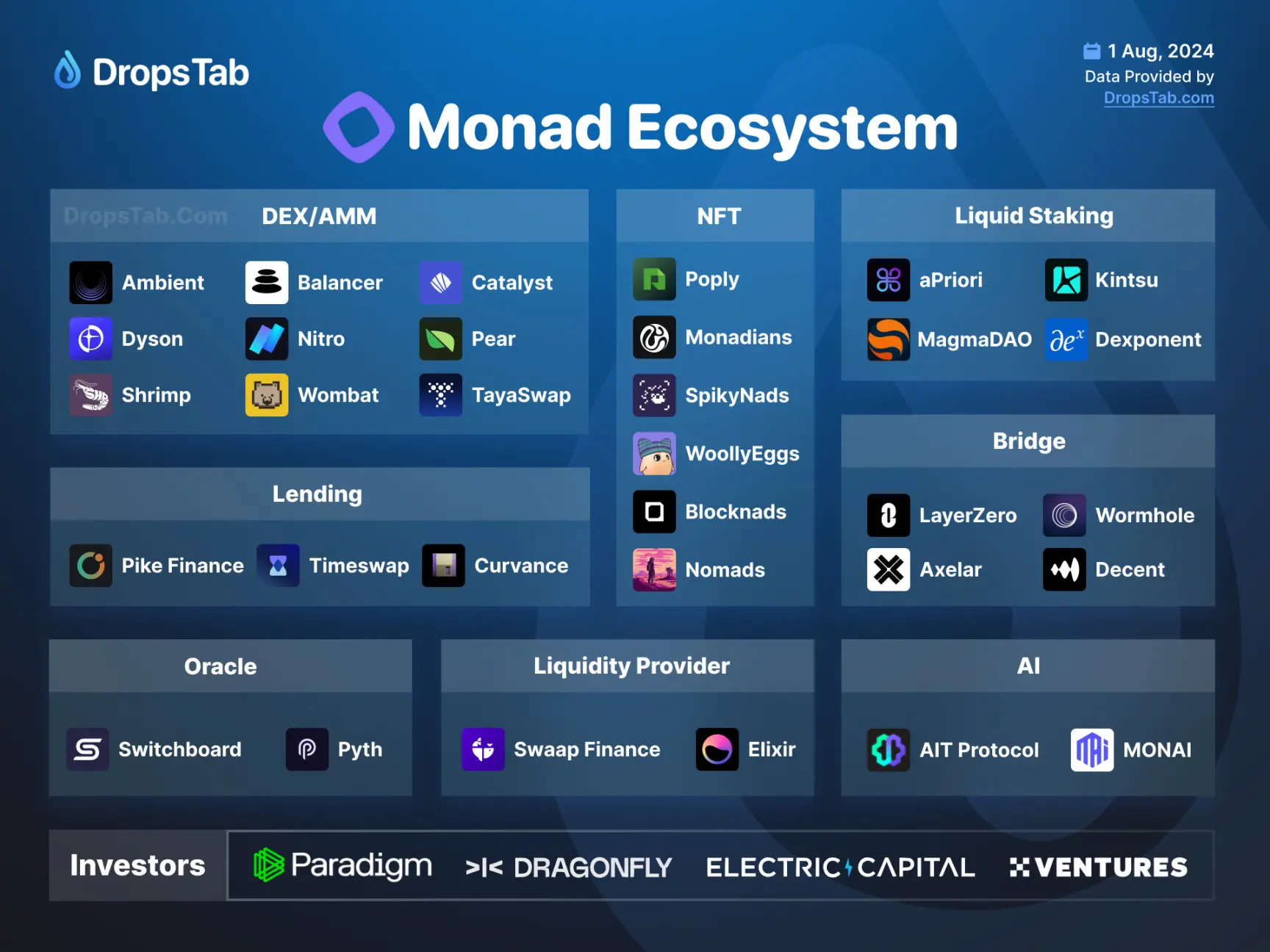
The convergence of technical readiness and partner commitment signals a mature approach to scalability. Rather than launching into an empty void, Monad is building a synchronized ecosystem where liquidity and infrastructure can migrate seamlessly. This strategy reduces the cold-start problem that has hindered previous high-performance chains, positioning Monad as a critical component in the 2026 DeFi landscape.
-
Verify node compatibility with parallel execution engines
-
Integrate with pre-approved liquidity providers like 0x
-
Audit smart contracts for state-machine consistency
-
Monitor testnet gas fee models for production readiness
No comments yet. Be the first to share your thoughts!