Monad mainnet performance metrics
Monad launched its public mainnet in November 2025, marking a significant shift in the Ethereum Virtual Machine (EVM) landscape. The network is engineered for high throughput, aiming to resolve the scalability trilemma that has long constrained legacy EVM chains. By leveraging parallel execution and optimized state management, Monad targets 10,000 transactions per second (TPS) with 0.6-second finality [[src-serp-2]].
This performance baseline distinguishes Monad from existing Layer 1s and Layer 2s. While most EVM-compatible chains struggle with congestion during peak usage, Monad’s architecture allows for 0.3-second block times. This speed is critical for applications requiring real-time responsiveness, such as decentralized finance (DeFi) protocols and high-frequency trading platforms. The network’s design prioritizes not just raw speed, but also deterministic finality, ensuring that transactions are irreversible almost instantly.
To understand how Monad’s price action reflects these technical fundamentals, you can monitor its current market data and chart patterns below.
How Monad Parallelizes the EVM
Most blockchains process transactions like a single-lane toll booth. Even if you have multiple lanes, the system checks each car one by one to ensure no two drivers try to use the same exit simultaneously. Ethereum follows this sequential model. Monad changes the infrastructure by treating transactions like independent data packets that can be processed side-by-side. This approach, known as parallel execution, allows Monad to handle thousands of transactions at once without breaking the rules that make Ethereum apps work.
The core challenge in parallelizing the EVM is ensuring consistency. If two transactions try to spend the same token at the exact same moment, the system must decide which one goes first. Monad uses a pre-execution analysis phase to sort out these conflicts before they happen. It groups independent transactions—those that don’t touch the same data—into batches. These batches are then executed in parallel across multiple cores. Because the system knows ahead of time which transactions conflict, it can reorder or reject them instantly, keeping the chain fast and secure.
This architecture delivers 10,000 transactions per second (TPS) with 0.6-second finality. For developers, this means your smart contracts run exactly as they do on Ethereum, but with significantly lower latency and higher throughput. The parallel engine handles the heavy lifting, so you don’t need to rewrite your code or switch to a non-EVM chain.
The result is a blockchain that feels like Ethereum but performs like a high-frequency trading platform. This performance gain is critical for applications that require real-time interaction, such as decentralized exchanges or complex DeFi strategies. By removing the sequential bottleneck, Monad sets a new standard for what the EVM can achieve.
MON token price prediction 2026
Use this section to make the Monad Blockchain decision easier to compare in real life, not just on paper. Start with the reader's actual constraint, then separate must-have requirements from details that are merely nice to have. A practical choice should survive normal use, maintenance, timing, and budget. If a recommendation only works in an ideal situation, call that out plainly and give the reader a fallback path.
The simplest way to use this section is to write down the must-have criteria first, then compare each option against those criteria before weighing nice-to-have features.
Ecosystem projects and adoption signals
Use this section to make the Monad Blockchain decision easier to compare in real life, not just on paper. Start with the reader's actual constraint, then separate must-have requirements from details that are merely nice to have. A practical choice should survive normal use, maintenance, timing, and budget. If a recommendation only works in an ideal situation, call that out plainly and give the reader a fallback path.
The simplest way to use this section is to write down the must-have criteria first, then compare each option against those criteria before weighing nice-to-have features.
Monad’s Risks and Competitive Landscape
Monad faces a high fully diluted valuation (FDV) relative to its current market cap. This structure creates significant selling pressure as early investor tokens unlock. Investors must weigh the token’s long-term utility against the risk of supply inflation outpacing ecosystem adoption.
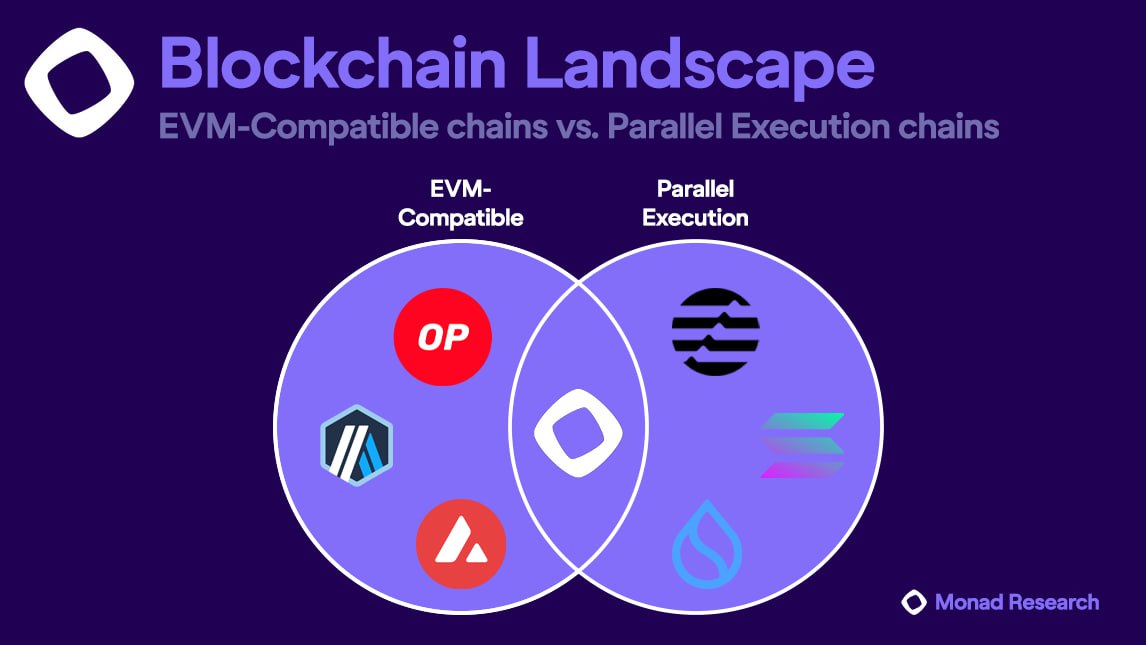
The layer-1 space is intensely crowded. Monad competes directly with established high-performance chains like Solana, Sui, and Aptos. These networks already possess deep liquidity, large developer communities, and proven track records. Monad must demonstrate a clear technical or economic advantage to capture market share from these incumbents.
Regulatory uncertainty remains a persistent headwind for all layer-1 protocols. As U.S. and global regulators clarify how they classify utility tokens, Monad’s compliance posture could impact its accessibility to institutional capital and mainstream users. Monitoring official regulatory developments is essential for assessing long-term viability.
Helpful gear
Use these product recommendations as a starting point, then choose the size, material, and price point that fit how you actually use the gear.


As an Amazon Associate, we may earn from qualifying purchases.
No comments yet. Be the first to share your thoughts!