
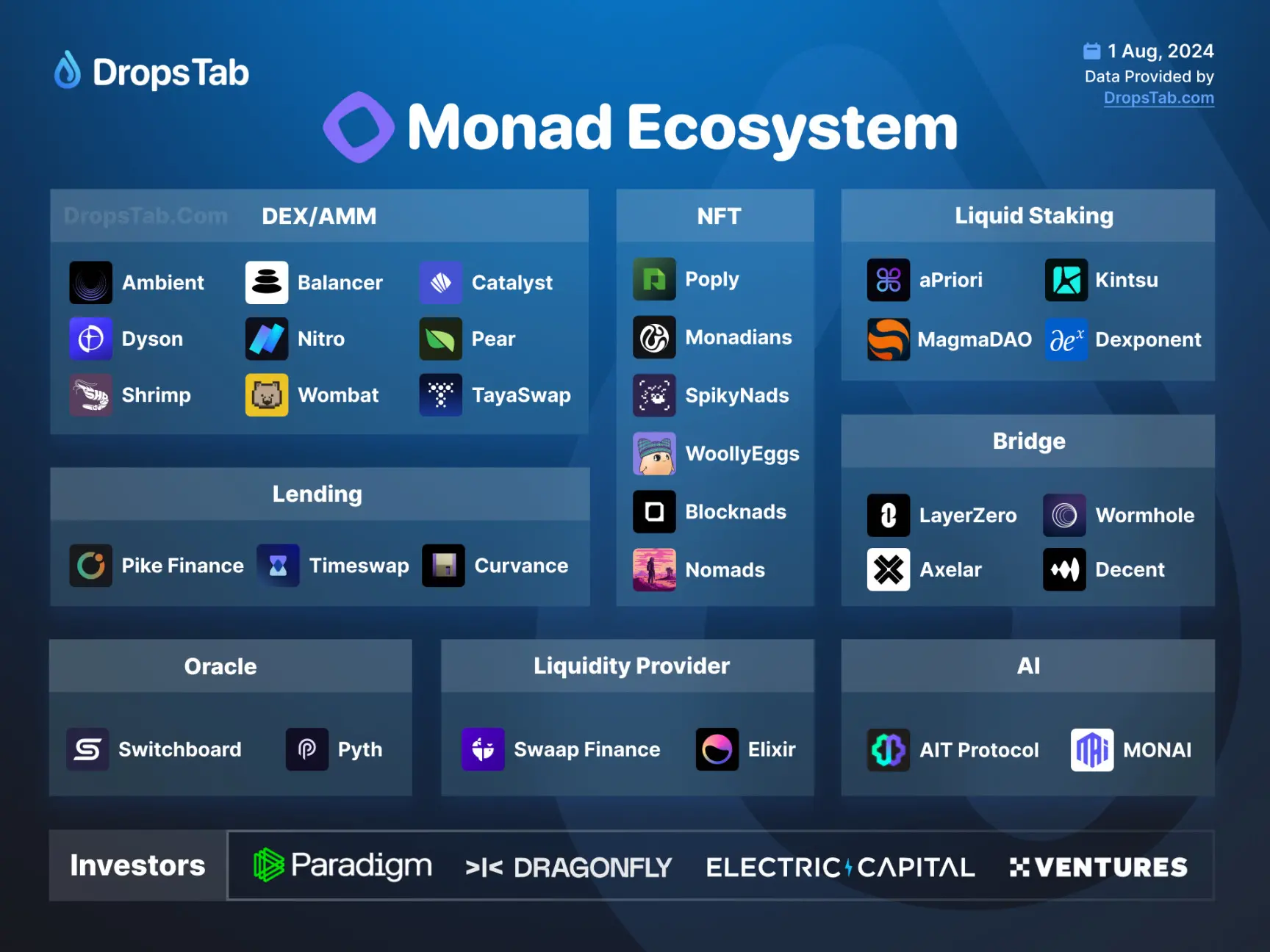
Monad's 2026 Performance Upgrade
Monad established its position in 2026 as a high-throughput EVM chain, anchored by a significant technical upgrade implemented in early June. This update increased network speed, reinforcing the protocol's core value proposition of processing 10,000 transactions per second (TPS) with 0.8-second finality and 0.4-second block times [src-serp-1]. By prioritizing parallel execution, Monad allows developers to build beyond the traditional limits of single-threaded EVM environments.
The June 2026 upgrade was not merely a theoretical milestone but a practical enhancement to network throughput. According to community updates, the change directly increased the speed at which blocks are produced and finalized [src-serp-4]. For users and developers, this means lower latency and higher capacity for decentralized applications (dApps) without sacrificing EVM compatibility. The network's ability to handle such volume makes it a relevant contender in the landscape of high-performance blockchains.
Visualizing the market's response to these technical capabilities provides context for Monad's current standing. The following chart tracks the price action of MON/USD, reflecting investor sentiment relative to the network's ongoing performance improvements.
Parallel EVM execution mechanics
Monad achieves 10,000 transactions per second and sub-second finality by fundamentally rethinking how the Ethereum Virtual Machine processes data. Rather than forcing every transaction through a single-threaded sequential bottleneck, Monad implements a parallel execution engine that allows independent operations to occur simultaneously. This architectural shift retains full EVM compatibility, meaning existing Solidity smart contracts and developer tooling function without modification, while delivering performance that scales linearly with hardware improvements.
The core of this system is parallel block processing. In traditional EVM chains, transactions are executed one after another in a strict order. Monad decouples transaction execution from ordering. It first executes transactions in parallel to determine their outcomes, and only then applies the final ordering to the state. This approach ensures correctness under high load, as the system can identify and resolve conflicts—such as two transactions attempting to modify the same account state—after execution rather than before. This method allows the network to process a massive volume of transactions concurrently.
To support this throughput, Monad utilizes a specialized block time of 0.4 seconds, significantly faster than Ethereum's current average. This rapid block production, combined with the parallel execution layer, reduces latency for DeFi applications and high-frequency trading platforms. The network is designed to handle the computational intensity of parallel processing by optimizing memory access and state management, ensuring that the benefits of speed do not come at the cost of decentralization or security. For technical developers, this means the ability to build complex, state-heavy applications that would previously be prohibitively expensive or slow on single-threaded EVM chains.
DeFi liquidity and ecosystem growth
Use this section to make the Monad Blockchain decision easier to compare in real life, not just on paper. Start with the reader's actual constraint, then separate must-have requirements from details that are merely nice to have. A practical choice should survive normal use, maintenance, timing, and budget. If a recommendation only works in an ideal situation, call that out plainly and give the reader a fallback path.
The simplest way to use this section is to write down the must-have criteria first, then compare each option against those criteria before weighing nice-to-have features.
2026 Market Outlook and Exchange Availability
The 2026 market landscape for Monad hinges on the successful absorption of post-airdrop supply and the expansion of its parallel execution ecosystem. Current technical analysis suggests a moderate upward trajectory, with some forecasts indicating a potential price target of $0.0228 by mid-2026. However, the Fear & Greed Index currently reflects a score of 23, signaling a market environment dominated by caution rather than speculative euphoria. This sentiment underscores the importance of monitoring real usage metrics over short-term price speculation as the network matures.
For investors and developers, exchange availability is a critical component of liquidity and accessibility. Monad is actively pursuing listings on major centralized exchanges to ensure deep order books and better trading experiences for users. The project has also announced retroactive drops for active traders, a move designed to incentivize early adoption and sustain trading volume during the pre-mainnet and early mainnet phases. These initiatives aim to stabilize the token's market presence before broader institutional adoption.
To provide a clearer view of Monad's competitive positioning, the following table compares its key performance metrics against other high-performance EVM competitors. This comparison highlights the theoretical advantages of parallel execution, though actual throughput and finality times will depend on real-world network conditions and validator distribution.
| Metric | Monad | Competitor A | Competitor B |
|---|---|---|---|
| Execution Model | Parallel EVM | Sequential EVM | Parallel EVM |
| Theoretical TPS | 10,000+ | 3,000 | 10,000 |
| Finality | < 2s | 12s | < 2s |
While price predictions offer a directional guide, they should be treated as estimates rather than guarantees. The regulatory environment for decentralized finance continues to evolve, and Monad's compliance strategy will play a significant role in its long-term viability. Investors should remain vigilant about security audits and the network's ability to maintain decentralization as it scales.
Common questions about Monad 2026
Investors often look for concrete price targets and exchange availability before entering the Monad ecosystem. Below are answers to the most frequent questions regarding MONAD's market trajectory and accessibility.
No comments yet. Be the first to share your thoughts!