How Monad Parallel EVM Architecture Works
Monad is a high-performance Layer-1 blockchain designed to solve the throughput limits of traditional Ethereum Virtual Machine (EVM) networks. Unlike rollups that batch transactions off-chain, Monad operates as a monolithic chain with its own validator set, consensus mechanism, and state. This architecture allows it to process transactions in parallel, achieving 10,000 transactions per second (TPS) with 0.8-second finality and 0.4-second block times.
The core differentiator is Monad parallel EVM execution. In standard EVM chains, transactions are processed sequentially, one after another, creating a bottleneck. Monad’s parallel execution engine analyzes transactions within a block to identify those that do not share common state dependencies. These independent transactions are then executed simultaneously across multiple cores. Crucially, transactions and blocks remain linearly ordered, preserving the deterministic execution model that developers expect from the EVM.
This approach allows Monad to maintain 100% EVM compatibility. Developers can port existing smart contracts and dApps from Ethereum without code changes, using familiar toolchains and the standard JSON-RPC protocol. The network does not post data to Ethereum, operating as an independent L1 that leverages parallel processing to deliver institutional-grade performance.
How the Monad parallel EVM processes transactions
Most blockchains process transactions like a single-lane toll booth: one car at a time, regardless of the destination. Monad parallel EVM removes that bottleneck by re-engineering the EVM to process independent transactions simultaneously. This architecture allows the network to handle significantly higher throughput without sacrificing the compatibility that makes Ethereum ecosystems so robust.
The core innovation lies in dependency analysis. Before a block is committed, Monad’s execution layer scans the transaction list to identify operations that interact with the same accounts or smart contracts. Transactions that touch different parts of the state—such as two users swapping tokens on separate pairs—can be executed in parallel. Those that share state dependencies remain serialized. This ensures that while execution is parallel, the final state remains deterministic and linearly ordered, preserving the integrity of the blockchain ledger.
This approach targets approximately 10,000 transactions per second. By keeping the EVM interface identical, developers can deploy existing Solidity contracts without modification, while users benefit from the speed of a Layer-1 chain rather than the latency of a rollup. The result is a system that scales execution horizontally while maintaining the vertical consistency required for secure financial applications.
Impact on high throughput DeFi
The Monad parallel EVM architecture shifts the baseline for decentralized finance performance. By offering 10,000 TPS and 0.8-second finality, it moves beyond the theoretical promise of scalability into practical execution. This throughput enables use cases that were previously bottlenecked by Ethereum’s sequential processing model, particularly for high-frequency trading and complex liquidity aggregation.
For high-frequency trading, speed is the primary asset. Traditional EVMs struggle with the latency required for arbitrage strategies that span multiple blocks. Monad’s rapid block production allows traders to react to market movements in near real-time. This reduces the risk of front-running and slippage, making the chain a viable home for sophisticated trading bots that require deterministic execution windows.
Complex aggregators also benefit significantly from this parallel processing. When a user swaps tokens across multiple decentralized exchanges, the aggregator must query various liquidity pools simultaneously. On a sequential chain, these queries happen one after another, increasing latency. Monad’s parallel EVM allows these queries to execute concurrently, delivering faster swap routes and better prices for users without compromising security.
Monad vs. Ethereum L1 Performance
The following comparison highlights the technical advantages of Monad’s parallel EVM against the standard Ethereum Layer 1.
| Metric | Monad | Ethereum L1 |
|---|---|---|
| Throughput | 10,000 TPS | ~15-30 TPS |
| Block Time | 0.4 seconds | ~12 seconds |
| Finality | 0.8 seconds | ~12+ minutes |
| Execution Model | Parallel EVM | Sequential EVM |
These specs are not just numbers; they represent a fundamental change in how DeFi applications can be built. Developers no longer need to rely on complex Layer 2 rollups to achieve acceptable transaction speeds. Instead, they can build monolithic, high-performance applications directly on the mainnet.
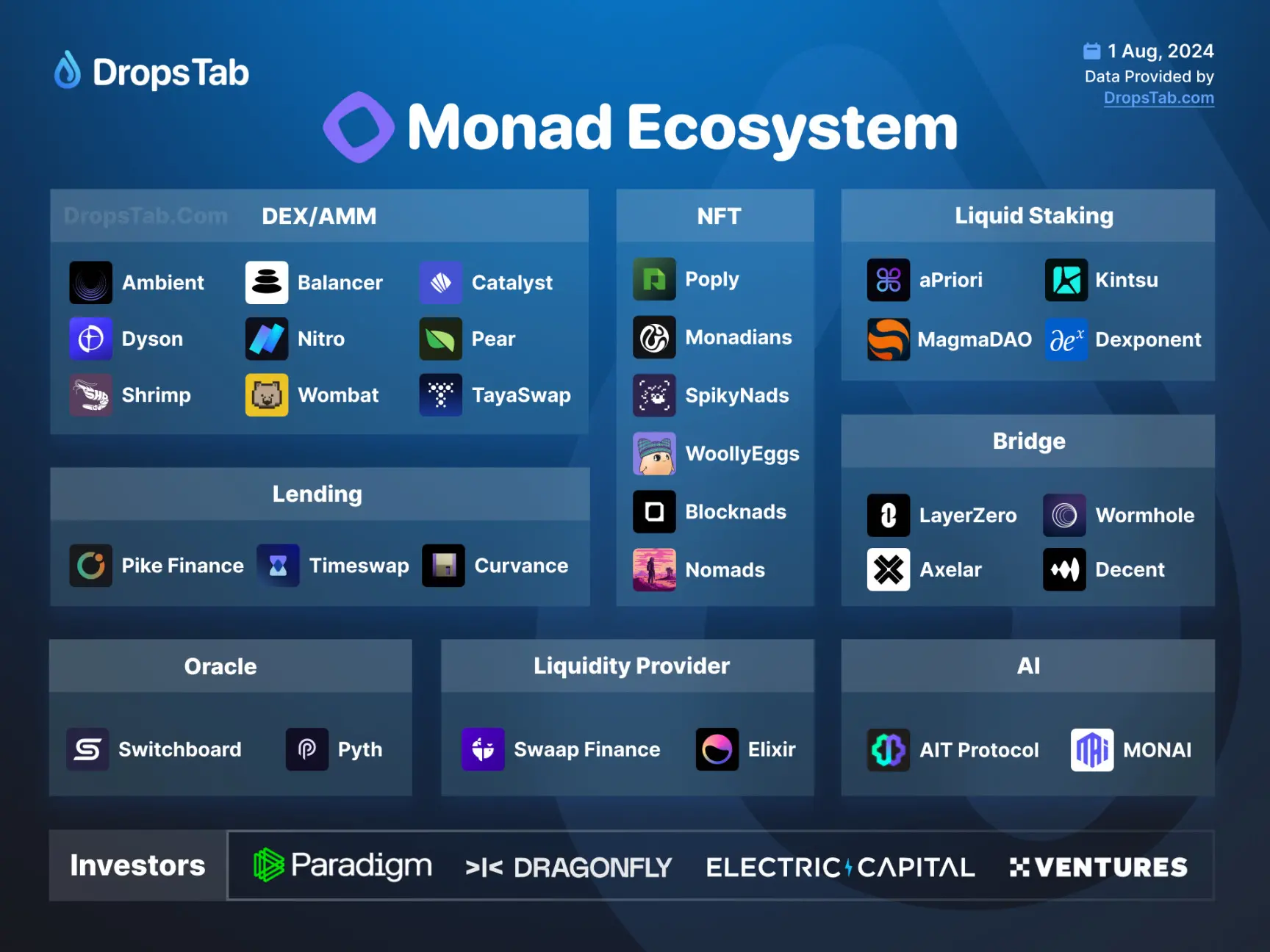
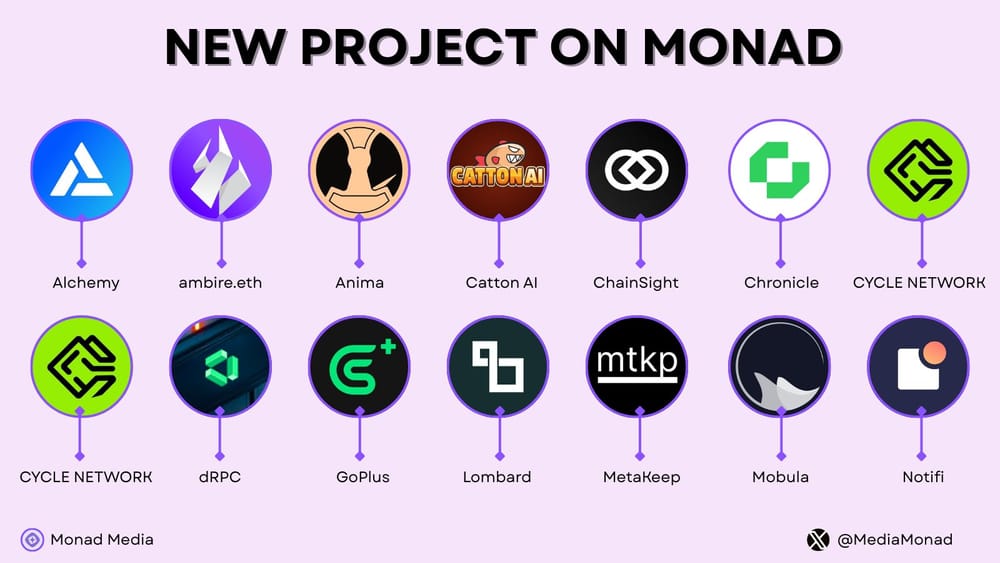
Monad ecosystem projects and tools
The Monad parallel EVM is moving from whitepaper to mainnet, and the ecosystem is building around its high-throughput architecture. Because Monad is a monolithic Layer-1 with its own validator set and consensus, it is not an Ethereum rollup. It does not post data to Ethereum, meaning the ecosystem projects are building on a distinct, independent chain rather than a sidecar to Ethereum's security layer.
This independence allows developers to leverage the parallel EVM for scalable decentralized applications and smart contracts without the congestion of the Ethereum mainnet. The network targets approximately 10,000 TPS with 0.4-second block times and roughly 0.8-second optimistic finality. This performance profile is attracting early DeFi protocols and developer tooling that require speed and low costs.
Developer infrastructure is already aligning with these capabilities. Infura, a leading Ethereum infrastructure provider, now supports Monad, offering developers a familiar JSON-RPC protocol to interact with the network. Since Monad is 100% EVM-compatible, developers can deploy existing smart contracts and applications with no code changes, using the same toolchains they use for Ethereum.
No comments yet. Be the first to share your thoughts!