Monad blockchain limits to account for
Monad operates as a high-performance Layer 1 blockchain designed to solve the scalability bottlenecks that plague existing networks. Built for the Ethereum Virtual Machine (EVM), it allows developers to use familiar tools while accessing significantly higher throughput. The network targets 10,000 transactions per second (TPS) with 0.6-second finality and 0.3-second block times, aiming to bridge the gap between current EVM capabilities and mass adoption needs.
The core innovation lies in its parallel execution engine. Unlike traditional blockchains that process transactions sequentially, Monad executes them in parallel. This architectural shift allows the network to handle heavy loads without the congestion and high fees typical of older networks. It effectively decouples transaction processing from block production, enabling the speed metrics that define its value proposition.
However, this performance comes with specific constraints. The parallel model requires sophisticated state management and sharding strategies to maintain consistency. While the technical foundation is robust, the ecosystem is still in its early stages. Users and developers must navigate a network that is powerful but less battle-tested than established Layer 1s. The trade-off is clear: you get speed and scalability, but you rely on a newer, more complex infrastructure that is still proving its long-term stability. For now, Monad represents a high-stakes bet on parallel EVM technology, with live market data reflecting its speculative nature.
| Feature | Monad |
|---|---|
| TPS | 10,000 |
| Finality | 0.6s |
| Block Time | 0.3s |
| EVM Compatible | Yes |
Monad blockchain choices that change the plan
Parallel execution is Monad’s defining feature, but it introduces specific constraints you need to weigh before committing capital or building dApps. The architecture sacrifices some of Ethereum’s strict sequential consistency for raw throughput, aiming for 10,000 transactions per second (TPS) with 0.3-second block times [src-1]. This performance gain comes with distinct tradeoffs in developer experience, decentralization, and long-term security assumptions.
Transaction Ordering and Front-Running
In a parallel EVM, transactions are processed simultaneously rather than sequentially. This drastically reduces front-running opportunities common on Ethereum, but it complicates state prediction. Developers must ensure their smart contracts are deterministic under parallel execution, which requires rigorous testing in Monad’s testnet environment. If a contract relies on strict sequential state changes, it may fail or produce unexpected results on Monad.
Decentralization and Validator Costs
High throughput typically demands more powerful hardware. Monad’s validator requirements may be higher than those of lighter Layer 2s, potentially centralizing the network among well-funded operators. This tradeoff between performance and decentralization is critical for long-term resilience. A network with fewer, more powerful validators is faster but more vulnerable to collusion or single points of failure compared to a more distributed, slower network.
EVM Compatibility and Tooling
Monad is fully EVM-compatible, meaning most Ethereum tools work out of the box. However, parallel execution may require minor code adjustments for complex interactions. The ecosystem is still maturing, so while the technology is promising, the available liquidity and dApp variety are currently limited compared to established Layer 1s. Early adopters benefit from lower fees and speed, but they also bear the risk of a less mature ecosystem.
| Feature | Monad | Ethereum | Typical L2s |
|---|---|---|---|
| TPS | ~10,000 | ~15-30 | ~2,000-4,000 |
| Block Time | 0.3s | ~12s | ~1-2s |
| Execution | Parallel | Sequential | Sequential |
| Finality | 0.6s | ~12-15 min | ~1-5 min |
| EVM Compat | Full | Native | Full |
How to choose your next step on Monad
Monad’s parallel EVM architecture promises 10,000 TPS, but the ecosystem is still maturing. Before committing funds or building, use this framework to evaluate your exposure. The decision depends on your risk tolerance and whether you are seeking speculative growth or early-stage developer utility.
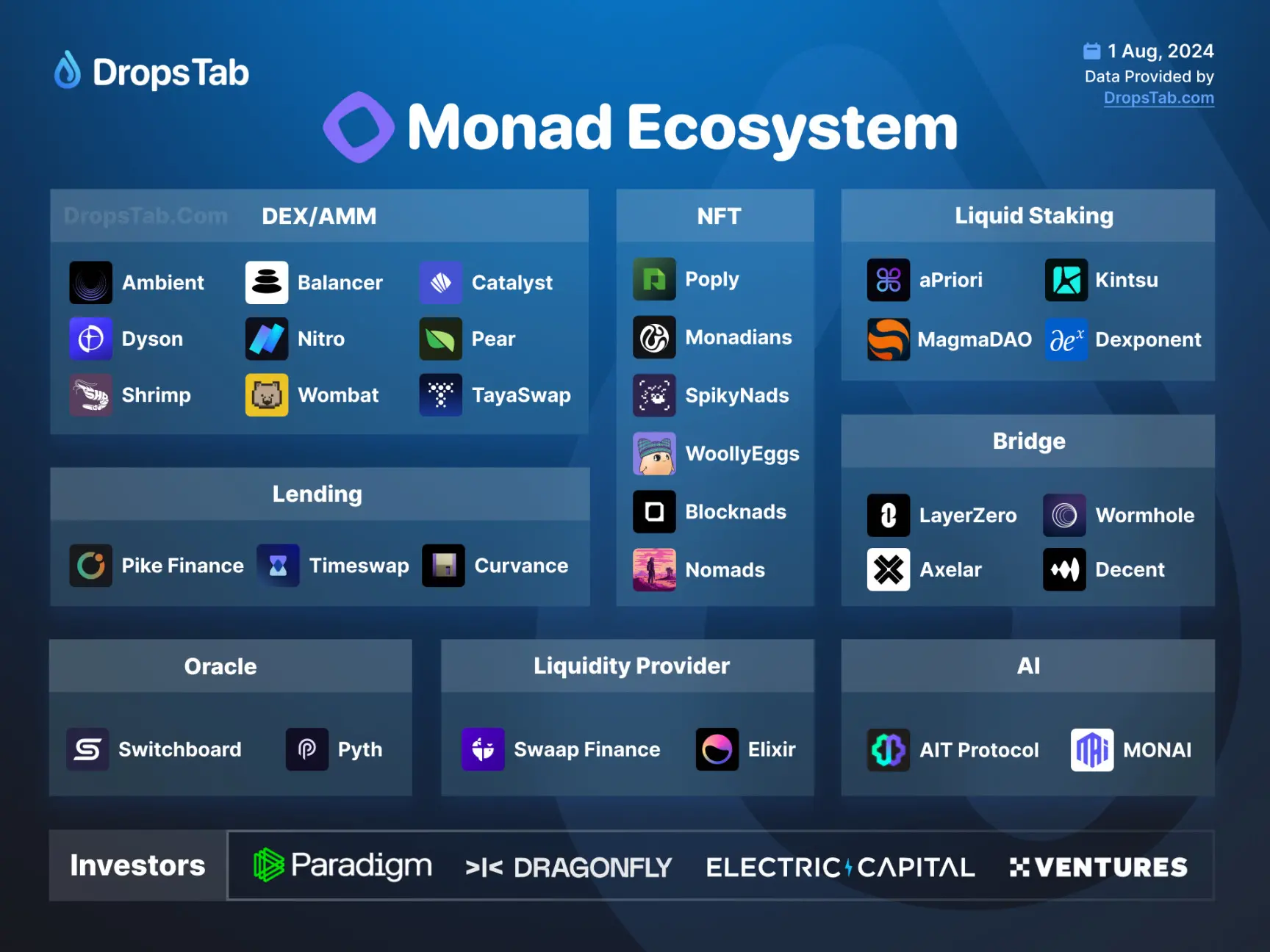
Check if your target dApp is live on the mainnet. Parallel execution requires specific SDK support. If the project is still on testnet or a forked environment, the performance claims are theoretical. Wait for mainnet stability before allocating significant capital.
Review the MON token distribution schedule. Early investors and team allocations often vest over time, creating sell pressure. Check if the current circulating supply is low compared to the total supply. High future inflation can suppress price appreciation regardless of technical success.
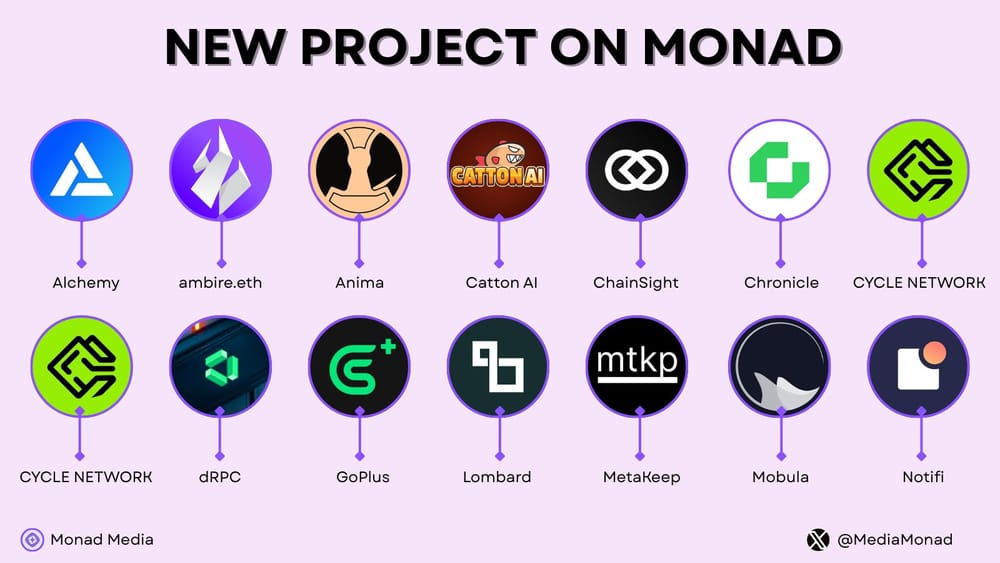
Look beyond the base layer. A healthy ecosystem includes DeFi protocols, NFT marketplaces, and gaming dApps. If the chain relies on a single project for volume, it is vulnerable. Diversified usage indicates genuine adoption and network resilience.
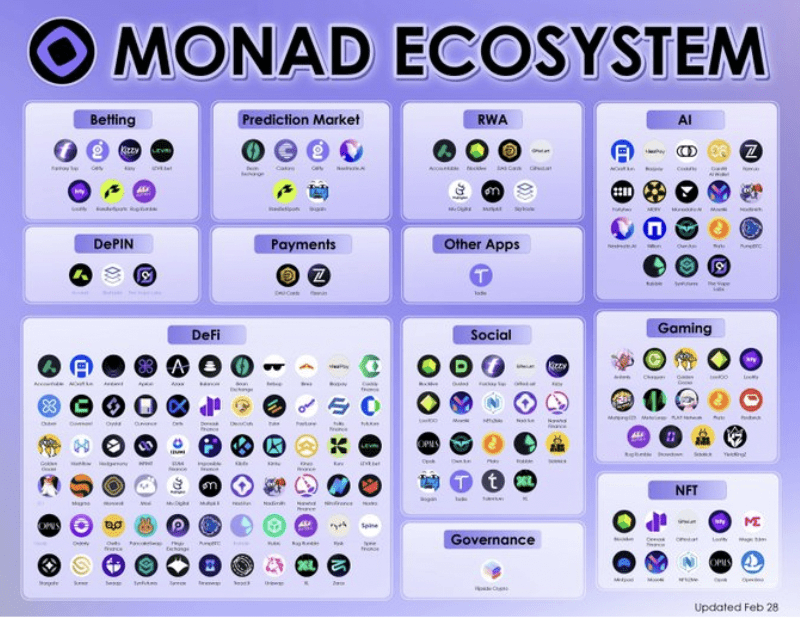
Track GitHub commits and active addresses. High transaction volume with low developer growth suggests speculation, not utility. Consistent code contributions signal long-term commitment. Use this data to distinguish between hype and sustainable growth.
Spotting Weak Options in the Monad Ecosystem
As Monad’s parallel EVM architecture pushes toward mass adoption in 2026, investors and builders must separate genuine scalability from marketing noise. The core promise—10,000 TPS and sub-second finality—is technically sound, but the ecosystem is still maturing. Many early projects replicate existing Ethereum templates without leveraging Monad’s unique parallel execution capabilities.
When evaluating potential investments or partnerships, look for dApps that actually utilize parallelism. If a project’s codebase is a direct fork of a single-threaded Ethereum contract, it offers no performance advantage on Monad. Avoid projects that claim "Monad-native" status without transparent, audited smart contracts demonstrating true parallel processing.
Price volatility is another trap. While live widgets show current market movements, static price predictions are unreliable. Focus on on-chain metrics like active addresses and transaction volume rather than speculative price targets. The real value lies in whether the network can sustain high throughput without centralization or downtime. If a project cannot demonstrate consistent usage under load, it is likely a weak option in a competitive landscape.
Monad blockchain: what to check next
What is the Monad blockchain?
Monad is a high-performance, EVM-compatible Layer 1 blockchain designed to solve the scalability limits of Ethereum. It uses parallel execution to process 10,000 transactions per second with 0.6-second finality and 0.3-second block times. This architecture allows developers to build complex decentralized applications without the congestion common on other networks. Monad is currently live on testnet, with its mainnet launch expected in 2026.
How much is 1 Monad?
Monad’s token price fluctuates based on market demand and network activity. You can track the live MON/USD price and market capitalization on CoinGecko or CoinMarketCap. Because the mainnet is not yet fully live, the token’s value is heavily influenced by speculation around its upcoming launch and the growth of its ecosystem. Always check real-time data before trading.
Is Monad crypto a good investment?
Investing in Monad carries high risk, as it is a pre-mainnet project competing in a crowded Layer 1 market. Its potential lies in its technical superiority: if it captures significant market share from Ethereum, the network could thrive. However, early-stage crypto projects face regulatory uncertainty and technical hurdles. Conduct your own research and never invest more than you can afford to lose.
How high will Monad crypto go?
No one can accurately predict Monad’s price ceiling. Crypto markets are volatile, and token prices depend on adoption, liquidity, and broader economic trends. While some analysts are bullish on Monad’s technology, past performance does not guarantee future results. Focus on the network’s utility and user growth rather than speculative price targets.
No comments yet. Be the first to share your thoughts!