How Monad’s Parallel EVM Works
Monad’s architecture tackles the EVM’s biggest bottleneck: sequential processing. Traditional Ethereum nodes execute transactions one by one, like a single cashier handling a long line. Monad’s parallel EVM allows the network to process independent transactions simultaneously. If two transactions don’t touch the same account or data, Monad executes them in parallel, drastically increasing throughput without sacrificing the security guarantees of the EVM.
This design enables Monad to target 10,000 transactions per second (TPS) with 400-millisecond block times and single-slot finality. The network achieves this through software-level optimizations, including a custom virtual machine that can predict and parallelize execution paths. For developers, this means existing Solidity smart contracts run on Monad with zero code changes, leveraging the full EVM ecosystem while benefiting from significantly lower latency and higher capacity. This parallel approach is what distinguishes Monad from other Layer 1s and positions it for institutional-grade DeFi applications that require high-speed settlement.
Monad parallel evm choices that change the plan
Monad’s architecture promises institutional-grade throughput by processing transactions in parallel rather than sequentially. This shift allows the network to handle up to 10,000 TPS with 0.6-second finality, addressing the primary bottleneck of traditional EVM chains. However, this performance comes with specific engineering and economic tradeoffs that developers and institutional users must evaluate before integration.
Execution vs. Consensus Complexity
Parallel execution requires sophisticated scheduling to determine which transactions can run simultaneously without conflicting states. Monad achieves this through a pipelined execution model, but it increases the complexity of the node software. For institutional operators, this means higher infrastructure costs and a steeper learning curve for maintaining validator nodes compared to simpler sequential chains. The tradeoff is raw speed for operational overhead.
EVM Compatibility vs. Native Optimization
Monad remains 100% EVM-compatible, allowing developers to deploy existing smart contracts with zero code changes. This reduces migration friction significantly. However, to achieve its high throughput, Monad optimizes the underlying execution layer rather than strictly adhering to legacy EVM semantics. This means that while the interface is familiar, the gas mechanics and execution environment have subtle differences. Teams should audit their contracts to ensure they do not rely on edge-case behaviors that parallel execution might reorder or optimize differently.
Throughput vs. Decentralization Risks
High-performance chains often face the "decentralization trilemma," where increased speed can lead to centralization pressures. Monad targets 400-millisecond block times, which requires powerful hardware to keep up with the data load. This could potentially limit validator participation to well-resourced entities, posing a long-term centralization risk. Institutional users must monitor the distribution of stake and validator nodes to ensure the network remains resilient against potential bottlenecks or single points of failure.
| Factor | Benefit | Tradeoff |
|---|---|---|
| Parallel Execution | Up to 10,000 TPS | Higher node complexity |
| EVM Compatibility | Zero-code migration | Subtle gas mechanic differences |
| Block Finality | 0.6s finality | Hardware-intensive validators |
How to evaluate Monad for your stack
Choosing Monad requires looking past the headline throughput numbers. Parallel EVM architecture changes how transactions are processed, but it also introduces unique integration points for developers and capital allocators. Use this framework to determine if the chain’s specific technical advantages align with your infrastructure needs.

Monad is a fully EVM-compatible Layer 1 blockchain, meaning you can deploy existing Solidity smart contracts without rewriting code. This compatibility extends to standard development tools like Hardhat, Foundry, and Remix. Before committing resources, verify that your preferred RPC providers and block explorers support Monad’s specific endpoints to ensure seamless deployment and debugging workflows.

The core value proposition of Monad is its parallel execution engine, which processes independent transactions simultaneously rather than sequentially. This architecture targets 10,000 TPS with single-slot finality. Evaluate whether your application involves high-frequency trading or complex DeFi interactions that benefit from this concurrency. If your contracts have high inter-dependency, the parallel benefits may be limited, and the complexity of managing state might outweigh the speed gains.
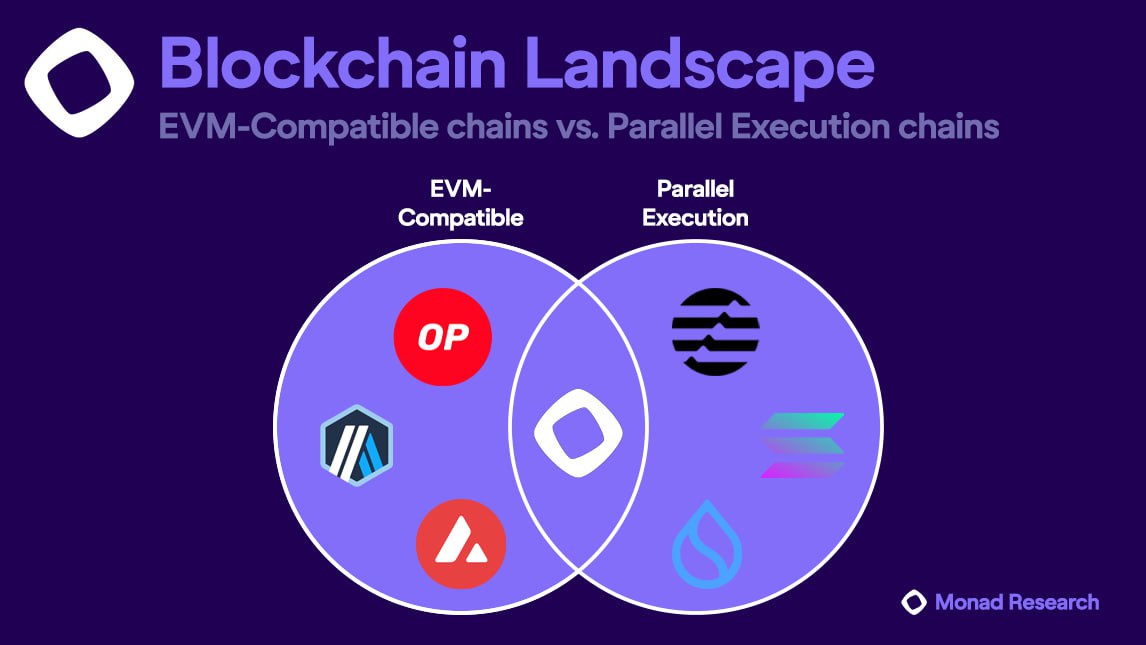
As a new L1, Monad’s security relies on its validator set and consensus mechanism rather than Ethereum’s proof-of-stake bridge. Investigate the current validator distribution and any ongoing decentralization incentives. For institutional adoption, understanding the trust assumptions and potential centralization risks at the protocol level is critical before integrating significant capital or sensitive data.

Despite high theoretical throughput, real-world performance depends on liquidity availability. Check the total value locked (TVL) and daily volume across major Monad DEXs and lending protocols. A robust ecosystem ensures that your trades execute with minimal slippage. Look for established projects that have already migrated or launched natively on Monad to gauge the health of the DeFi landscape.

Monad’s economic model aims to keep transaction costs low while maintaining network security. Analyze the current gas price trends and how they scale under load. For high-frequency applications, even small variations in gas fees can impact profitability. Understand the tokenomics of the native MON token, including staking rewards and potential future utility, to forecast long-term operational costs.
Spotting Misleading Claims About Monad
The promise of parallel execution on Monad is real, but the marketing surrounding it often blurs the line between technical capability and practical reality. When evaluating Monad as an institutional DeFi layer, it is essential to separate the engineering potential from the hype cycle. The network is a Layer 1 blockchain, not an Ethereum L2, a distinction that matters for custody, settlement, and security assumptions.
Common Mistakes in Evaluation
Many guides incorrectly label Monad as an L2. It is a standalone L1 with EVM compatibility. This means it does not inherit Ethereum’s security directly; it relies on its own validator set. Assuming L2-like security profiles can lead to significant risk miscalculations for institutional portfolios.
Weak Options to Avoid
Do not confuse parallel EVM with simple sharding. Parallel EVM processes transactions concurrently within the same block, offering sub-second finality. However, this performance comes at the cost of increased hardware requirements for validators, which can impact decentralization. Evaluate the validator distribution carefully before committing capital.
Redefining Institutional Adoption
Institutional adoption hinges on predictability, not just speed. Monad’s 10,000 TPS target is impressive, but the real value lies in deterministic execution. For high-frequency trading firms, the ability to process complex smart contract interactions without queueing delays is the primary utility. Look for projects that leverage this for latency-sensitive applications, not just speculative token launches.
Monad parallel evm: what to check next
Before committing capital or migrating infrastructure, it helps to clear up the technical distinctions that often confuse new entrants. Monad’s architecture solves specific bottlenecks, but it also introduces unique tradeoffs that institutional players must weigh against established Layer 2s.
Does Monad use EVM?
Yes. Monad is fully EVM-compatible. Developers can deploy existing Solidity smart contracts without rewriting code or switching development tools. This compatibility lowers the barrier to entry, allowing teams to leverage the vast Ethereum ecosystem while benefiting from Monad’s higher throughput capabilities.
What is parallel EVM?
Traditional EVMs process transactions sequentially, one after another, like a single-lane toll booth. Parallel EVM allows multiple transactions to be processed simultaneously across different processing cores. Monad achieves this through parallel execution and optimized consensus, enabling it to target thousands of transactions per second without sacrificing the security guarantees of the EVM standard.
Is Monad an Ethereum L2?
No. Monad is a Layer 1 blockchain. It has its own native consensus layer and execution environment, rather than relying on Ethereum’s base layer for settlement. This distinction matters for institutions evaluating gas fees, finality times, and security models, as Monad operates independently while remaining compatible with Ethereum tooling.
Is Monad coin a good investment?
Monad’s tokenomics and investment potential depend on its mainnet launch and adoption rates. As a pre-launch asset, the token carries high risk and volatility. Investors should monitor the official Monad roadmap, network metrics post-launch, and regulatory developments before making decisions. Always conduct independent due diligence and consider consulting a financial advisor.
No comments yet. Be the first to share your thoughts!