Parallel EVM Architecture
Monad addresses the throughput limitations of traditional Ethereum Virtual Machine (EVM) chains by introducing a parallel execution model. Unlike sequential EVMs, which process transactions one by one in a linear order, Monad executes independent transactions simultaneously. This architectural shift allows the network to achieve 10,000 transactions per second (TPS) while maintaining EVM compatibility.
The core innovation lies in Monad's ability to identify non-conflicting transactions and process them in parallel batches. This approach significantly reduces block times to 0.3 seconds and achieves finality in 0.6 seconds. For developers, this means the familiar Solidity and EVM tooling remain intact, but the underlying execution engine handles far higher load without the congestion typical of high-traffic networks.
This parallelism transforms the EVM from a sequential processor into a high-performance distributed system. The result is a blockchain that scales horizontally, offering institutional-grade speed and low latency. This performance profile positions Monad as a potential infrastructure layer for high-frequency decentralized applications and financial protocols.
2026 mainnet milestones and upgrades
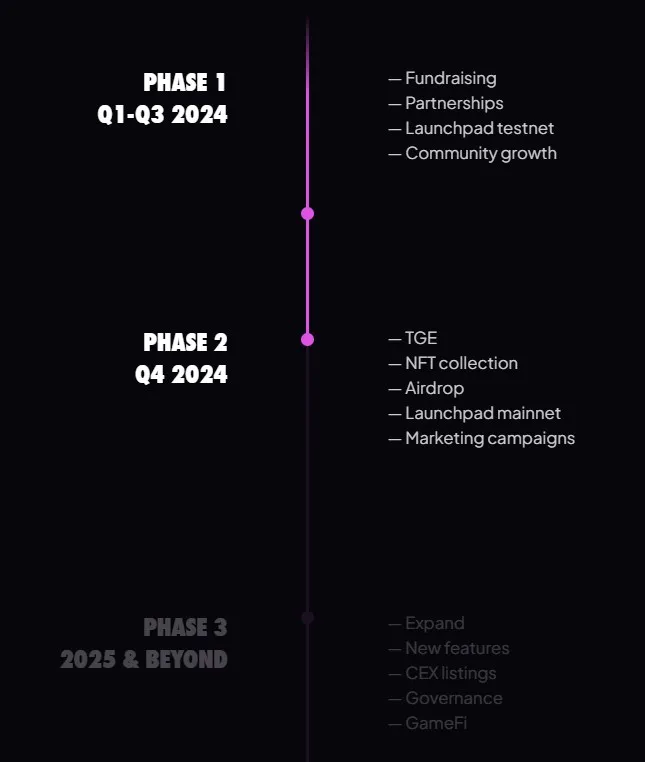
Monad’s 2026 roadmap centers on stabilizing its parallel EVM infrastructure while expanding developer tooling. The network aims to transition from high-throughput testing environments to a production-grade Layer-1 capable of sustaining 10,000 TPS with 0.6-second finality. This shift requires rigorous stress testing to ensure that parallel execution does not compromise EVM compatibility or state consistency.
The core technical upgrade involves refining the Monad Virtual Machine (MVM) to handle complex smart contract interactions without bottlenecks. By executing transactions in parallel rather than sequentially, Monad seeks to eliminate the latency issues that plague traditional EVM chains. This architectural choice is critical for supporting high-frequency DeFi protocols and real-time gaming applications that demand instant settlement.
Ecosystem expansion is equally important. The team plans to onboard major decentralized exchanges, lending protocols, and NFT marketplaces to demonstrate the network’s utility. Developer incentives, including grants and technical support, will accelerate the deployment of dApps that leverage Monad’s low-latency capabilities. This strategic growth aims to create a robust liquidity pool and active user base before the end of the year.

The success of these milestones hinges on seamless integration with existing Ethereum standards. Monad must maintain full EVM equivalence to allow developers to port projects from Ethereum without rewriting code. This compatibility, combined with superior performance, positions Monad as a compelling alternative for projects seeking scalability without sacrificing security or decentralization.
Monad price prediction for 2026
The MON token has retreated approximately 57% from its November 2025 all-time high of $0.04883, currently trading near $0.021. This correction reflects broader market consolidation and the typical post-launch volatility seen in new Layer 1 networks. For 2026, forecasts suggest a trajectory anchored by Monad’s parallel EVM architecture, which serves as the primary differentiator for institutional and retail adoption.
Market analysis from major financial platforms projects a conservative 2026 scenario where MON stabilizes between $0.02 and $0.05. This range assumes the post-airdrop circulating supply is gradually absorbed by staking and DeFi utility. A bullish case, contingent on significant ecosystem expansion and sustained transaction volume on the parallel EVM, could see the token reclaim the $0.05 to $0.08 range. However, predictions remain speculative and heavily dependent on broader crypto market conditions and regulatory clarity.
Monad Ecosystem and DeFi Liquidity
The Monad ecosystem is expanding as it positions itself as the high-performance EVM layer. By retaining full Ethereum compatibility while delivering parallel execution, Monad attracts developers building for scale. This technical foundation supports a growing network of decentralized applications, including DeFi protocols and NFT marketplaces that leverage the chain's speed and low transaction costs.
Current metrics highlight the performance gap between Monad and established networks. The following comparison illustrates how Monad’s parallel EVM architecture stacks up against Ethereum and Solana in terms of throughput, finality, and block times.
| Metric | Ethereum | Solana | Monad |
|---|---|---|---|
| Throughput | ~15-30 TPS | ~4,000+ TPS | ~10,000 TPS |
| Finality | ~12-15 minutes | ~400-1,200 ms | ~0.6 seconds |
| Block Time | ~12 seconds | ~400 ms | ~0.3 seconds |
Liquidity trends are closely tied to these performance advantages. As DeFi protocols migrate or deploy on Monad, they benefit from reduced gas fees and faster settlement times, which are critical for high-frequency trading and complex financial instruments. The total value locked (TVL) in the ecosystem is expected to grow as more projects launch and integrate with existing DeFi primitives.
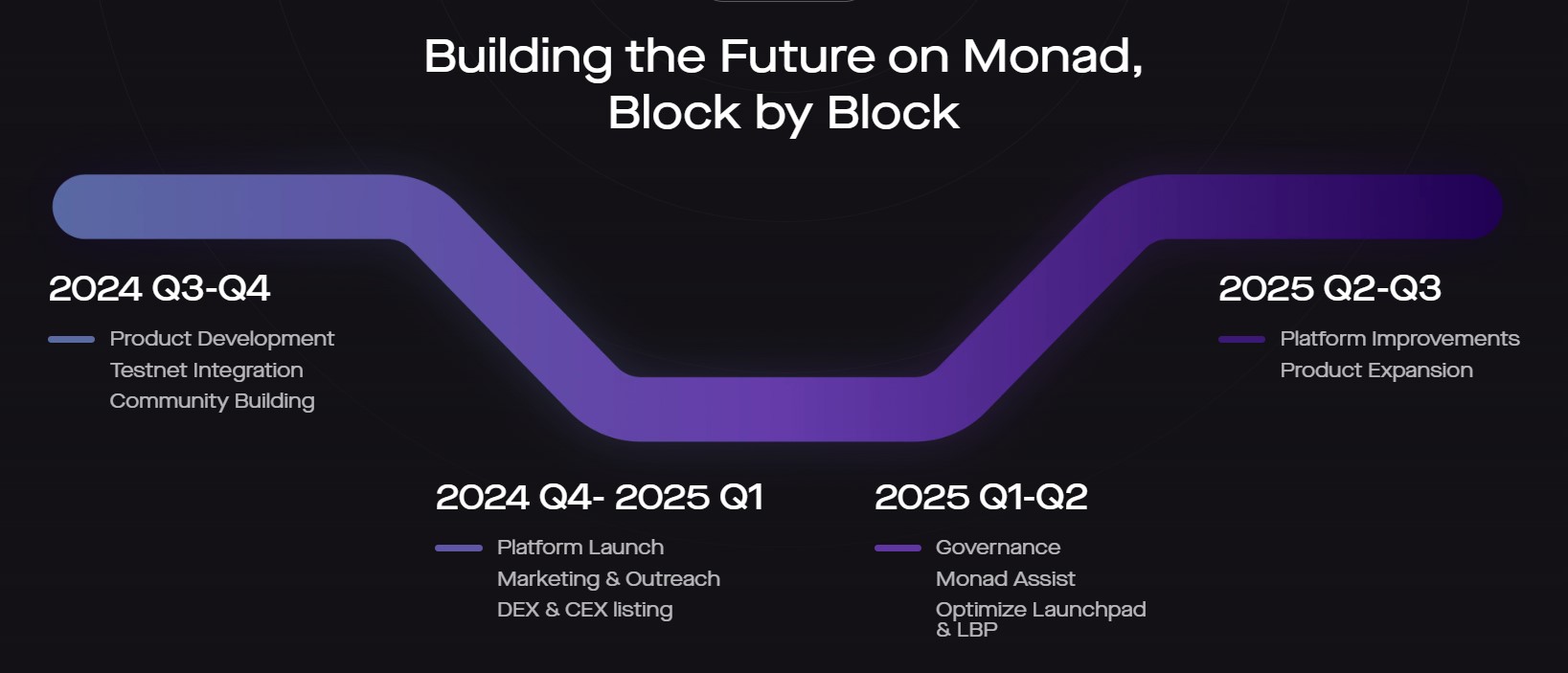
The parallel EVM model allows Monad to process multiple transactions simultaneously, a feature that traditional EVM chains struggle to achieve. This capability is central to Monad’s value proposition, offering a scalable alternative for developers who need Ethereum compatibility without sacrificing performance. As the ecosystem matures, the focus will remain on attracting high-quality DeFi applications that can fully utilize this parallel processing power.
Investment risks and market challenges
Monad’s parallel EVM architecture offers theoretical throughput advantages, but the path to market dominance faces significant headwinds. The primary challenge is not technical capability, but market positioning. Monad competes directly with established Layer 1s like Ethereum, Solana, and emerging parallelized chains. These incumbents already possess deep liquidity, mature developer tooling, and entrenched user bases. For Monad to succeed, it must convince developers to abandon established ecosystems for a new, unproven standard, a migration that typically requires years of sustained incentive programs and network effects.
Regulatory uncertainty remains a persistent overhang for all new Layer 1 projects. As financial authorities scrutinize token distribution and utility, Monad’s future regulatory classification could impact its accessibility to institutional capital. In addition, the immediate post-airdrop landscape presents acute selling pressure. Historical data from similar high-profile launches indicates that early token unlocks often trigger significant price volatility as early investors and airdrop recipients liquidate positions. This dynamic can suppress price appreciation regardless of underlying technical progress.
Current market data reflects this cautious sentiment. MON is trading near $0.021, approximately 57% below its November 2025 all-time high of $0.04883. Conservative 2026 scenarios suggest a potential recovery to the $0.05 to $0.08 range, but this assumes successful ecosystem expansion and absorption of post-airdrop supply. Investors must weigh these risks against the potential upside of parallel execution technology.
| Risk Factor | Potential Impact |
|---|---|
| Competition | High. Established L1s like Ethereum and Solana dominate developer mindshare and liquidity. |
| Regulation | Medium-High. Unclear token classification could limit institutional adoption and exchange listings. |
| Post-Airdrop Selling | High. Early sell-offs from airdrop recipients can create sustained downward price pressure. |
| Technical Adoption | Medium. Parallel EVM is novel, but developer migration requires significant incentives and time. |
Frequently asked questions about Monad
What is the Monad price prediction for 2026?
Current market analysis suggests a conservative price range for Monad (MON) in 2026, with estimates hovering between $0.02 and $0.08. These projections depend heavily on ecosystem expansion and the absorption of post-airdrop supply. While some optimistic scenarios point toward higher valuations if the parallel EVM technology gains significant traction, the baseline forecast remains grounded in cautious growth metrics.
Is Monad a good investment?
Monad presents a high-risk, high-reward opportunity centered on its parallel EVM architecture. The technology aims to solve Ethereum's scalability bottlenecks, offering a compelling use case if developer adoption accelerates. However, as a pre-mainnet asset with significant token unlocks ahead, investors should weigh the potential for technical disruption against the inherent volatility of early-stage Layer 1 projects.
Can Monad reach $10?
A $10 price target is highly improbable in the near to medium term. Based on current circulating supply and realistic market capitalization constraints, reaching this valuation would require an unprecedented expansion of the ecosystem's total value locked and user base. Most financial models view this level as unrealistic unless Monad achieves dominant global market share in smart contract platforms.
What will Monad be worth in 2030?
Long-term forecasts for 2030 are speculative, ranging from $0.15 to $0.50 depending on regulatory clarity and technological adoption. If Monad successfully establishes itself as a primary parallel EVM chain, sustained usage could drive gradual appreciation. However, investors should treat these long-range estimates as scenarios rather than guaranteed outcomes, given the rapid pace of blockchain innovation.
No comments yet. Be the first to share your thoughts!