Monad blockchain 2026 limits to account for
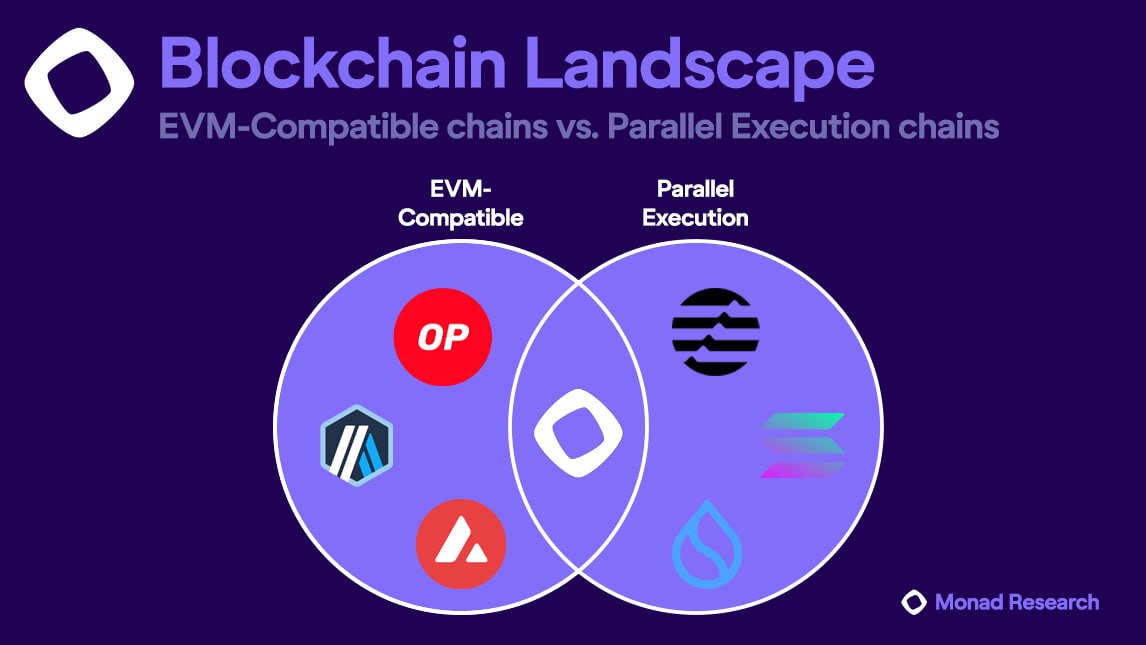
Monad positions itself as the most performant EVM-compatible blockchain, targeting 10,000 TPS with 0.6-second finality and 0.3-second block times. These specs aim to resolve the scalability bottlenecks that have historically forced developers to choose between Ethereum’s security and the speed of alternative Layer 1s. By parallelizing EVM execution, Monad allows developers to build high-throughput applications without abandoning the existing Ethereum tooling ecosystem.
However, the technology’s theoretical limits do not guarantee market performance. As of early 2026, MON trades near $0.021, with base price predictions ranging from $0.022 to $0.04. While the infrastructure promises institutional-grade throughput, the token’s actual utility and adoption metrics remain the primary drivers of its valuation. Developers should evaluate Monad not just on paper specs, but on the growing density of decentralized applications and liquidity flowing through its network.
The gap between technical potential and market reality is where most monolithic chains struggle. Monad’s constraint in 2026 is less about raw speed and more about proving that parallelized execution can sustain high user activity without centralization trade-offs. For investors and builders, the focus should remain on measurable network growth rather than speculative price targets.
Monad blockchain 2026 choices that change the plan
Use this section to make the Monad Blockchain decision easier to compare in real life, not just on paper. Start with the reader's actual constraint, then separate must-have requirements from details that are merely nice to have. A practical choice should survive normal use, maintenance, timing, and budget. If a recommendation only works in an ideal situation, call that out plainly and give the reader a fallback path.
| Factor | What to check | Why it matters |
|---|---|---|
| Fit | Match the option to the primary use case. | A good deal still fails if it does not fit the job. |
| Condition | Verify age, wear, and service history. | Hidden condition issues erase upfront savings. |
| Cost | Compare purchase price with likely upkeep. | The cheapest option is not always the lowest-cost option. |
Choosing the Right Monad Development Path
Deciding where to build on Monad requires aligning your technical stack with the network's parallelized EVM capabilities. Unlike traditional monolithic chains, Monad processes transactions concurrently, offering 10,000 TPS and 0.3-second block times. This architecture demands a specific approach to smart contract development, testing, and deployment to fully leverage its throughput.
The decision framework below outlines the critical steps for evaluating Monad's infrastructure for your project. Each step addresses a distinct layer of the development lifecycle, from environment setup to final deployment.


Watchouts: Weak Options and Misleading Claims
Monad’s pitch of 10,000 TPS and instant finality sounds impressive, but the technical reality is more complex. The network relies on parallel execution, a model that introduces significant trade-offs for developers. While the throughput is high, the cost of state management can spike during congestion. You must evaluate whether the speed justifies the complexity of debugging parallelized transactions.
The tokenomics for MON remain speculative. Current predictions range from $0.022 to $0.04, but these are not guarantees. The market is volatile, and many high-profile launches have failed to sustain momentum. Do not assume that technical performance translates directly to price appreciation. The path to $10 or higher is not supported by current fundamentals.
Many projects claim to be "EVM-compatible," but Monad’s implementation is unique. This can lead to compatibility issues with existing tools and libraries. Before committing resources, test your smart contracts against the actual testnet conditions. Avoid projects that promise seamless migration without addressing these technical hurdles.
No comments yet. Be the first to share your thoughts!