
Monad's 2026 performance baseline
Monad has established itself as a high-throughput EVM Layer 1, positioning its parallel execution engine as a direct response to the throughput limitations that have historically constrained Ethereum. The network is designed to process transactions in parallel rather than sequentially, a technical shift that aims to unlock significantly higher speeds without sacrificing the compatibility that developers expect from the EVM environment. This architectural choice is central to Monad's value proposition as a scalable infrastructure for the next generation of online financial systems.
As of June 24, 2026, the live market data reflects this ongoing development phase. The token is trading around $0.02, with a market capitalization hovering near $228.7 million. While these figures place Monad in the mid-cap range, they signal active participation from a community that is closely watching the network's technical milestones. The current price action suggests that investors are evaluating the project based on its fundamental utility and ecosystem growth rather than speculative hype alone.
To understand the scale of Monad's operations, it is helpful to look at the technical specifications that drive its performance. The network's ability to handle high transaction volumes is not just a theoretical advantage; it is a practical requirement for applications that demand low latency and high throughput. As the ecosystem matures, the focus remains on demonstrating that parallel EVM execution can deliver consistent performance gains over traditional sequential models.
Parallel Execution Driving Liquidity Growth
Monad’s core technical differentiator is its parallel execution engine, a departure from the sequential processing that bottlenecks many legacy EVM chains. By processing independent transactions simultaneously rather than one after another, Monad drastically reduces latency and increases throughput. This architectural shift transforms the user experience, allowing for near-instant finality even during periods of high network congestion. For institutional participants and high-frequency traders, this reliability is not just a convenience but a prerequisite for viable financial operations.
The correlation between this technical capability and liquidity expansion is direct. Capital seeks efficiency; when an ecosystem can handle complex DeFi interactions without the gas wars and failed transactions typical of congested networks, inflows increase. The reduction in friction lowers the cost of entry for sophisticated applications, encouraging developers to build complex derivatives, lending protocols, and trading venues that were previously too expensive to deploy. As the network demonstrates its capacity to handle load, confidence from large capital allocators grows, further accelerating asset accumulation on the chain.
This dynamic creates a feedback loop: higher throughput attracts more users, which increases the total value locked (TVL), which in turn justifies further development of high-value applications. The market responds to this fundamental strength, viewing Monad not merely as another Layer-1, but as a necessary infrastructure upgrade for the next generation of on-chain finance. The following chart illustrates the current market sentiment and price action reflecting this underlying technical narrative.
Protocol Upgrades and Efficiency Gains
The Monad network is moving beyond theoretical throughput to address the friction points that often stall developer adoption. The 2026 roadmap centers on the MONAD_EIGHT revision, a technical update designed to streamline the core interactions between developers and the blockchain. Rather than focusing solely on raw speed, this revision targets the operational overhead that slows down contract deployment and validator operations.
Contract Verification and Staking Optimization
The MONAD_EIGHT revision introduces specific optimizations to contract verification and staking precompiles. By reducing pagination requirements for staking operations, the network minimizes the computational steps required to process validator rewards and stake adjustments. This change directly impacts user experience by making interactions feel more responsive and predictable, reducing the likelihood of transaction timeouts during high-traffic periods.
For developers, streamlined contract verification means faster feedback loops during testing and deployment. This efficiency is critical for retaining talent in a competitive EVM landscape, where development velocity often dictates project success. The update aims to remove the administrative and technical bottlenecks that previously hindered rapid iteration.
Market Context and Technical Performance
While technical upgrades strengthen the foundation, market metrics provide a real-time view of how these changes are perceived. The following chart illustrates the recent technical performance of MON, reflecting market sentiment around these protocol improvements.
Institutional Capital and Ecosystem Depth
Long-term network security on Monad relies less on speculative retail momentum and more on the structural depth of its decentralized finance (DeFi) and non-fungible token (NFT) ecosystems. Institutional investors are increasingly viewing EVM parallelism not just as a technical novelty, but as a necessary infrastructure for high-frequency trading and complex financial products that require deterministic finality.
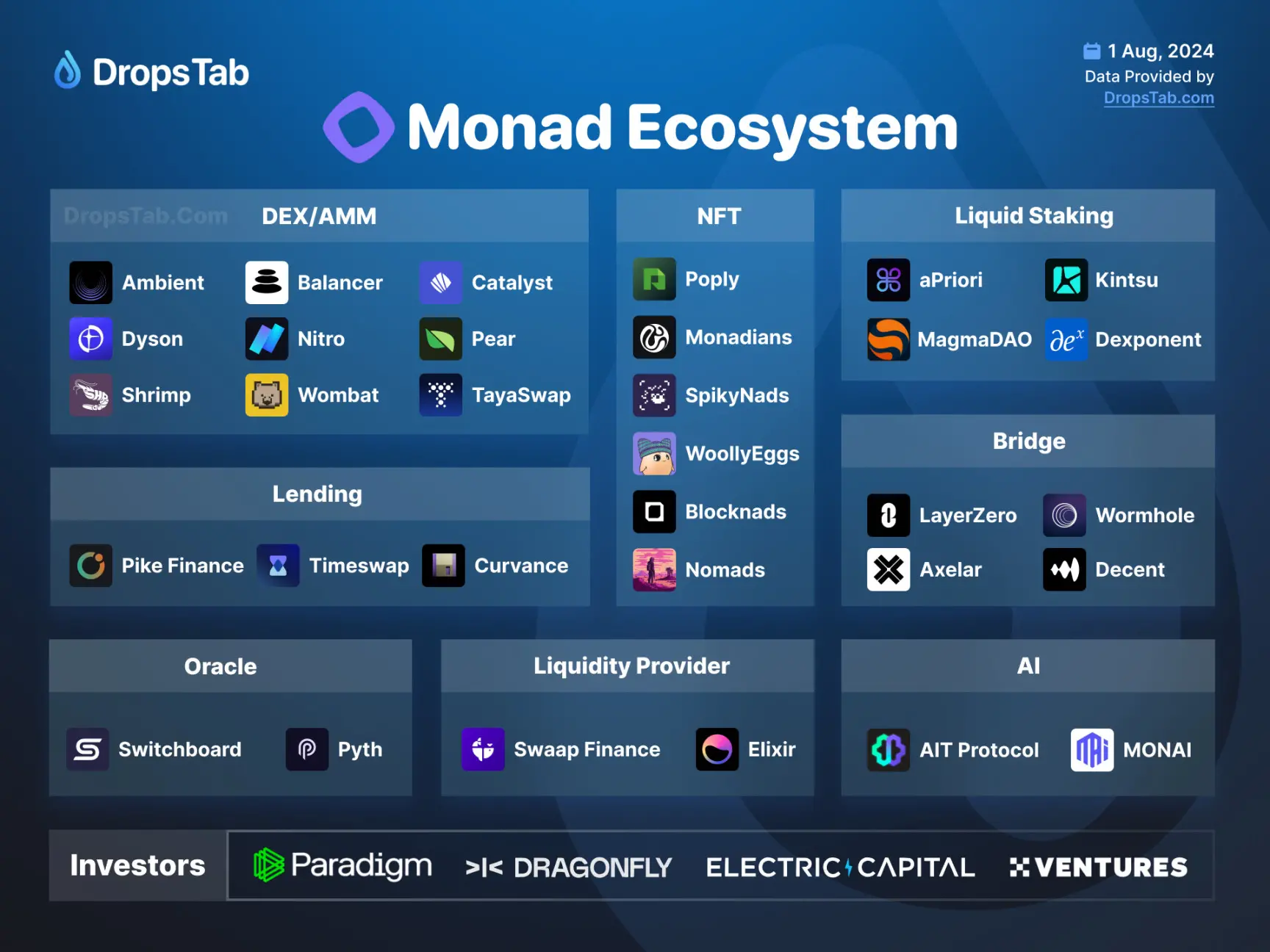
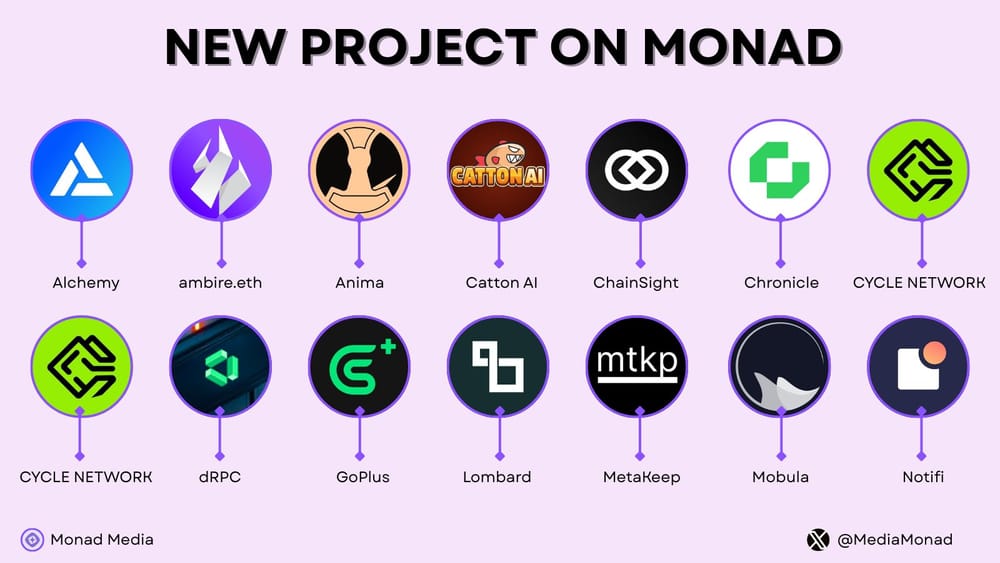
The migration of capital into Monad is accelerating as major protocol teams deploy parallelized versions of established lending, liquidity, and derivatives platforms. This ecosystem expansion reduces single-point-of-failure risks and creates a sticky liquidity environment that is difficult for newer, less proven L1s to displace. As noted in recent market analyses, the removal of technical risk through EVM compatibility has lowered the barrier for institutional adoption, allowing traditional finance entities to interact with the chain using familiar tooling and security standards.
To understand where Monad stands relative to its peers, it is essential to compare its TVL growth against other high-performance EVM Layer 1 networks. This comparison highlights the rate at which capital is committing to Monad's specific parallel execution architecture versus alternative scaling solutions.
| Project | Estimated TVL | Primary Focus | Parallel EVM |
|---|---|---|---|
| Monad | Growing | High-Throughput DeFi | Yes |
| Ethereum | $45B+ | General Purpose | No |
| Optimism | $2B+ | Modular L2 | Partial |
| Arbitrum | $1.5B+ | General Purpose L2 | No |
While static TVL figures fluctuate daily, the trend indicates a steady inflow of institutional-grade capital into Monad's ecosystem. This growth is supported by a growing suite of institutional-grade infrastructure, including custody solutions and on-chain analytics tools that meet regulatory compliance standards. The presence of these tools signals to larger investors that the network is maturing beyond its experimental phase.
Monad Price Scenarios and Market Outlook
Predicting Monad’s valuation requires anchoring projections to market cap constraints rather than wishful thinking. The token’s potential depends on how much circulating supply the market can absorb post-launch. Conservative models from financial analysts suggest a baseline range of $0.05 to $0.08 if ecosystem usage expands steadily [src-serp-4]. This scenario assumes gradual adoption without sudden speculative spikes.
More optimistic targets place the price between $0.13 and $0.15, contingent on institutional participation and the maturation of the EVM parallelism ecosystem. The $0.10 mark has emerged as a psychological checkpoint for many traders. Reaching this level would require significant liquidity inflows to offset potential sell pressure from early investors and airdrop recipients.
A bearish case remains possible if broader crypto markets weaken or if Monad fails to differentiate itself from other high-performance EVM chains. In this scenario, the price could stagnate below $0.05. Investors should monitor on-chain activity and developer adoption as leading indicators of long-term viability rather than relying solely on short-term price momentum.
Will Monad reach $1 in 2026?
The path to a dollar for Monad ($MON) is defined by market capitalization rather than just price action. At a $1 valuation, Monad would require a market cap exceeding $100 billion, assuming current supply estimates hold. This places Monad in the same tier as established giants like Solana or Avalanche, a position that demands massive institutional adoption and ecosystem maturity.
Current analyst sentiment treats the $0.10–$0.15 range as a more realistic medium-term target. Reaching the $1 mark hinges on Monad’s ability to capture significant Ethereum Layer 2 liquidity through its parallel EVM execution. Without a surge in daily active users and TVL, the $1 psychological checkpoint remains mathematically distant.
No comments yet. Be the first to share your thoughts!