What parallel EVM means for Monad
Traditional Ethereum processes transactions one after another. If ten users swap tokens at the same time, the network handles them sequentially. Monad parallel EVM changes this by allowing independent transactions to run at the same time. This is not a sidechain or rollup; it is a Layer-1 chain with its own validator set and consensus.
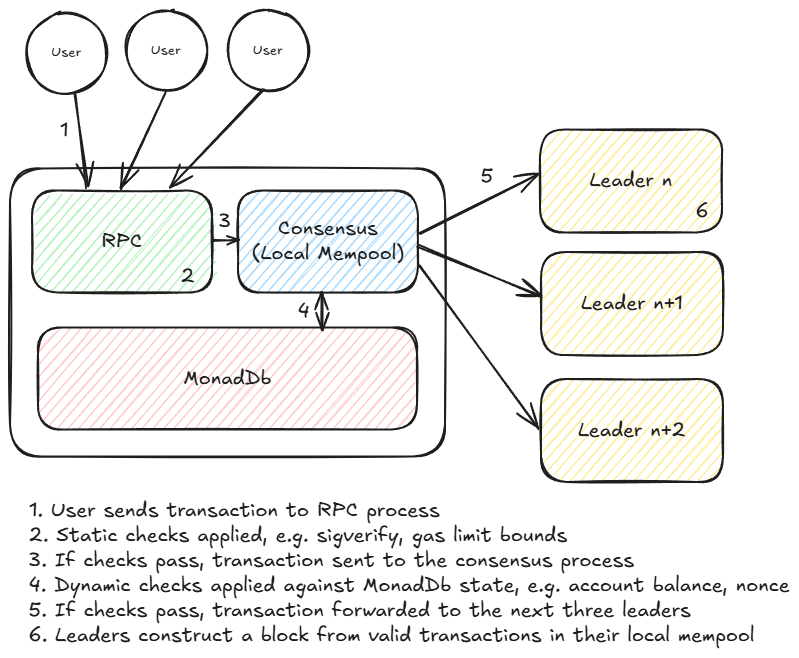
Transactions are still ordered linearly to maintain consistency. However, the execution layer identifies which transactions do not share state dependencies. These independent transactions execute in parallel. Dependent transactions wait for their predecessors. This approach eliminates the bottleneck that causes gas spikes during high demand.
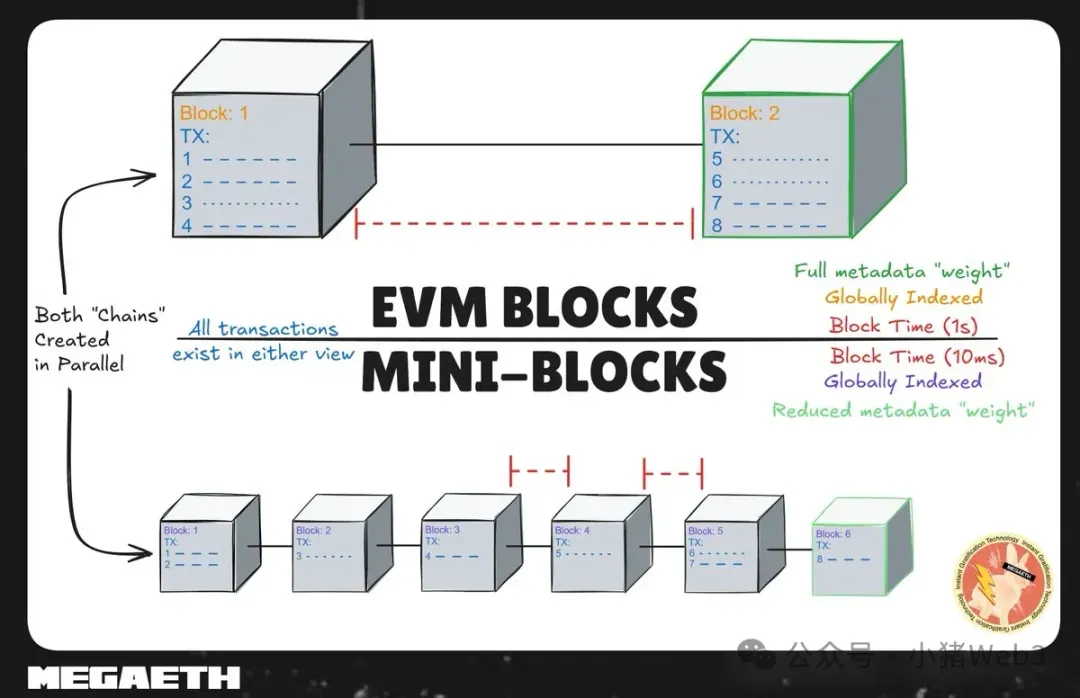
For DeFi liquidity, this parallelism matters. Liquidity pools on Ethereum often suffer from front-running and high slippage because the mempool is congested. Monad’s ability to process thousands of transactions simultaneously reduces latency. Traders can execute complex strategies without waiting for block confirmation delays. This efficiency attracts deeper liquidity from institutional players who require predictable execution costs.
Set up your development environment
To build on the Monad parallel EVM, you need a standard Ethereum-compatible toolchain. Monad is a Layer-1 blockchain with complete EVM compatibility, meaning you can deploy existing smart contracts without rewriting them. You will use familiar tools like Hardhat or Foundry, connecting to Monad’s network via standard JSON-RPC endpoints.
Monad development relies on Node.js. Ensure you have an LTS version installed. This runtime allows you to execute package managers like npm or yarn, which are required to install the Monad CLI and smart contract frameworks.

Download the official Monad Command Line Interface. This tool simplifies interaction with the network by providing pre-configured RPC endpoints for both testnet and mainnet. It handles the connection logic so you can focus on contract deployment.

Initialize your project with a standard EVM framework like Hardhat. Update your configuration file to point to the Monad testnet RPC URL provided by your infrastructure provider or the Monad CLI. This directs your deployment scripts to the correct parallel EVM instance.
Compile and deploy a simple smart contract to the testnet. Verify that transactions are processed using Monad’s parallel execution. This step confirms your environment is correctly configured to leverage the network’s high throughput capabilities.
Deploying smart contracts
How Monad’s Parallel EVM Changes DeFi Liquidity works best as a clear sequence: define the constraint, compare the realistic options, test the tradeoff, and choose the path with the fewest hidden costs. That order keeps the advice usable instead of decorative. After each step, pause long enough to check whether the recommendation still fits the reader's actual situation. If it depends on perfect timing, unusual access, or a best-case budget, include a simpler fallback.
Optimizing for high throughput
The easiest mistake with How Monad’s Parallel EVM Changes DeFi Liquidity is comparing options on the most visible detail while ignoring the day-to-day constraint. A choice can look strong on paper and still fail because it is too hard to maintain, too expensive to repeat, or awkward in the actual setting. Use the same checklist for every option: fit, cost, durability, timing, upkeep, and fallback plan. That keeps the comparison practical instead of drifting into preference alone.
The simplest way to use this section is to write down the real constraint first, compare each option against it, and choose the path that still works outside ideal conditions.
Common deployment mistakes
Use this section to make the How Monad’s Parallel EVM Changes DeFi Liquidity decision easier to compare in real life, not just on paper. Start with the reader's actual constraint, then separate must-have requirements from details that are merely nice to have. A practical choice should survive normal use, maintenance, timing, and budget. If a recommendation only works in an ideal situation, call that out plainly and give the reader a fallback path.
The simplest way to use this section is to write down the must-have criteria first, then compare each option against those criteria before weighing nice-to-have features.
Verifying transaction finality
Confirming a transaction on Monad requires less patience than on legacy chains. Because Monad’s parallel EVM processes blocks in 0.4 seconds with 0.8-second finality, your DeFi interactions settle almost instantly. You do not need to wait for the 12-15 confirmations typical of Ethereum mainnet to consider a trade safe.
Open your wallet interface and locate the recent transaction. Copy the full transaction hash (TXID). This unique identifier is your proof of submission to the Monad network.
Navigate to the official Monad block explorer. Paste the hash into the search bar and press enter. The explorer will query the parallel execution layer for the transaction’s current status.
Look for the "Finalized" or "Confirmed" badge. On Monad, this status typically appears within one second of submission. If the status remains "Pending" for more than a few seconds, check your gas fees, though failures are rare due to the parallel architecture.
This speed is the primary advantage of the Monad parallel EVM for real-time trading. You can verify your liquidity position and proceed to the next trade without the anxiety of waiting for block confirmations.
No comments yet. Be the first to share your thoughts!