

Parallelized EVM Architecture
Monad differentiates itself by decoupling execution from consensus, a structural shift from legacy EVM chains that process transactions sequentially. This parallelized execution model allows the network to simulate and finalize multiple transactions simultaneously rather than in a single linear queue. The result is a dramatic increase in throughput, with official documentation citing 10,000 transactions per second (TPS) as the baseline performance metric.
For institutional DeFi infrastructure, this architecture directly addresses the bottlenecks that typically cause network congestion and fee spikes during high-volume market activity. By maintaining 0.8-second finality and 0.4-second block times, Monad offers the deterministic speed required for complex financial instruments and high-frequency trading strategies. This performance profile positions the network as a viable alternative to Layer 2 solutions that often sacrifice composability for speed.
The technical advantage lies in the ability to handle massive transaction volumes without compromising the EVM compatibility that developers already rely on. This means existing smart contracts and tooling can be deployed with minimal modification, while benefiting from the underlying parallel execution engine. The infrastructure is designed to scale linearly with hardware improvements, ensuring that the network can accommodate growing institutional demand without fundamental architectural changes.
Institutional adoption and payment rails
Monad’s infrastructure is shifting from speculative retail interest to institutional utility. The network’s high-throughput design, capable of processing 10,000 transactions per second with sub-second finality, addresses the scalability bottlenecks that have historically prevented traditional finance from adopting blockchain payment rails. This technical foundation allows Monad to function not just as a settlement layer, but as a viable alternative for high-frequency financial operations.
A significant catalyst for this transition is Monad’s integration into traditional payment ecosystems. In late April 2026, Mastercard added Monad to its Crypto Partner Program, signaling a formal endorsement of its payment infrastructure. This partnership embeds Monad’s low-latency capabilities into Mastercard’s broader network, enabling institutions to leverage blockchain for faster, cheaper cross-border settlements and stablecoin transactions. Such integrations reduce the friction typically associated with on-chain payments, making Monad an attractive option for enterprises seeking scalable financial infrastructure.
The growth of stablecoin volume on Monad further underscores this institutional shift. In the first quarter of 2026, the algorithmic stablecoin AUSD processed over $20 billion in transfer volume, representing a 355% year-over-year increase. This surge in activity reflects a broader trend where institutions prioritize networks that offer both speed and cost efficiency. The doubling of AUSD’s supply specifically on Monad indicates growing confidence in the network’s ability to handle large-scale financial flows without congestion.
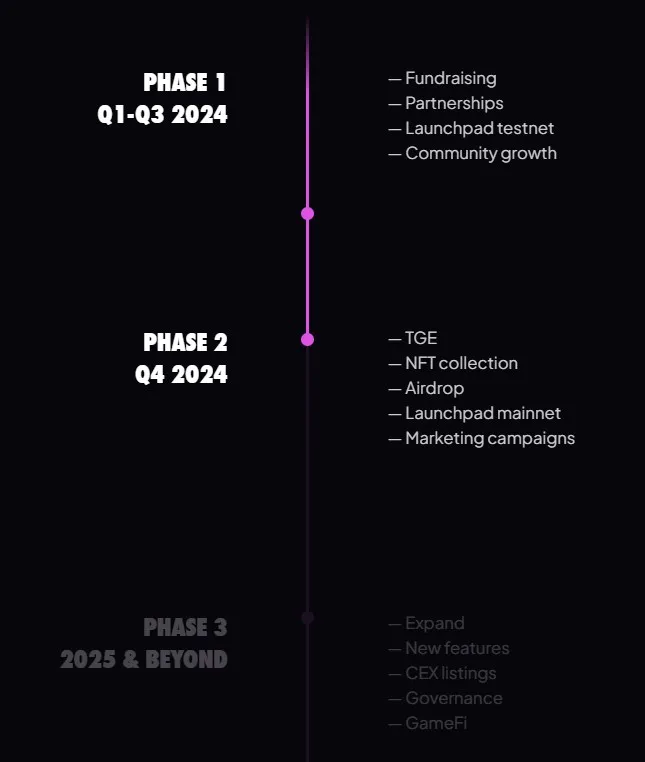
This institutional adoption is supported by Monad’s EVM compatibility, which allows developers to deploy existing Ethereum-based applications with minimal modification. This interoperability reduces the barrier to entry for financial institutions already operating within the Ethereum ecosystem, facilitating a smoother transition to Monad’s high-performance layer. As partnerships like the one with Mastercard deepen, Monad is positioning itself as a critical component of the next generation of decentralized finance.
Monad vs. Solana and Legacy EVMs
Institutional infrastructure decisions require evaluating throughput, compatibility, and finality against established benchmarks. Monad positions itself as a high-performance EVM-compatible chain, directly competing with Solana’s proprietary stack and Ethereum Layer 2 solutions. The following analysis compares these networks on technical metrics that matter for high-frequency DeFi and institutional settlement.
Performance and Compatibility Trade-offs
Solana offers high throughput but requires developers to learn Rust, creating a friction point for EVM-native institutions. Ethereum L2s maintain EVM compatibility but often sacrifice latency due to sequencer bottlenecks and data availability constraints. Monad aims to bridge this gap by delivering EVM compatibility with near-Solana speeds through parallel execution and optimized block production.
| Feature | Monad | Solana | Ethereum L2s (e.g., Arbitrum/Optimism) |
|---|---|---|---|
| EVM Compatibility | Native | No (Rust) | Native |
| Theoretical TPS | 10,000 | 65,000+ | 4,000–100,000 |
| Block Time | 0.4s | ~400ms | 0.25s–12s |
| Finality | ~0.8s | ~1.2s | 12s–15 mins |
| Development Stack | Solidity/Rust | Rust/C/C++ | Solidity |
Institutional Readiness
For institutions, the ability to deploy existing Solidity codebases without rewriting is a significant operational advantage. Monad’s 0.8-second finality and 0.4-second block times reduce settlement risk compared to traditional L2s, while its EVM compatibility avoids the talent acquisition costs associated with Solana’s non-EVM stack. This hybrid approach targets the specific needs of DeFi protocols requiring both speed and developer familiarity.
Market Context
The competitive landscape for high-speed blockchains is shifting. While Solana has captured significant retail and meme-coin volume, institutional capital often prefers EVM environments for regulatory and technical familiarity. Monad’s infrastructure is designed to capture this institutional demand by offering a familiar development environment with performance characteristics that challenge Solana’s speed advantage.
Market performance and 2026 outlook
Monad’s market trajectory in 2026 is defined by its transition from a speculative asset to a functional infrastructure layer. Current pricing reflects the absorption of post-launch supply, with the token trading near $0.02 as of late June 2026. This valuation anchors the network’s early institutional adoption phase, where utility and transaction volume begin to outweigh pure narrative-driven speculation.
The economic model relies on sustained throughput to justify capital allocation. With Monad designed for high-frequency institutional DeFi, the primary value driver is not just price appreciation but the network’s ability to handle complex smart contract interactions with sub-second finality. Analysts project a conservative recovery to the $0.05–$0.08 range if ecosystem usage expands steadily, treating the $0.10 level as a significant psychological and technical checkpoint for medium-term growth.
Institutional participation remains the critical variable for 2026 stability. Unlike consumer-focused chains, Monad’s appeal lies in its EVM compatibility and technical efficiency, which lower the barrier for traditional finance entities to deploy capital. The removal of initial technical risks has allowed institutional capital to enter, but long-term price resilience depends on whether this capital generates consistent on-chain revenue rather than providing temporary liquidity.
The interplay between supply dynamics and demand is currently in a consolidation phase. As new tokens vest and enter circulation, the market must demonstrate sufficient depth to absorb sell pressure without significant price disruption. Success in this environment requires a mature ecosystem where developers and enterprises build durable applications, turning Monad from a high-performance testnet into a settled financial rail.
No comments yet. Be the first to share your thoughts!