Monad's performance metrics in 2026
Monad has established itself as the most performant EVM-compatible blockchain, delivering 10,000 TPS, 0.6-second finality, and 0.3-second block times. These metrics set a new technical baseline for parallel execution in decentralized finance.
Market data from August 7, 2026, reflects this technical advantage. Monad’s TVL increased by 5.33% over the prior week, a notable contrast to declines on Ethereum, Bitcoin, and Solana. This growth underscores the network’s ability to capture value as developers and users prioritize speed and efficiency.
Beyond pure throughput, Monad has become the third-largest blockchain for real-world assets (RWA) in DeFi, trailing only Ethereum and Solana. This adoption highlights its growing role in bridging traditional finance with decentralized infrastructure.
Parallel execution vs sequential EVM
Traditional Ethereum Virtual Machine (EVM) chains process transactions like a single-lane toll booth. Each block is a list, and the network must verify every signature and execute every smart contract call in strict order. This sequential bottleneck means that if one transaction is complex, it slows down the entire block for everyone else. The result is congestion during peak hours, leading to high gas fees and slow confirmation times.
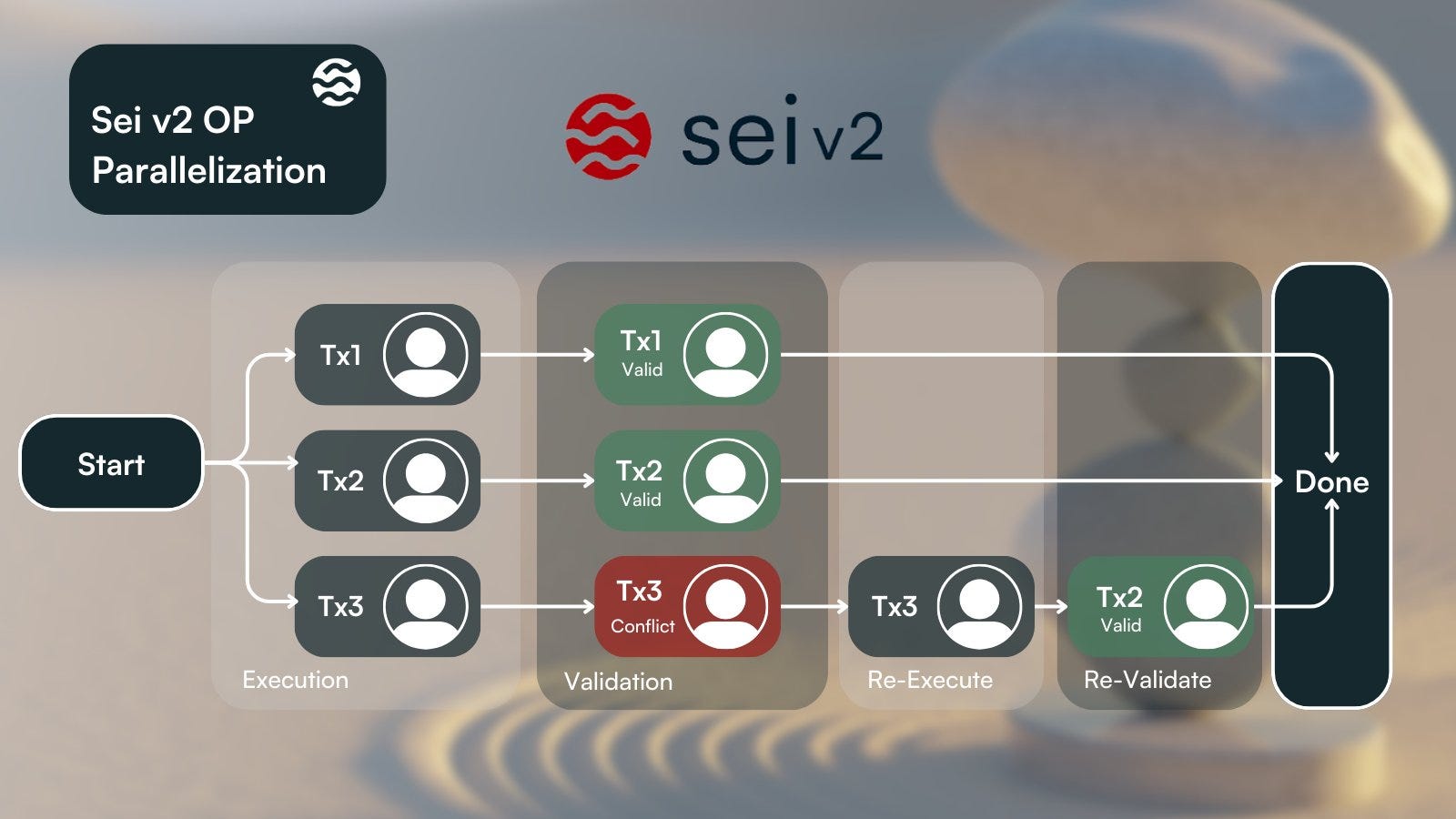
Monad changes this architecture by introducing parallel execution. Instead of a single line, Monad treats transactions as independent jobs that can be processed simultaneously. If two transactions do not interact with the same data or accounts, the network executes them at the same time. This approach allows Monad to achieve 10,000 transactions per second (TPS) with 0.3-second block times and 0.6-second finality, as stated in their official documentation.
This parallel engine does not break EVM compatibility. Developers can still write standard Solidity contracts, but the underlying execution layer is entirely new. It uses a deterministic scheduler to ensure that even when transactions run in parallel, the final state of the blockchain remains consistent and secure. This means existing Ethereum tools, wallets, and developer workflows work out of the box, but with significantly higher throughput.
The difference is comparable to upgrading from a single-core processor to a multi-core system. In a single-core system, only one task runs at a time, even if other cores are idle. In a multi-core system, independent tasks are distributed across cores, maximizing efficiency. Monad’s parallel execution allows the network to utilize its full computational power, handling high-frequency trading, complex DeFi interactions, and large-scale gaming without the typical Ethereum congestion.
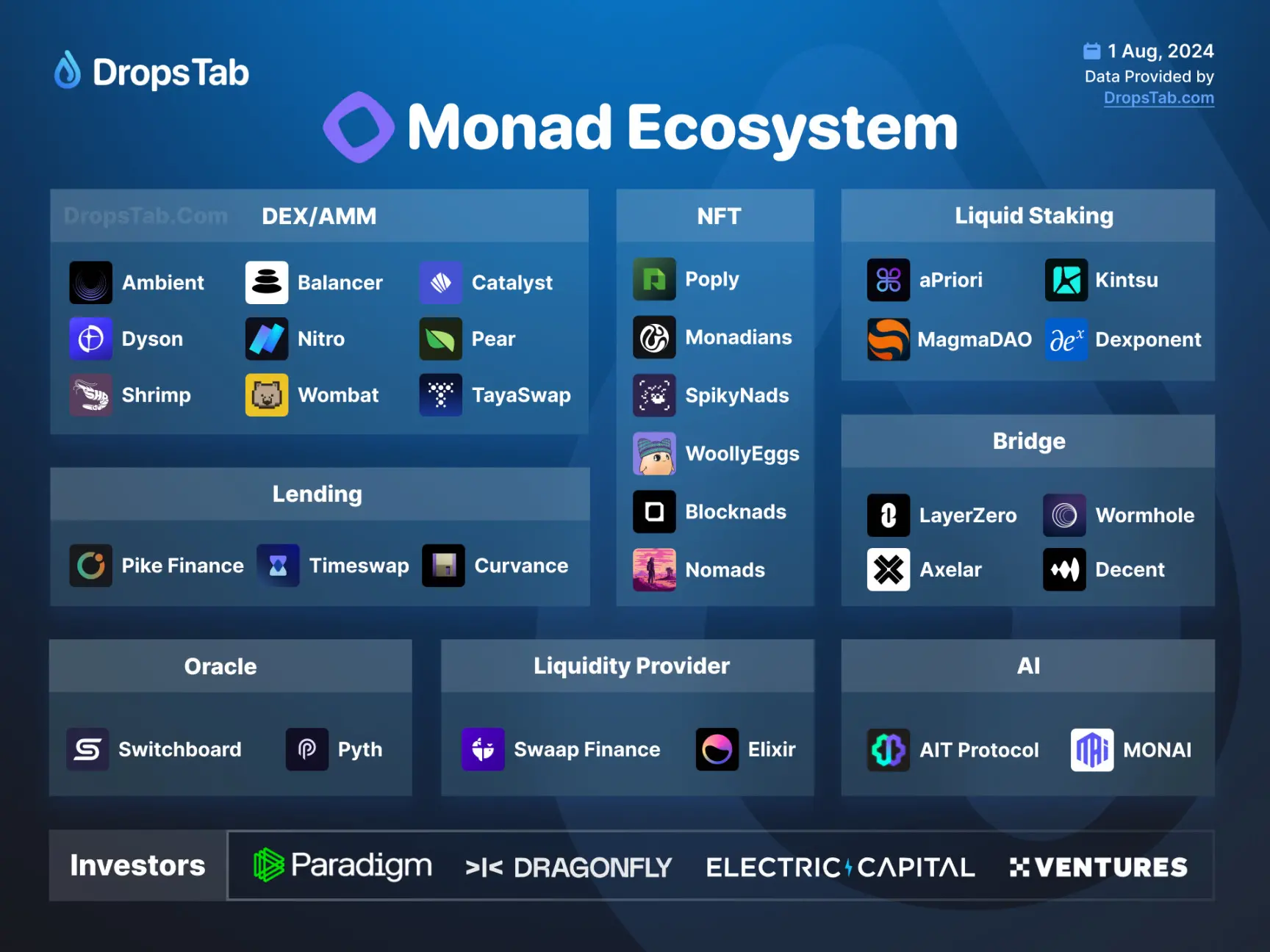
To understand how Monad fits into the broader market, it helps to compare its performance metrics against other high-throughput Layer-1 solutions. While many chains claim high TPS, Monad’s parallel execution model offers a distinct advantage in handling EVM-compatible workloads without sacrificing decentralization or security.
| Network | Throughput | Finality | Execution Model |
|---|---|---|---|
| Monad | 10,000+ | 0.6s | Parallel EVM |
| Ethereum | ~15-30 | ~12-15m | Sequential |
| Solana | ~4,000-6,500 | ~400ms | Parallel (Non-EVM) |
| Avalanche | ~4,500 | ~1-2s | Sequential/Parallel Hybrid |
Developer tools and ecosystem expansion
Monad is positioning itself as the most performant EVM-compatible blockchain, targeting 10,000 TPS with 0.6-second finality. For builders, this means the familiar Ethereum development stack works without modification, but at a speed that was previously impossible. The shift from testnet experimentation to mainnet activity in 2026 is driven by this practical compatibility and raw throughput.
SDKs and EVM Compatibility
Monad retains full Ethereum Virtual Machine (EVM) compatibility, allowing developers to deploy existing Solidity smart contracts and dApps with minimal changes. The Monad SDK provides the necessary tools to leverage parallel execution, ensuring that transactions are processed concurrently rather than sequentially. This approach eliminates the bottlenecks that plague traditional Layer-1 networks, enabling complex DeFi interactions and high-frequency trading applications to run smoothly.
Mainnet Activity in 2026
As Monad transitions from testnet to mainnet in 2026, the focus is on real-world usage. Developers are building decentralized applications that require high throughput, such as on-chain gaming and social media platforms. The network’s ability to handle 10,000 TPS with 0.3-second block times makes it a viable alternative for projects that have outgrown Ethereum’s base layer. This migration phase is critical for establishing Monad’s position in the competitive Layer-1 landscape.
Why Developers Are Choosing Monad
The primary draw for developers is the combination of EVM compatibility and superior performance. Monad offers a seamless upgrade path for Ethereum projects seeking to scale without rewriting their codebase. The network’s infrastructure is designed to support a high volume of concurrent transactions, reducing gas fees and improving user experience. This technical advantage is attracting a growing ecosystem of builders who prioritize speed and cost-efficiency.
MON price trends and market risks
Monad’s native token, MON, currently trades near $0.02, reflecting a significant contraction from its peak. According to MetaMask data, the token is approximately 57% below its November 2025 all-time high of $0.04883. This decline places MON in a consolidation phase, where the market is reassessing its valuation after the initial hype surrounding parallel execution capabilities.
Despite the price drop, on-chain fundamentals show resilience. Total Value Locked (TVL) in the Monad ecosystem has maintained relative stability, suggesting that developers and users are staying engaged even as speculative traders exit. This divergence between price action and ecosystem utility is a common pattern in early-stage Layer 1 networks, where infrastructure building outpaces immediate token demand.
Technical analysis points to a critical support zone near $0.027. Breaking below this level could expose the token to further downside, while holding it may provide a base for a potential recovery. Traders are watching these levels closely, as they define the short-term sentiment for MON.
Comparison with Competitors
Monad’s technical architecture aims to solve scalability issues, but how does it stack up against established chains? The following table compares Monad’s key performance metrics against Ethereum and Solana.
| Metric | Monad | Ethereum | Solana |
|---|---|---|---|
| Throughput | High (Parallel) | Low (Sequential) | High |
| Finality | ~4 seconds | ~12-15 minutes | ~400 milliseconds |
| Average Cost | Low | High | Very Low |
Market Outlook
The path to recovery for MON depends on broader crypto market conditions and Monad’s ability to onboard sustainable dApps. While the token remains highly volatile, the underlying technology offers a compelling alternative to sequential processing chains. Investors should monitor TVL growth and developer activity as leading indicators of long-term value, rather than relying solely on short-term price fluctuations.
Key questions about Monad in 2026
What is the current MON price?
MON trades near $0.021, roughly 57% below its November 2025 all-time high of $0.04883. The asset remains highly volatile, with technical indicators suggesting immediate support levels near $0.027.
Will Monad reach $1 by 2026?
Current forecasts show a wide price range for 2026 to 2030. While some speculative models explore the $1 milestone, the gap between the current sub-$0.03 price and that target is significant. Most analyst projections focus on whether Monad can reclaim its previous highs rather than reaching four-figure valuations.
How does Monad’s parallel execution work?
Monad’s core advantage is parallel execution, allowing it to process multiple transactions simultaneously rather than sequentially. This architecture aims to achieve high throughput without sacrificing security, positioning it as a high-performance Layer 1 blockchain competing with established Ethereum Layer 2 solutions.
Helpful gear
Use these product recommendations as a starting point, then choose the size, material, and price point that fit how you actually use the gear.



As an Amazon Associate, we may earn from qualifying purchases.
No comments yet. Be the first to share your thoughts!