
Parallel execution: Monad's core advantage
Most Ethereum Virtual Machine (EVM) blockchains process transactions sequentially, one after another, like cars waiting at a single-lane toll booth. Monad changes this by allowing parallel execution. It groups independent transactions—such as separate token swaps or NFT minting actions—and processes them simultaneously. This architectural shift moves the EVM away from bottlenecked throughput toward a model that scales with network demand.
The technical result is significant. Monad targets 10,000 transactions per second (TPS) with 0.6-second finality and 0.3-second block times. For developers, this means applications can handle high-frequency interactions without the congestion fees typical of Layer 1 networks during peak hours. For users, transactions confirm almost instantly, making complex DeFi strategies or gaming mechanics feasible without lag.
This performance is not just theoretical; it is baked into the Monad-specific virtual machine. By optimizing how state changes are computed and validated, Monad ensures that the speed gains do not come at the cost of decentralization or security. The network remains EVM-compatible, allowing existing smart contracts and tools to deploy with minimal modification while benefiting from the underlying parallel infrastructure.
Understanding this parallel execution model is essential for evaluating Monad's position in the 2026 blockchain landscape. It sets the foundation for the ecosystem growth we will examine next, explaining why developers are prioritizing Monad for high-throughput applications.
MON price performance and market data
Evaluating Monad requires separating must-have technical capabilities from speculative market narratives. A practical assessment begins with the asset's current valuation relative to its utility promise. If a token's price does not reflect its throughput advantages, the market may be undervaluing its potential for high-frequency applications. Conversely, if the price is driven solely by hype, it risks correction as utility matures.
The simplest way to assess this is to compare Monad's throughput metrics against competing Layer 1s while monitoring price stability. Must-have criteria include consistent block times and low gas fees during peak load. Nice-to-have features include specific ecosystem incentives or partnerships. A robust investment case survives normal market volatility, not just ideal bull conditions. If current metrics only support a bullish thesis in a perfect scenario, note that risk plainly and consider a staggered entry strategy.
Ecosystem expansion and key partnerships
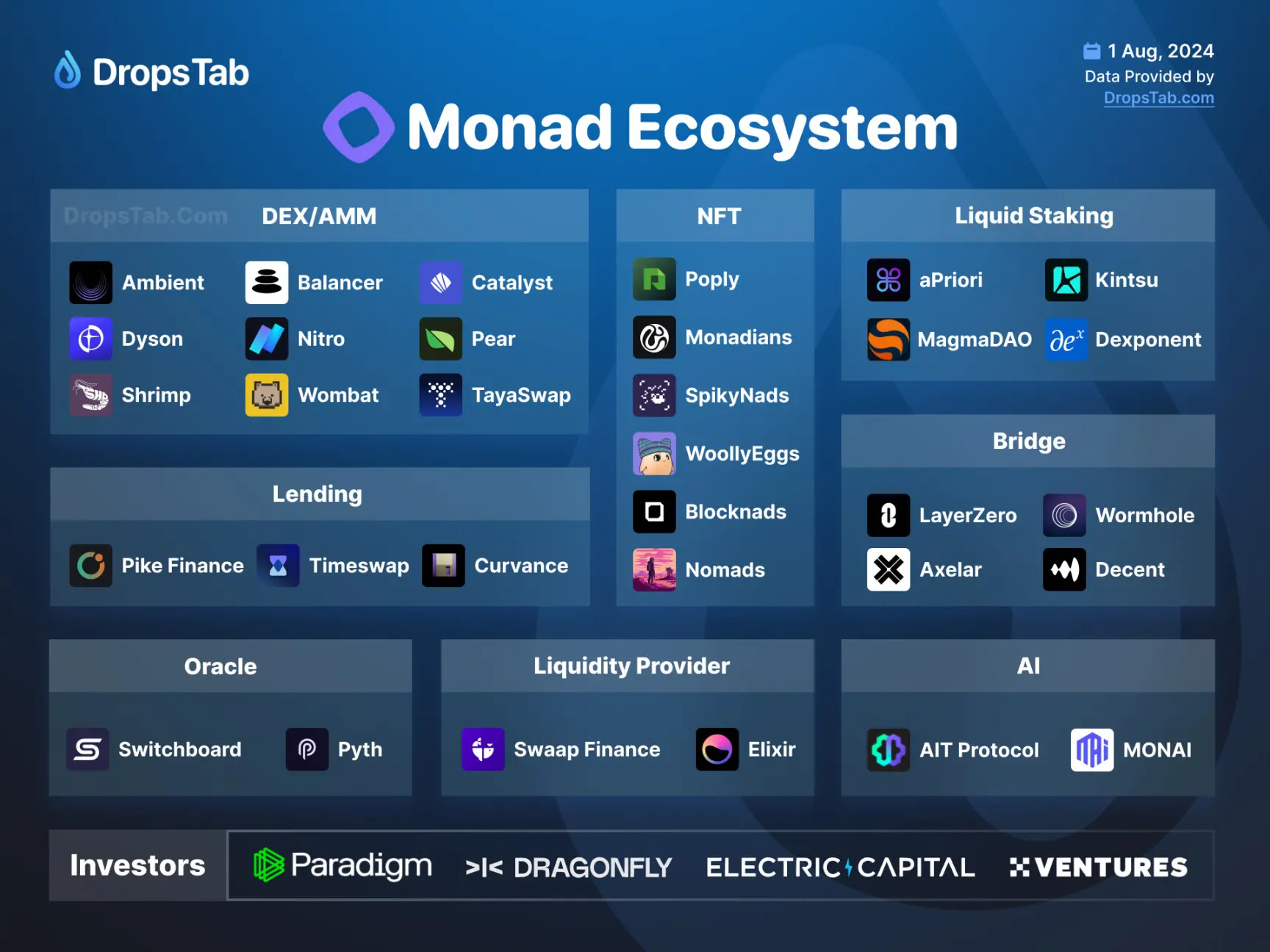
Ecosystem health is the primary driver of long-term value for parallel execution chains. Monad's strategy focuses on attracting high-throughput applications that cannot easily scale on sequential EVMs. Key partnerships with DeFi protocols, gaming studios, and infrastructure providers signal confidence in the network's ability to handle real-world load.
Assessing ecosystem growth involves looking beyond announced partnerships to actual on-chain activity. Must-have indicators include total value locked (TVL) growth, active developer addresses, and daily active users. Nice-to-have features include exclusive airdrops or grant programs. A thriving ecosystem survives initial hype cycles by delivering utility. If current partnerships are purely marketing-driven with no technical integration, treat them with caution and monitor for concrete deployment milestones.
2026 outlook and regulatory considerations
The 2026 landscape for Layer 1 blockchains will be defined by regulatory clarity and technological differentiation. Monad's parallel execution model offers a distinct advantage in performance, but it also faces scrutiny regarding centralization risks inherent in high-speed consensus mechanisms. Regulatory frameworks for staking and token classification will significantly impact institutional adoption.
Investors must weigh the potential for ecosystem growth against broader regulatory risks. Must-have considerations include the legal status of staking rewards and the network's compliance with emerging financial regulations. Nice-to-have factors include potential ETF listings or integration with traditional finance rails. A sustainable outlook requires navigating these regulatory hurdles without compromising the network's core value proposition. If regulatory headwinds intensify, the network's ability to adapt its governance structure will be critical.
Frequently asked questions about Monad
Is Monad a good investment for 2026?
Monad operates as a high-performance Layer 1 blockchain focused on parallel execution. While it offers technical advantages for developers building high-throughput applications, the asset remains volatile. Current market analysis suggests a cautious approach, with price predictions for 2026 hovering around the $0.02 mark. Investors should weigh the potential for ecosystem growth against the broader risks associated with emerging Layer 1 tokens.
How does Monad’s parallel execution work?
Unlike traditional blockchains that process transactions sequentially, Monad utilizes parallel execution to handle multiple operations simultaneously. This architecture significantly increases throughput and reduces latency, aiming to solve the scalability trilemma. By processing independent transactions in parallel, Monad can support complex DeFi protocols and high-frequency trading applications that would struggle on slower networks.
What is the current MON token price?
Market data indicates that MON is currently trading near $0.021. This represents a decline of approximately 57% from its November 2025 all-time high of $0.04883. For real-time pricing and technical analysis, refer to the live chart below.
When will Monad mainnet fully launch?
Monad has been progressing through testnet phases to ensure network stability before a full mainnet launch. The team has emphasized rigorous auditing and performance optimization during these stages. Stakeholders should monitor official Monad channels for announcements regarding the mainnet release date, as this will be a critical milestone for token utility and ecosystem adoption.
No comments yet. Be the first to share your thoughts!